



BRIN Highlights Silvo-Aquaculture as Key to Coastal Food Resilience
- 23 Jun 2026 18:32 WIB
- Voice of Indonesia
Key Points
- The National Research and Innovation Agency (BRIN) endorsed silvo-aquaculture to advance coastal food security.
- Indonesian marine researchers successfully deployed sustainable structural models to boost high-value coastal commodities.
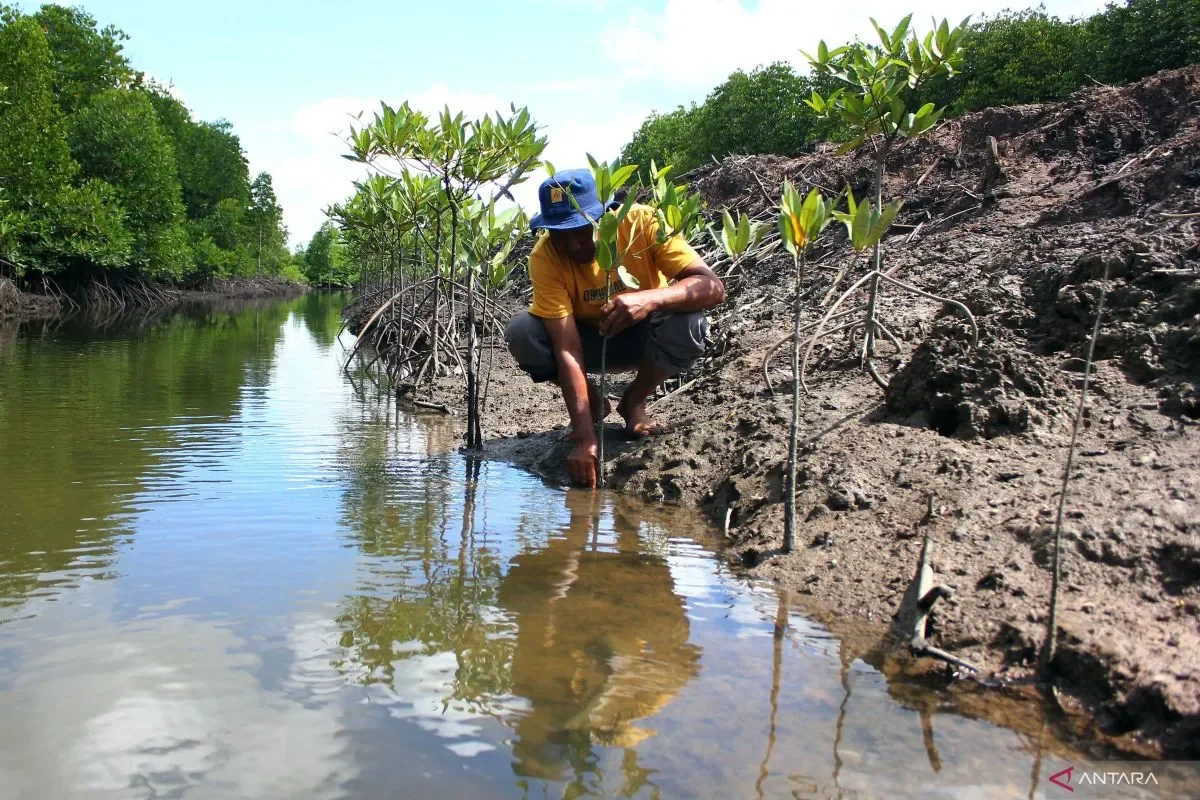
RRI.CO.ID, Jakarta - Indonesia’s National Research and Innovation Agency (BRIN) is spotlighting the growing role of silvo-aquaculture as a nature-based solution to strengthen food security in coastal regions.
By integrating mangrove ecosystems with aquaculture practices, researchers argue the approach can simultaneously boost fishery production, protect coastlines, and mitigate climate change.
Speaking at the 8th OceanFarm Webinar on Tuesday, June 23, 2026, BRIN's senior researcher Hidayat Suryanto Suwoyo emphasized Indonesia’s unique potential.
“Our country has the largest mangrove forests in the world, covering about 3.31 million hectares. Silvo-aquaculture is a sustainable integrated activity that manages mangrove areas alongside pond-based aquaculture, allowing us to utilize mangroves while preserving them,” he explained, as quoted on BRIN's official website.
Hidayat outlined the ecological and social functions of mangroves, from shielding coasts against disasters to providing habitats, absorbing carbon, and supporting local livelihoods.
He noted that silvo-aquaculture applies sustainability principles such as using natural inputs, reducing waste, adopting circular economy practices, and mimicking natural processes.
Models already tested in Indonesia include empang parit, komplangan, tanggul, and greenbelt systems, which place mangroves as buffer zones in front of aquaculture ponds.
Research shows these systems can improve water quality, maintain biodiversity, store carbon, and deliver economic benefits. Commodities studied under silvo-aquaculture include tiger shrimp, vannamei shrimp, milkfish, mangrove crabs, saline tilapia, and seaweed.
Hidayat also highlighted more than 100 scientific publications on silvo-aquaculture produced between 1990 and 2026, positioning Indonesia among the most active contributors globally.
Field studies in South Sulawesi and Central Java have demonstrated increased productivity, availability of natural feed, and improved pond environments. Other research explores using aquaculture waste as a medium for mangrove seedlings, aligning with circular economy principles.
Despite its promise, challenges remain. “Policy support and field assistance are essential so that silvo-fishery truly becomes a sustainable aquaculture model supporting coastal food resilience,” Hidayat stressed.
Issues include water management, mangrove degradation, soil quality, limited farmer knowledge, and the need for stronger institutional backing.
“Silvo-aquaculture offers an integrated path by combining aquaculture, conservation, and restoration," Head of BRIN’s Agricultural and Food Research Organization, Puji Lestari, said.
"This system not only enhances sustainable food production but also protects shorelines, improves water quality, and contributes to climate mitigation through blue carbon absorption,” she added, reinforcing urgency.
The webinar also featured Hiroshi Imai of Japan’s JIN Corporation, who shared experiments on mangrove planting in silvo-aquaculture systems in South Sulawesi.
With participation from researchers, academics, practitioners, and environmental activists, the event served as a platform for dialogue, knowledge exchange, and collaboration.
BRIN hopes these efforts will advance coastal food resilience while ensuring mangrove preservation. In the face of climate change, coastal erosion, and ecosystem degradation, silvo-aquaculture is being positioned as a strategic model for sustainable fisheries and community livelihoods. ***
News Recomendation
Loading latest news.....