



BRIN Highlights Southeast Asia’s Global Role in Early Civilization
- 01 Apr 2026 12:13 WIB
- Voice of Indonesia
Key Points
- BRIN research highlights Southeast Asia as a global hub for early migration and trade, with evidence from Homo erectus in Java and advanced maritime networks connecting Asia to the Indian Ocean.
- The webinar highlighted significant breakthroughs in bio-anthropology and human evolution, particularly regarding ancient migration and regional history.
RRI.CO.ID, Jakarta - Cutting-edge research into ancient human migration, maritime technology, and prehistoric trade networks took center stage at the international webinar "Connecting Continents and Oceans," hosted by the National Research and Innovation Agency’s (BRIN) Prehistoric Archaeometry Research Center on Monday, March 30, 2026.
The forum brought together multidisciplinary experts to map out how Southeast Asia served as a vital bridge between civilizations from prehistory through the classical period. Head of BRIN’s Archaeology, Language, and Literature Research Organization (Arbastra) Heri Yogaswara noted that modern archaeology now serves as a key instrument for understanding global dynamics through a historical lens.
The webinar highlighted significant breakthroughs in bio-anthropology and human evolution, particularly regarding ancient migration and regional history.
An anthropology expert from Budapest Tamás Hajdu explained that while cremation rituals often destroy DNA, researchers are now successfully tracking origins via isotopes, specifically using strontium to trace individual movements. Findings from the Bronze Age in Hungary (circa 1500 BCE) confirm significant population mixing and cross-regional mobility even in these early stages of human history.
In the Indonesian context, an archeology expert Harry Widianto presented new evidence regarding Java's Homo erectus from the Bumiayu site, which suggests the presence of ancient humans as early as 1.8 million years ago. This discovery predates previous estimates and solidifies Java's position as a global cornerstone for understanding human evolution in Asia.
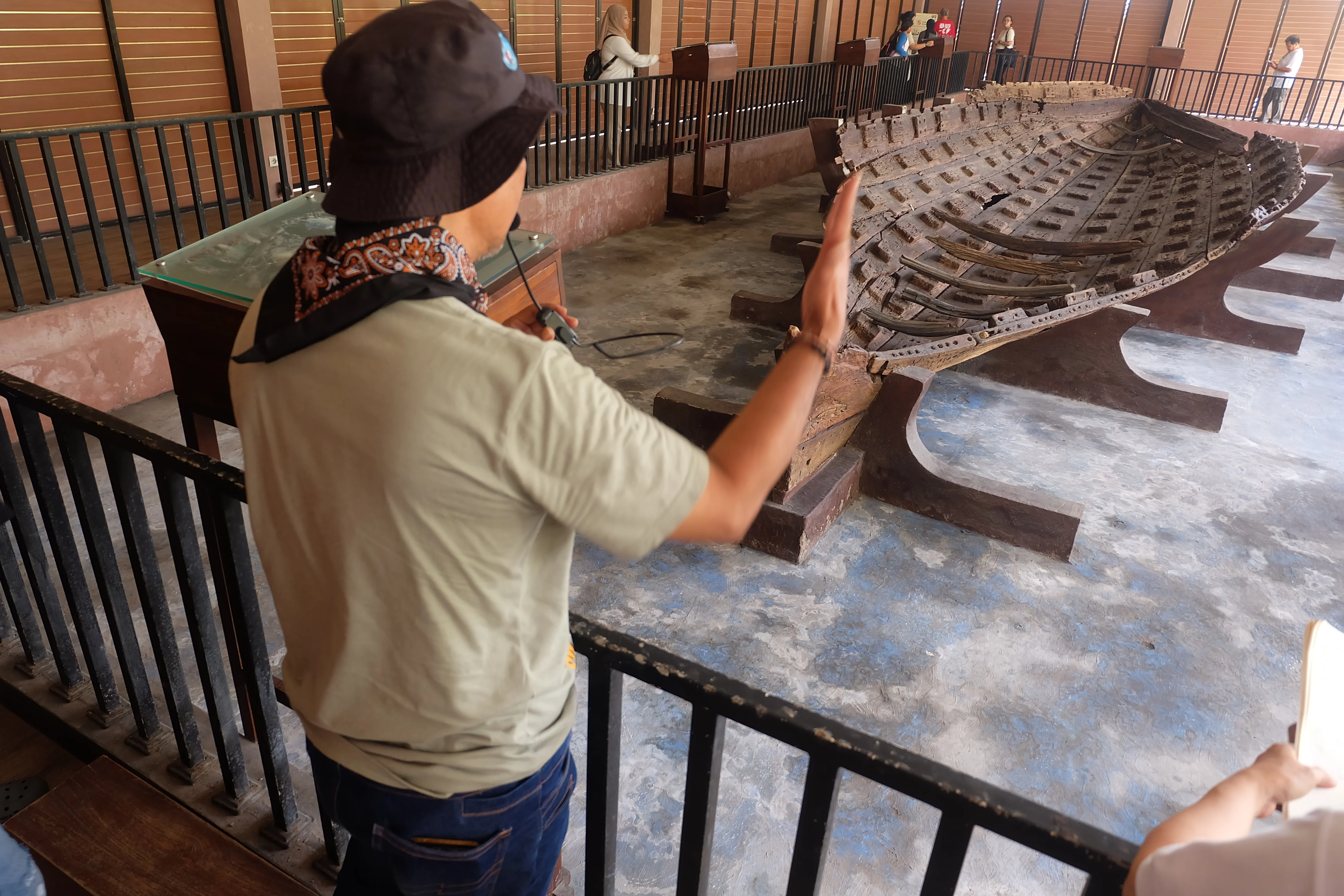
A major focus of the research was Southeast Asia’s indigenous shipbuilding prowess. A Maritime archeology researcher, Agni Sesaria Mochtar, highlighted the lashed-lug technique, a traditional boat-building method found across 40 shipwreck sites, more than half of which are located in Indonesia.
"Through the development of a comparative database, this research seeks to reconstruct shipbuilding techniques while revealing the extent of sailing networks reaching the Indian Ocean," Agni explained, as quoted on BRIN's official website.
Meanwhile, an archeologist spezialising in South and Southeast Asia, Bérénice Bellina added that these maritime networks linked Vietnam and Western Indonesia long before formal kingdoms emerged. The spread of Dong Son bronze drums as far as Sumatra serves as material proof of a continuous regional trade integration that eventually paved the way for the Srivijaya Empire.
Archaeologist Ery Soedewo presented findings from the Barus and Bongal sites, which served as early distribution hubs for Indonesian commodities like resins and spices to global markets between the 7th and 11th centuries CE.
The webinar highlighted significant breakthroughs in bio-anthropology and human evolution, particularly regarding ancient migration and regional history.
The collective research presented by BRIN underscores that Southeast Asia, and Indonesia specifically, has occupied a strategic position in global history for millennia. The region’s identity was formed through a complex interplay of human mobility, technological innovation, and cultural exchange.
By integrating archaeology, anthropology, and ethnography, researchers are finally piecing together a comprehensive history of how Southeast Asian sailors and traders helped connect the ancient world’s greatest oceans and continents. ***
News Recomendation
Loading latest news.....