



BRIN Advances Green Technology with Breakthrough CO₂ Conversion Catalyst
- 14 Jun 2026 18:48 WIB
- Voice of Indonesia
Key Points
- BRIN engineered an economical hybrid catalyst for carbon utilization.
- Silica decoration significantly optimizes low-temperature performance.
- The long-term roadmap utilizes sustainable regional biomass waste.
RRI.CO.ID, South Tangerang - Indonesia’s National Research and Innovation Agency (BRIN) is intensifying its role in developing green technologies to support the country’s Net Zero Emission (NZE) target.
Through its latest research in catalysis, BRIN has introduced a nickel-based biochar catalyst enhanced with silica decoration, designed to boost the conversion of carbon dioxide (CO₂) into high-value products with potential as future sources of green energy.
The innovation was presented by young researcherWiyanti Fransisca Simanullang of BRIN’s Catalysis Research Center, during the Wednesday Insight & Science Exchange (WISE) webinar on Friday, June 12, 2026.
The study focuses on modifying biochar with silica structures to improve catalyst performance in CO₂ hydrogenation.
“Carbon dioxide is thermodynamically very stable, making it difficult to convert. Our biggest challenge is designing catalysts that are both active and economical for transforming CO₂ into useful products,” Wiyanti explained, as quoted on BRIN's official website.
The hybrid catalyst aims to accelerate CO₂ hydrogenation, a chemical process that converts CO₂ into methane, carbon monoxide, or alcohols--products with economic value and relevance for clean energy.
While global research often relies on costly precious metals like palladium and platinum, BRIN’s team chose nickel (Ni) as a more affordable alternative.
To enhance nickel’s performance, silica decoration was applied, forming a protective layer that stabilizes particles, prevents agglomeration at high temperatures, and enables more effective breaking of CO₂ bonds. Laboratory tests using a fixed-bed reactor showed significant performance improvements.
Advanced characterization techniques--including HR-TEM, XPS, and synchrotron-based XAS--revealed that silica selectively promotes iron oxidation as a sacrificial layer, keeping nickel in its optimal reduced state.
“Our findings show silica decoration maintains the reduced phase of nickel, which is key to breaking CO₂’s strong bonds. This results in better hydrogenation performance, especially at lower temperatures,” Wiyanti noted.
Further analysis identified optimal interaction between nickel and hydrogen at a wavelength of 106.0 cm⁻¹, a critical factor in determining reaction rates. The silica-decorated nickel monometallic system outperformed other catalysts in low-temperature CO₂ hydrogenation.
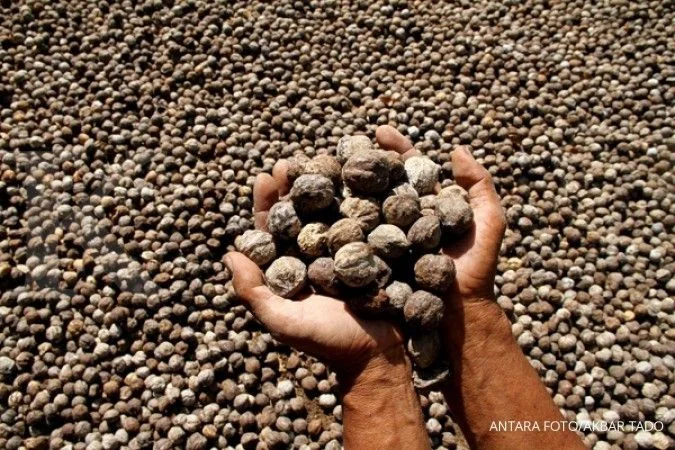
As part of its long-term strategy, BRIN has mapped out a technology downstreaming roadmap. The initial stage focuses on optimizing carbon synthesis using sustainable local resources, such as candlenut shells as biochar feedstock.
Future research will target liquid methanol production and the development of metal-free catalysts based on nitrogen-doped biochar.
This breakthrough not only offers an innovative solution to reduce carbon emissions but also opens opportunities to transform local biomass waste into high-value technologies.
BRIN plans to strengthen collaborations with strategic partners to accelerate downstreaming and commercialization, ensuring tangible contributions to Indonesia’s green economy and NZE goals.
This development ties into broader themes such as CO₂ hydrogenation research, the role of biochar catalysts, and Indonesia’s pursuit of Net Zero Emission targets. ***
News Recomendation
Loading latest news.....