



RI Begins Construction of Global-Standard Seaweed Research Center
- 13 Feb 2026 11:47 WIB
- Voice of Indonesia
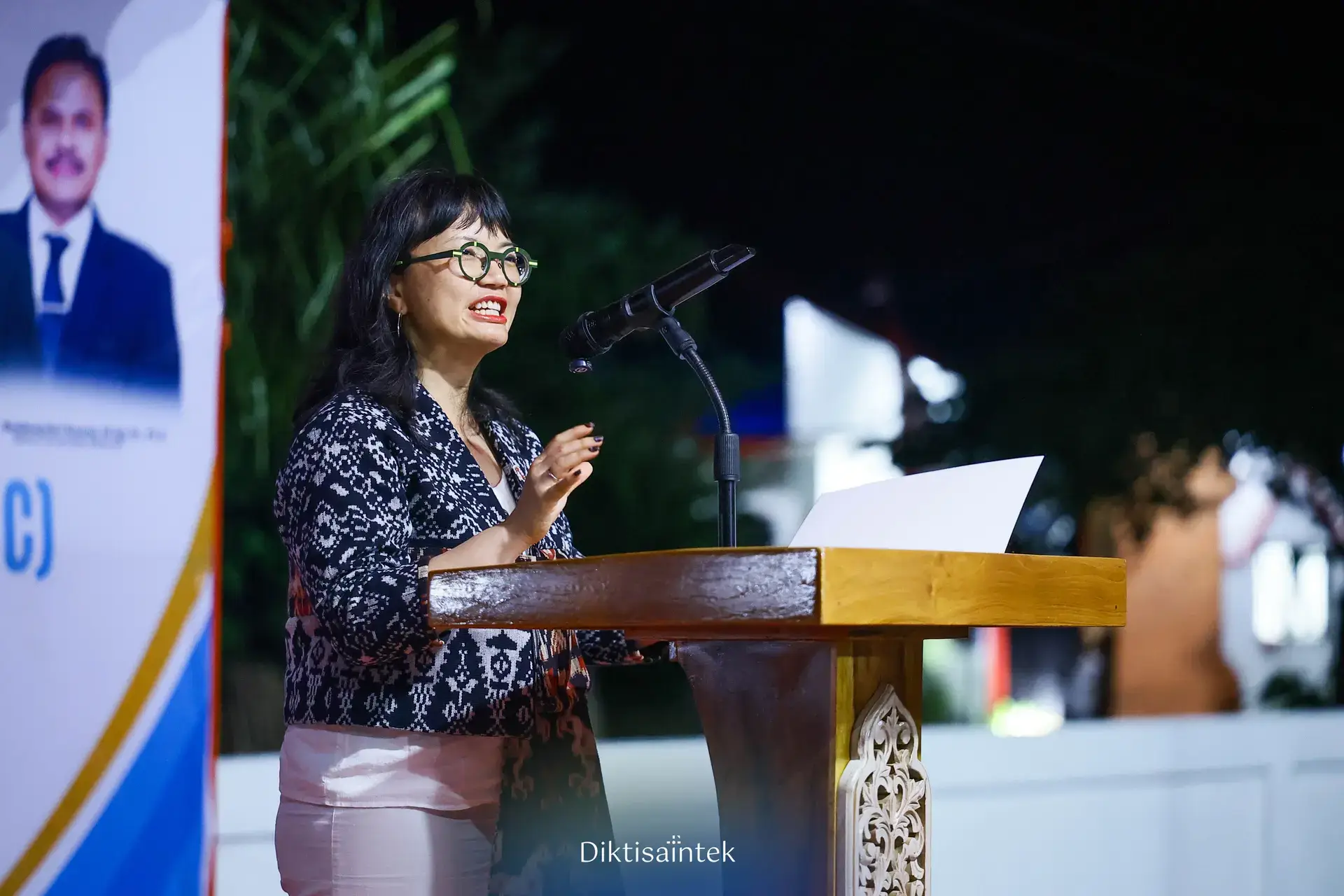
RRI.CO.ID, Jakarta – Indonesia has begun construction of the International Tropical Seaweed Research Center (ITSRC) in Ekas Bay, East Lombok, West Nusa Tenggara, as part of a national strategy to strengthen seaweed research and transform the coastal economy.
Deputy Minister of Higher Education, Science and Technology, Stella Christie, delivered the remarks during the groundbreaking ceremony on Thursday, February 12, 2026. She said the government aims to position Indonesia as the world’s seaweed center through stronger research capacity and international collaboration.
“Our major focus in recent months has been to make Indonesia the world’s seaweed center, and that must start now. Therefore, we are building an international-standard research center with global standards and networks,” Stella said.
She noted that Indonesia is currently the world’s largest producer of tropical seaweed, controlling around 75 percent of the global market. The global seaweed industry is valued at approximately USD 12 billion annually and is projected to continue growing.
Despite its dominant production share, Indonesia’s position in the global market has not been fully matched by domestic research capacity and downstream industrial development. Stella said Indonesia must move beyond being a raw material producer and become a center of innovation and value-added products.
The ITSRC is designed as a hub for national and international collaboration. The initiative has undergone consolidation since May 2025. It involves cross-sector partnerships, including with the Indonesian Employers Association (APINDO) to support downstream processingand with overseas universities to facilitate knowledge transfer and collaborative funding.
“We are working with the University of California, Berkeley, and the Beijing Genomics Institute from China. The Beijing Genomics Institute has committed IDR 3 billion for the first two years, including equipment and researchers. The ministry has also allocated IDR 1.5 billion for the initial phase,” Stella said.
Ekas Buana Village in Ekas Bay was selected as the site because it has long served as a center for coastal livelihoods, including seaweed cultivation and fisheries. Local authorities expect the research center to help improve harvests and aquaculture yields by developing superior, research-based seedlings.
Rector of the University of Mataram (Unram), Bambang Hari Kusumo, said the ITSRC would be developed as an integrated research zone to support international collaboration.
“The facilities will include research buildings, dormitories for international researchers, a pharmacy, and other supporting infrastructure. All are designed to be integrated with the development of Kampung Merah Putih, cooperatives, and other community empowerment programs,” he said.
Ecologically, Ekas Bay is a relatively sheltered tropical bay system with favorable currents and water circulation, making it a suitable living laboratory for research on productivity, climate resilience, and tropical-scale biomass development.
In addition to Kappaphycus, a key raw material for carrageenan, the area has potential for cultivating Caulerpa, Ulva, and Halymenia species.
Eka Sunarwidhi Prasedya, a biology lecturer and researcher at Unram, said that data-driven research is essential to develop superior varieties that are climate-adaptive and deliver added value for industry.
By establishing the ITSRC in Ekas Bay, the Ministry of Higher Education, Science, and Technology seeks to leverage Indonesia’s natural advantages to enhance scientific and industrial competitiveness, support coastal communities, and strengthen the country’s role in the global value chain. ***
News Recomendation
Loading latest news.....