



Yogyakarta Royal Heirs Rejects Indonesia Partners with France and India, Why?
- 20 Apr 2026 15:12 WIB
- Voice of Indonesia
Key Points
- Descendants of the second monarch of Yogyakarta Sultanate, Sri Sultan Hamengkubuwono II, expressed their rejection of plans to strengthen bilateral cooperation between Indonesia and France, as well as India.
- They demand accountability over impacts of Geger Sepehi, an attack on Yogyakarta in 1812 that have took the sultanate's precious assets.
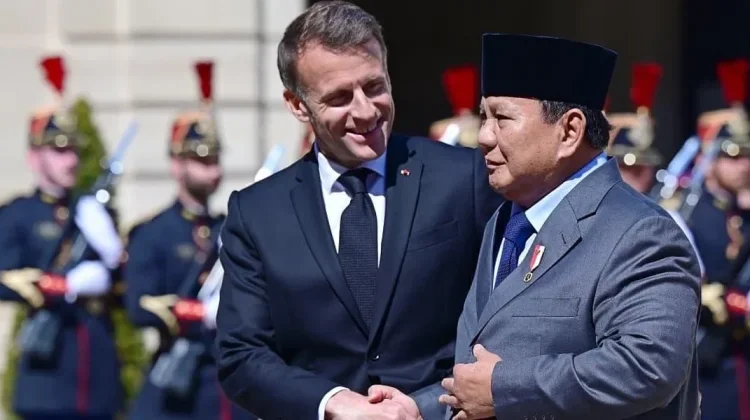
RRI.CO.ID, Yogyakarta – Descendants of Sri Sultan Hamengkubuwono II, the second monarch of the Java-based Yogyakarta Sultanate in the Special Region of Yogyakarta, have firmly expressed their rejection of plans to strengthen bilateral cooperation between Indonesia and France, as well as India. An attack on the Yogyakarta city center in the early 19th century is cited as the reason.
A Sultan's family representative, Fajar Bagoes Poetranto, stated that diplomatic and economic cooperation with France and India should not be carried out before issues around the sacking incident of 1812, locally known as Geger Sepehi, is fully resolved. He emphasized that historical records show the British East India Company (EIC) mercenaries and Napoleonic France are behind the attack on the Yogyakarta Palace in June 1812.
“We cannot turn a blind eye to history. France and India played major roles in the Geger Sepehi incident. Until there is moral and historical accountability for the looting of assets and ancient manuscripts belonging to Sultan Hamengkubuwono II, we reject any cooperation carried out by the Indonesian government with them,” he said in a written statement on Sunday, April 19, 2026.
Meanwhile, an academic of the University of Sebelas Maret, Harto Juwono, found evidence that the Geger Sepehi was a ripple effect of major conflicts in Paris and London. When Napoleon was invading Russia in 1812, a power vacuum occurred in Java.
"The people, who were suffocated by the militaristic policies of Daendels (a French proxy), saw an opportunity to move amid the fragility of colonial control," he said.
The event occurred when the British, through their EIC, sent thousands of Sepoy soldiers to remove French-Dutch influence in Java. The name "Sepehi" in the local name is strongly believed to be a Javanese adaptation of Sepoy.
According to him, Java at that time was merely "a pawn on the chessboard" of the Napoleonic War. The British attack on Yogyakarta was not merely to conquer the palace, but to secure trade routes from the threat of France.
However, this investigation reveals the surprising fact that the forces that attacked Yogyakarta in 1812 were not simply British troops, but were largely composed of Sepoys—Indian professional mercenaries working for the EIC. Harto Juwono also highlighted that the impact of the Geger Sepehi is still felt today, particularly the loss of thousands of valuable manuscripts and financial assets that were forcibly taken out of Yogyakarta.
"The government, through President Prabowo Subianto, must be bold in bringing this issue of historical restitution to the diplomatic table. Do not only talk about military or economic cooperation—first resolve their historical debt to this nation, especially regarding the sovereignty of Sultan Hamengkubuwono II," he said.
The descendants of Sultan Hamengkubuwono II believe that international recognition and the return of assets are absolute prerequisites for fair reconciliation. The Indonesian government is asked to postpone strategic cooperation commitments until there is goodwill from the countries involved to resolve the history of the 1812 Geger Sepehi incident.
They urge France and India to acknowledge their involvement in the Raffles' British military operation that destroyed the Yogyakarta Palace. The restitution of manuscripts and assets seized during the Geger Sepehi incident should be pursued immediately through official diplomatic channels.
"We ask the Indonesian government to ‘immediately take swift, precise, careful, and concrete steps’ in defending the nation’s historical sovereignty," Fajar, also the Chairman of the Vasatii Socaning Lokika Foundation, said.
| Baca juga: TNI AU Reviews RAAF Education System |
"Geger Sepehi is a wound that has not yet healed. Do not let new cooperation be built on unresolved history,” he concluded.
To this day, the descendants continue to carry out advocacy efforts and international legal actions. They hoped the Geger Sepehi incident of 1812 is recognized as a violation of sovereignty that requires immediate resolution from the parties involved.
(This report is largely based on RRI Yogyakarta original report by Dyan Parwanto)
News Recomendation
Loading latest news.....