



Indonesia Reinforces Irrigation to Safeguard Rice Output
- 06 Feb 2026 01:30 WIB
- Voice of Indonesia
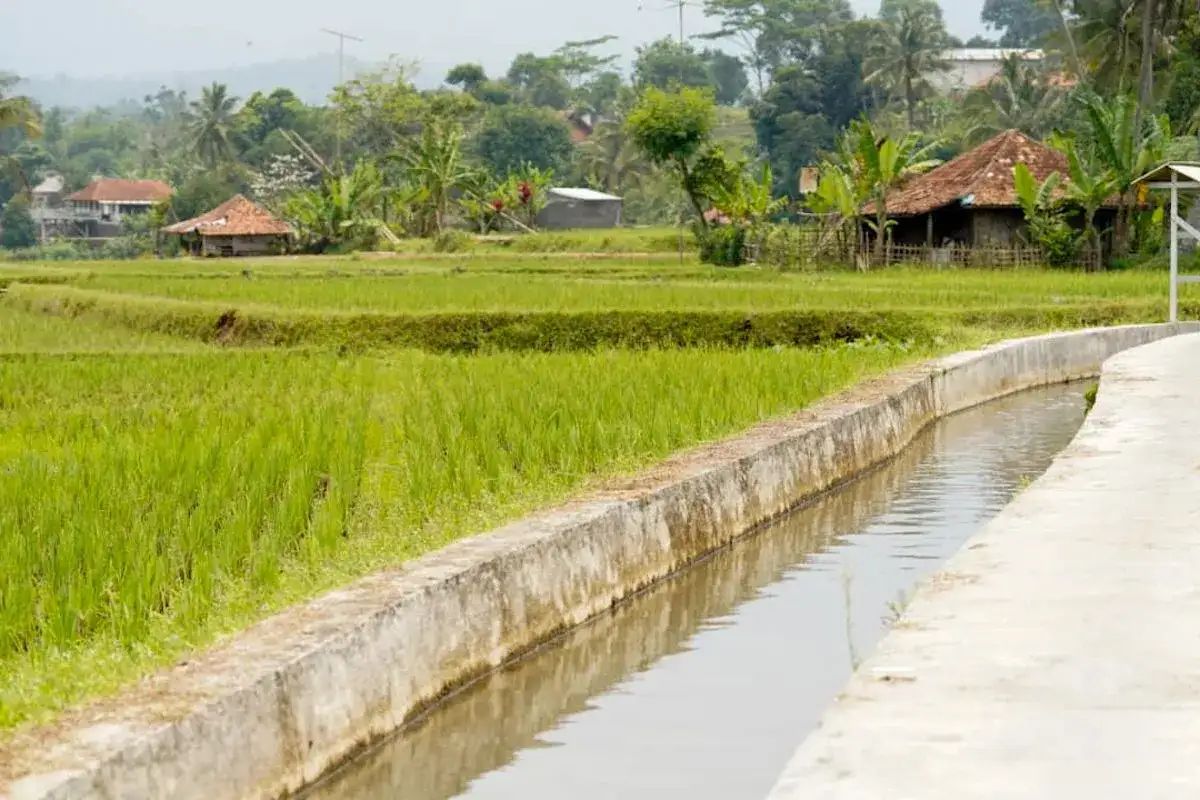
RRI.CO.ID, Jakarta - The Indonesian Ministry of Agriculture is accelerating the reinforcement of irrigation infrastructure in early 2026 to counter high rainfall and extreme weather patterns.
The initiative is part of a broader strategy to stabilize national rice production and ensure that food centers remain productive despite climate shifts.
Hermanto, Director General of Agricultural Land and Irrigation (Ditjen LIP), stressed that water management, covering irrigation networks, drainage, and flood control, remains the backbone of agricultural productivity.
“Amid the increasing risk of extreme weather in a number of food hubs, strengthening water management, from irrigation networks and drainage to controlling land flooding, is being encouraged to support increased productivity,” he said in Jakarta on Thursday, February 5, 2026, as quoted by Antara.
The government is integrating its Cetak Sawah Rakyat (CSR) program with water infrastructure projects. CSR program refers to Cetak Sawah Rakyat, or “People’s Rice Field Expansion,” a state-led initiative to expand rice production by converting suitable land into productive agricultural areas.
The program aims to expand cultivation capacity and strengthen food security, particularly in regions vulnerable to climate variability. To ensure these new lands are viable, the Ministry is working closely with the Meteorology, Climatology, and Geophysics Agency (BMKG) to use precise climate data to inform technical decision-making.
“We need scientifically based justification from BMKG rainfall time series data as a reference for accelerating the completion of the rice field development target,” Hermanto explained, adding that collaboration with the Ministry of Public Works is also crucial to address water shortages in specific regions.
BMKG forecasts indicate that most of Indonesia will experience annual rainfall between 1,500 and 4,000 millimeters in 2026, with 5.1 percent of the country experiencing above-normal rainfall.
Marjuki, Director of Applied Climate Services at BMKG, noted that while parts of Sumatra and Java have seen historical declines in rainfall, regions in Kalimantan, Sulawesi, and Papua are experiencing increases in rainfall.
For February to March 2026, rainfall is expected to be moderate to high across the country, with certain areas in Central Java, South Sulawesi, and Central Papua at heightened risk of very high rainfall, potentially leading to flooding or waterlogging.
Agriculture Minister Andi Amran Sulaiman emphasized that with the right infrastructure, heavy rainfall should be viewed as an asset rather than a threat.
“We must manage the high rainfall as a blessing. By strengthening irrigation, improving drainage, and managing land water properly, rice production can be maintained and even increased,” he said. The Minister reiterated the government’s commitment to supporting farmers and ensuring food security remains intact despite extreme weather.
Through accelerated development and rehabilitation of irrigation infrastructure, the government aims to improve planting indices and stabilize rice production across food centers. Strengthened water management is expected to protect farmland from both flooding and drought, while sustaining long-term productivity in Indonesia’s rice sector. ***
News Recomendation
Loading latest news.....