



Indonesian NGO Transforms Plastic Waste into Prosthetics Legs
- 21 Sep 2026 15:55 WIB
- Voice of Indonesia
Poin Utama
- Environment Minister Jumhur Hidayat commended the Kaki Kita Se-Nusantara Foundation (YKKS) for converting plastic waste into prosthetic legs for underprivileged people with disabilities.
- YKKS successfully processes both high-density polyethylene (HDPE) bottle caps and traditionally hard-to-recycle multilayer packaging plastic (MLP) into functional prosthetic components.
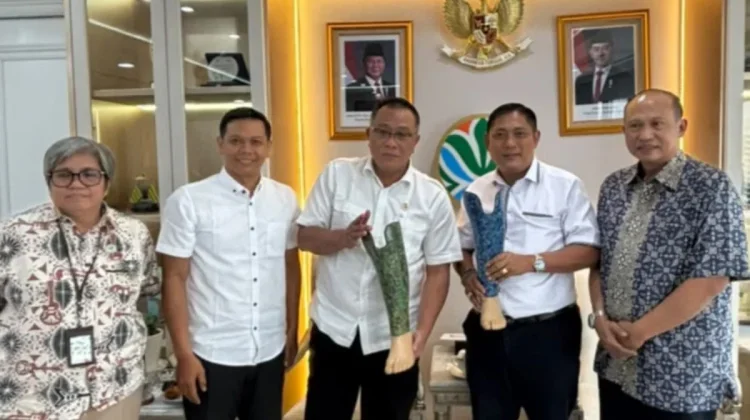
RRI.CO.ID, Singaraja - Environment Minister, Jumhur Hidayat, has praised an innovation by the Kaki Kita Se-Nusantara Foundation (YKKS), which uses plastic waste as raw material to produce prosthetic legs for people with disabilities.
“There must be waste separation, except for organic waste. Even inorganic waste can be turned into something like this,” said Minister Jumhur during a meeting with YKKS on Monday, September 21, 2026.
During the meeting, YKKS presented two examples of prosthetic legs made from plastic waste: one using high-density polyethylene (HDPE) bottle caps and another made from a mixture of multilayer packaging plastic (MLP) and HDPE. Minister Jumhur emphasized the importance of sorting waste at its source so that inorganic waste can be reused to create products with practical value.
YKKS Board of Trustees Chairperson, Putu Ivan Yunatana, said that turning plastic waste into prosthetic legs demonstrated that materials widely regarded as an environmental problem could be reprocessed. This recycling process proves that such waste can yield products with both social and economic value.
“These two completed examples of prosthetic legs show that plastic waste can be useful and have economic value, as long as the ecosystem is properly organized and managed,” he said.
He explained that developing prosthetic legs from plastic waste was one of YKKS’s efforts to combine environmental management with meeting the humanitarian needs of underprivileged people with disabilities.
According to him, YKKS-produced prosthetic legs have been distributed to people with disabilities in Bali and other parts of Indonesia, including Palu and Lombok. The distribution has been supported by corporate social responsibility programs from several companies, as well as public donations made through YKKS.
In addition to producing prosthetic legs, YKKS, through its affiliated entities, conducts educational activities and transports and collects waste. The foundation also processes organic and inorganic waste into refuse-derived fuel (RDF), which can be used as an alternative fuel.
Ivan said YKKS also wanted to introduce the use of MLP packaging plastic, which has long been considered difficult to recycle, by turning it into products that benefit the community.
“We want to show that plastic waste is not limited to HDPE but also includes MLP packaging plastic, which recyclers have traditionally considered difficult to process. However, we can process it into useful products, including prosthetic legs that are prioritized for distribution to people with disabilities who cannot afford them,” he said.
YKKS Chairperson, Made Aditiasthana, explained that producing one prosthetic leg requires approximately five kilograms of plastic waste as raw material. After processing and molding, the material is reduced to approximately two to three kilograms.
He said the use of recycled plastic meant that each prosthetic leg had a different pattern and color, depending on the waste materials used.
“The creative patterns come from the workers, while the patterns themselves are formed by the original colors of the waste. For example, white with black spots is made using white and black waste,” said Aditiasthana.
He added that the colors and patterns of the prosthetic legs could also be customized at the recipients’ request, giving the products not only functional value but also aesthetic appeal. (Annaila Azzahra-EN)
News Recomendation
Memuat berita terbaru.....