



Health Ministry: Strengthening Cancer Services a National Priority
- 23 Jan 2026 16:03 WIB
- Voice of Indonesia
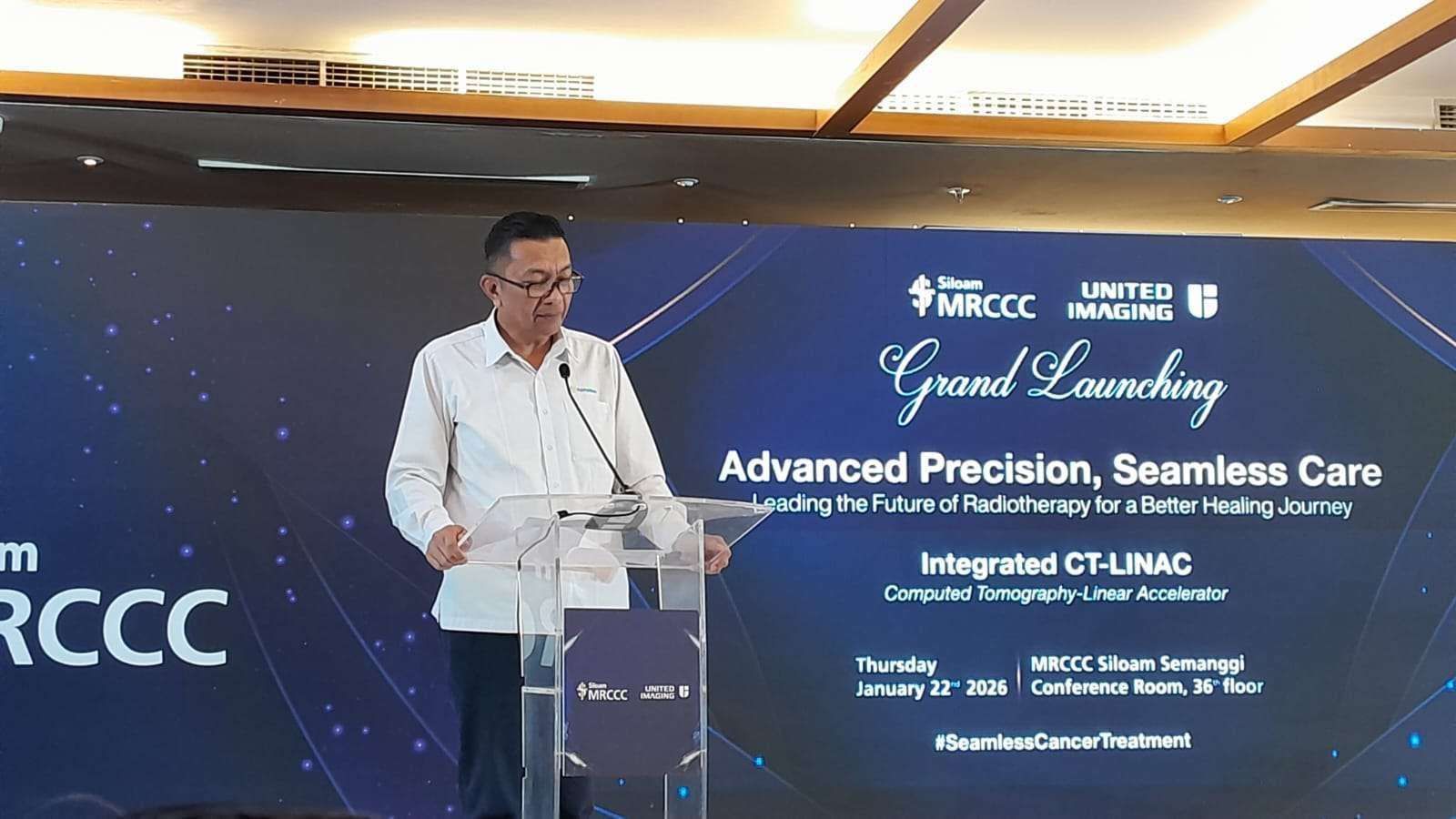
RRI.CO.ID, Jakarta - The Director of Clinical Services at the Ministry of Health, Obrin Parulian, emphasized that strengthening cancer services is a government priority. He stated that cancer remains a major challenge for the national health system.
"The Indonesian government remains strongly committed to strengthening health services, particularly in the field of cancer. This also applies to cardiovascular disease, stroke, urology, and maternal and child health, which remain challenges for the national health system," Obrin said in his remarks at the Mochtar Riady Comprehensive Cancer Center (MRCCC) Siloam Semanggi, Jakarta, Thursday, January 22, 2026.
Obrin explained that cancer is a catastrophic disease with a burden that continues to increase annually. This condition directly impacts the quality of services and national health financing.
"Cancer, heart disease, stroke, and urological diseases are categorized as catastrophic diseases. The cancer burden in Indonesia is very high and continues to increase," Obrin said.
He revealed that data from the Global Cancer Observatory (GLOBOCAN) shows the magnitude of the cancer threat in Indonesia. Without strengthening prevention and early detection, the surge in cases is expected to continue.
"GLOBOCAN 2022 data shows there are 408,661 new cancer cases each year. Furthermore, the death rate reaches 242,988 cases per year," he said.
Obrin also highlighted the financial pressures borne by the National Health Insurance (JKN) due to cancer. According to him, this condition reflects the urgency of improving the quality of national cancer services.
"BPJS (Health and Social Security Agency) data for 2024 recorded 4.2 million cancer patients. JKN financing has reached IDR 6.48 trillion," he said.
Responding to this challenge, Radiation Oncologist Denny Handoyo Kirana at MRCCC Siloam Semanggi assessed that utilizing precision technology is a strategic step. The latest radiotherapy technology is considered capable of improving the quality of cancer patient care.
"Integrated CT-LINAC technology focuses on the patient as the center of cancer care. Through daily CT imaging and adaptive radiotherapy, each therapy session can be tailored to the patient's anatomy and condition," he said.
This approach, Deny said, allows medical personnel to adjust therapy more accurately according to the patient's evolving condition. The use of adaptive radiotherapy technology is also part of efforts to improve the safety and quality of cancer care overall.
"This increases precision while reducing unnecessary radiation exposure to healthy tissue. For cancer patients, especially in Indonesia and Southeast Asia, this technology provides safer therapy and shorter waiting times," Denny said. (Misni Parjiati/Bambang MBKA)
News Recomendation
Memuat berita terbaru.....