



Indonesia Launches First Home‑Grown Typhoid Conjugate Vaccine
- 17 Jul 2026 22:27 WIB
- Voice of Indonesia
Key Points
- Bio‑TCV becomes Indonesia’s first domestically produced conjugate typhoid vaccine, developed through collaboration between the University of Indonesia (UI) and Bio Farma.
- Vaccine expected to cut antibiotic use for Salmonella typhi infections, helping mitigate antimicrobial resistance.
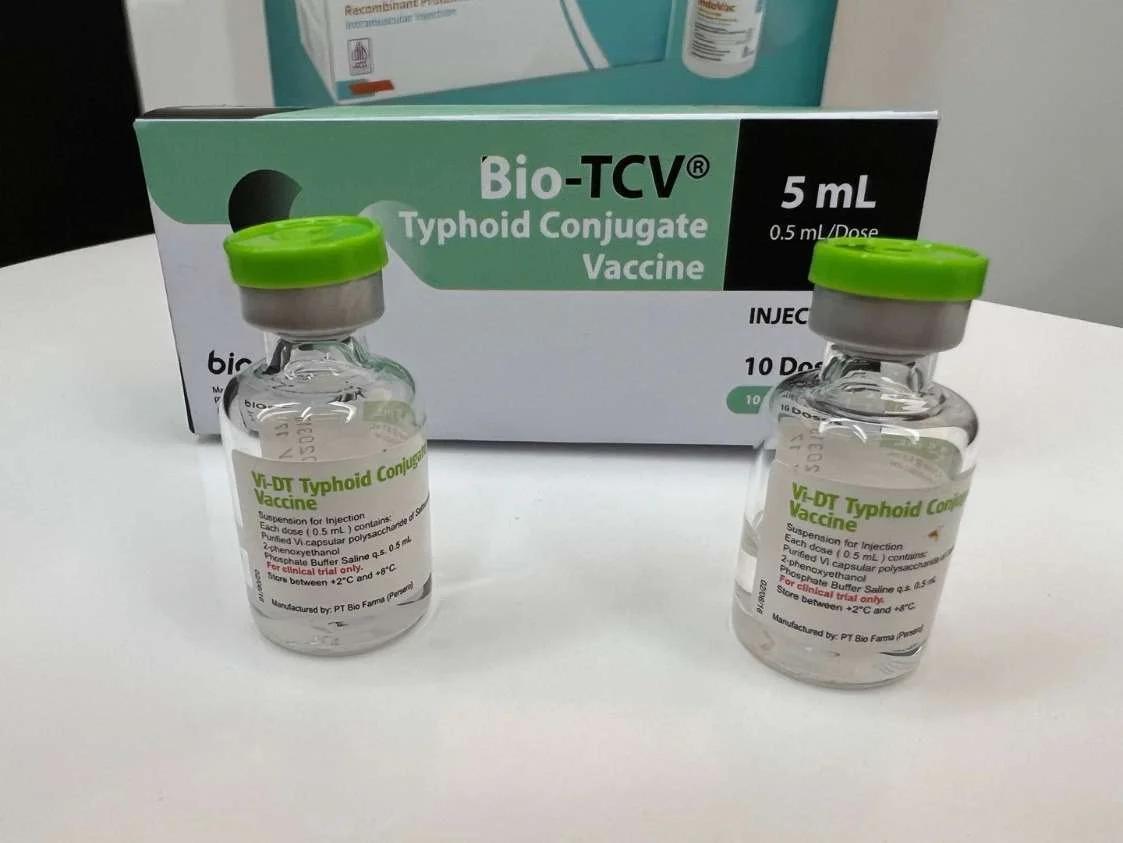
RRI.CO.ID, Jakarta - The Bio‑TCV vaccine, the first domestically produced conjugate typhoid vaccine developed through collaboration between the University of Indonesia (UI) and state-owned pharmaceutical company Bio Farma, marks a major step in strengthening national health resilience amid high rates of typhoid fever and Indonesia’s reliance on imported pharmaceutical raw materials.
Food and Drug Monitoring Agency (BPOM) Head Taruna Ikrar said the locally produced vaccine is a strategic measure to address national health challenges and reduce dependence on imports.
“BPOM is processing the registration of this product through a special pathway for newly developed drugs with a target timeline of 100 working days,” Taruna said in Jakarta on Friday, July 17, 2026, as quoted by Antara.
He noted that around 94 percent of Indonesia’s raw materials for drugs and vaccines are still imported, posing risks to health resilience in the event of supply chain disruptions or global crises.
BPOM conducted a comprehensive assessment of Bio‑TCV’s quality, safety, and efficacy before issuing a distribution authorization number (NIE) in 2023.
The agency also oversees all stages of vaccine development, including clinical trials in Indonesia, compliance with Good Manufacturing Practice (CPOB) standards at Bio Farma’s facilities, cold chain supervision, and post‑use safety monitoring (pharmacovigilance).
BPOM has approved three typhoid vaccines for distribution in Indonesia: Vivaxim, Typhim Vi, and Bio‑TCV. Between January 2025 and July 2026, Bio Farma produced two batches of Bio‑TCV totaling 84,719 vials, equivalent to 208,235 doses, of which 30,875 were distributed as of July 13, 2026.
Taruna added that the vaccine is expected to reduce antibiotic use for Salmonella typhi infections, helping mitigate antimicrobial resistance, a global health challenge.
Chair of the Med‑Expo FKUI 2026 Committee, Mohammad Kurniawan, said Indonesia continues to face complex health challenges, from a high burden of infectious diseases to the need for stronger vaccine resilience.
“Indonesia faces complex health challenges. We need synergy between academia, government, industry, and the community to tackle these challenges, from the double burden of disease to the demand for vaccine resilience. The launch of the One Health Indonesia Ecosystem and the Bio‑TCV vaccine today is clear evidence of the success of this collaboration,” he said.
Clinical trial results show Bio‑TCV is effective and safe according to international standards. Nearly all participants experienced a fourfold increase in antibody levels after vaccination, with protection lasting up to one year.
The vaccine is approved for active immunization of individuals from six months of age to adults, administered in a single 0.5‑milliliter intramuscular dose. Reported side effects were generally mild to moderate, including pain at the injection site, fever, and muscle aches.
Kurniawan emphasized that Bio‑TCV is expected to provide optimal protection, particularly for toddlers, who were not adequately protected by previous typhoid vaccines. ***
News Recomendation
Loading latest news.....