



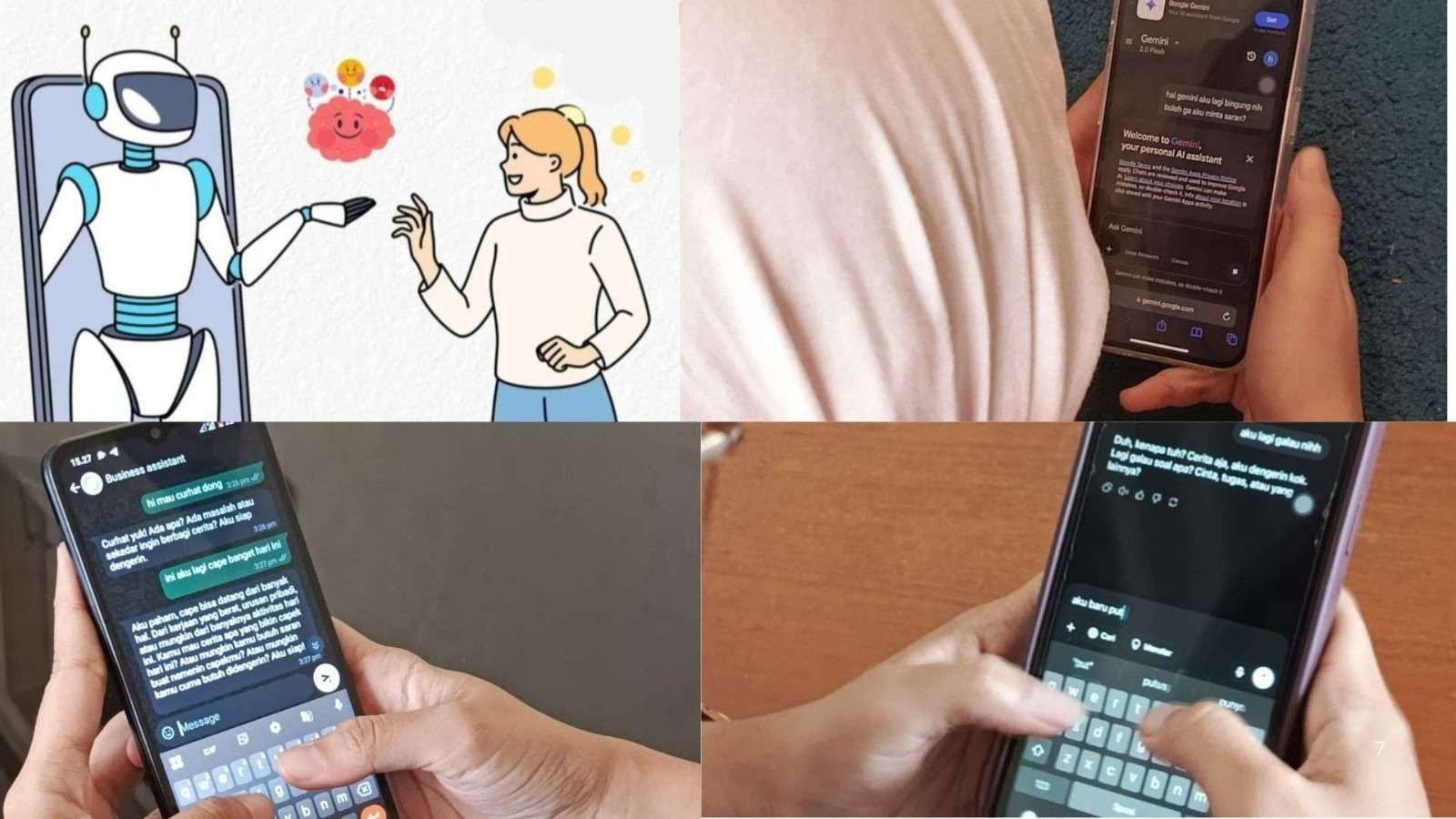
RRI.CO.ID, Jakarta - The growing habit of confiding in artificial intelligence (AI) among Generation Z and Generation Alpha signals a significant shift in social relationships in the digital age, as technology increasingly assumes the role of an emotional listener amid the pressures of modern life.
Clinical psychologist Salma Ghina Sakinah Safari of Amanasa Indonesia said the phenomenon is rooted in a basic need for psychological safety. Many young people, she noted, struggle to find someone who is genuinely present and willing to listen without judgment, whether within their families or social circles.
“As life becomes more overwhelming, people often come home carrying stress from outside. In the end, children have no space to process their emotions,” Salma said during a dialogue on RRI Pro3 on Sunday, January 25, 2026.
According to Salma, AI fills that emotional void by offering anonymity and freedom from social consequences. Users feel able to open up without worrying about judgment, maintaining an image, or facing repercussions, and they can disengage whenever they feel emotionally exhausted.
However, she warned that the sense of emotional closeness created by AI is ultimately illusory. AI systems are designed to validate users’ feelings, and repeated validation can reinforce negative emotions and distort perceptions of reality.
“AI is designed to validate. With constant validation, people may come to believe it unquestioningly. This can potentially lead to certain delusions,” Salma said.
She also cautioned that excessive reliance on AI could replace real human relationships and discourage individuals from seeking professional help. AI, she stressed, should serve only as a temporary reflective tool, not as a substitute for human connections that are essential to long-term mental health.
The trend is also closely linked to digital culture. Content creator Tatash Pridasari said social media has shaped the habits of expressing emotions online, making confiding in AI feel like a natural extension of those behaviors.
“AI is seen as an ideal listener because it doesn’t create social pressure,” Tatash said, as reported by RRI.CO.ID. She acknowledged having used AI to discuss romantic issues but emphasized that she never became emotionally dependent on it.
Tatash warned that excessive reliance on AI could erode social sensitivity. Humans, she said, still require direct interaction and emotional energy from one another.
“AI can offer a safe space, but humans are social beings. There will always be moments when we need interaction and the presence of other people,” she said.
Both Salma and Tatash agreed that balance is essential. Strengthening digital and emotional literacy is crucial to ensure that AI remains a supportive tool rather than a replacement for human relationships. Amid rapid technological advancement, emotional presence from family, friends, and the wider community remains the cornerstone of mental well-being. ***
News Recomendation
Loading latest news.....