



BRIN Develops Eco-Friendly Nanofibers for Gas Sensors and Green Technology
- 15 Jul 2026 15:31 WIB
- Voice of Indonesia
Key Points
- BRIN and UGM have developed eco-friendly nanofiber-based gas sensors using local iron sand and tomato skin waste, significantly improving chemical gas detection sensitivity.
- The technology also shows potential for energy storage, food packaging, and agricultural applications, with one innovation already receiving patent registration.
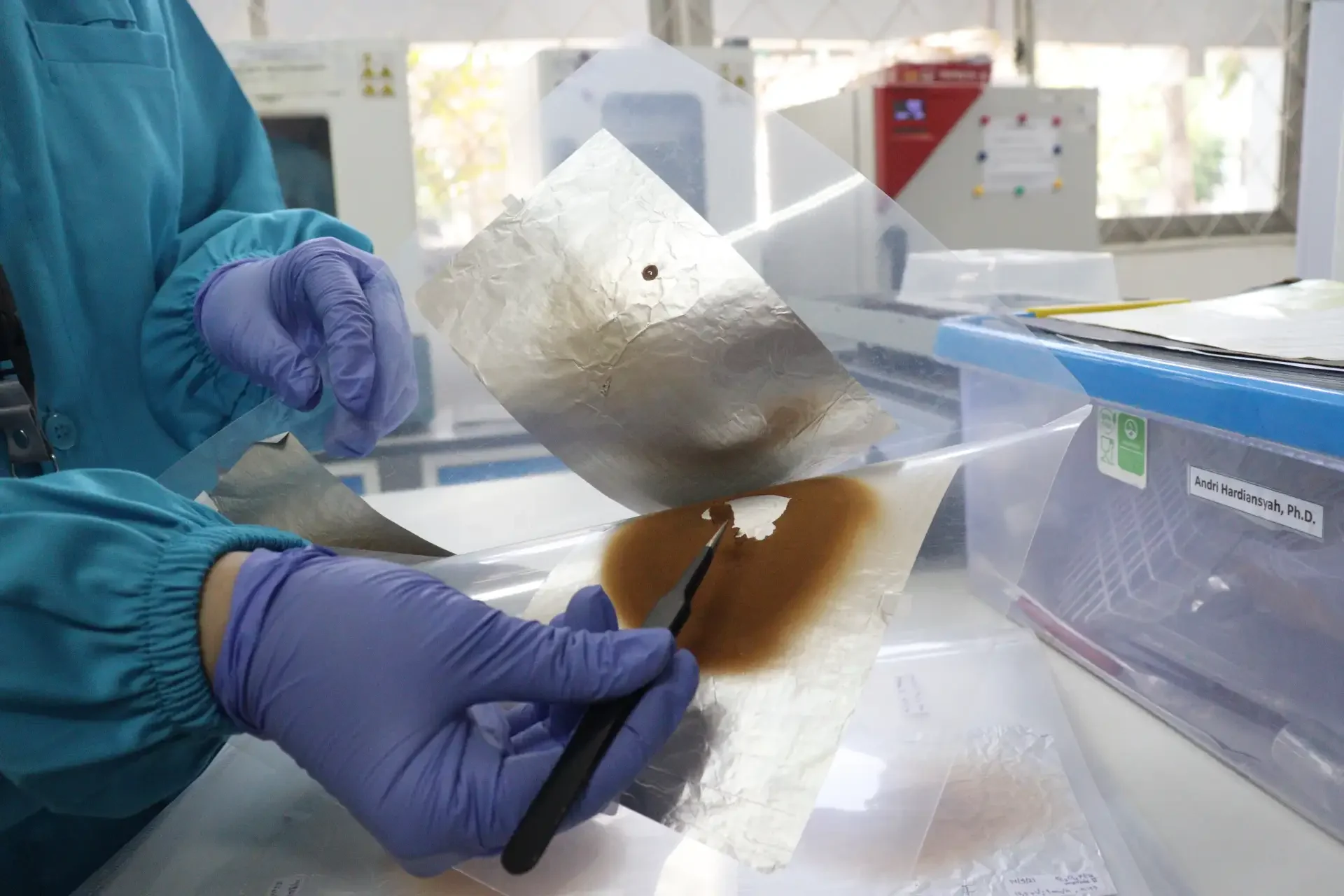
RRI.CO.ID, South Tangerang - The National Research and Innovation Agency (BRIN), through its Nanotechnology System Research Center (PRSN), has partnered with Gadjah Mada University (UGM) to develop advanced, eco-friendly Quartz Crystal Microbalance (QCM) gas sensors utilizing localized natural materials.
The breakthrough addresses the critical industrial and laboratory need for reliable, room-temperature monitoring of hazardous chemical vapors that pose severe environmental and public health risks.
"Fe3O4-based nanofibers applied to QCM sensors show a significantly higher response and are more sensitive in detecting chemical gases," explained a Senior Researcher at PRSN, Witha Berlian Kesuma Putri, during an interview, as quoted on BRIN'sofficial website.
The research team successfully synthesized polyvinyl acetate (PVAc) nanofibers enhanced with magnetite (Fe3O4) nanoparticles derived directly from abundant local iron sand deposits. This structural integration maintains the physical integrity of the nanofibers while ensuring an even distribution of active sensing sites, delivering a precision sensitivity rate of 0.442 Hz·ppm-1 when detecting methylamine gas at room temperature.
Beyond iron sand, the BRIN-UGM collaborative initiative achieved an even larger technical leap by harvesting carbon dots (Cdots) from organic tomato skins to detect formic acid vapors.
"The sensitivity of the sensor with PVAc nanofibers is 0.126 Hz ppm-1, while after the addition of Cdots, the sensor's sensitivity can reach 2.552 Hz ppm-1, resulting in a 20-fold increase," Witha detailed.
The high-performance capability of Fe3O4 combined with Polyvinylidene Fluoride (PVDF) provides a low-cost, highly efficient alternative for standard nanotechnology applications. This green extraction methodology has already secured a formal patent registration under the official tracking number P00202413732.
Looking past chemical detection, PRSN is expanding the application of these tomato-skin-derived nanocomposites into green energy storage and agricultural protection.
"PRSN is also developing research on Fe3O4 nanocomposites with carbon dots. The material is applied to supercapacitors and has the potential to increase energy storage capacity," Witha added, noting the technology's broad versatility.
Furthermore, the team is tailoring these bio-based nanofibers into antibacterial active coatings specifically designed for the food packaging sector.
"Agricultural and food products that we coat with this carbon dots-based nanofiber can extend their shelf life so they do not easily wither and rot," Witha concluded.
While both the antibacterial coatings and the specialized composite synthesis require ongoing structural refinement before hitting commercial production lines, the initial testing phases present an incredibly promising horizon for sustainable, bio-based green technology across everyday consumer sectors. ***
News Recomendation
Loading latest news.....