



BRIN Turns Ginger Waste into Eco-Friendly Bio-Briquettes for Circular Economy
- 10 Jul 2026 14:36 WIB
- Voice of Indonesia
Key Points
- BRIN has developed bio-briquettes from ginger distillation waste, transforming agro-industrial byproducts into renewable solid fuel.
- The research optimizes binder formulations to produce durable, high-performance briquettes that meet solid fuel quality standards.
RRI.CO.ID, South Tangerang - Indonesia’s pursuit of clean energy innovation is finding promise in an unexpected source: ginger waste.
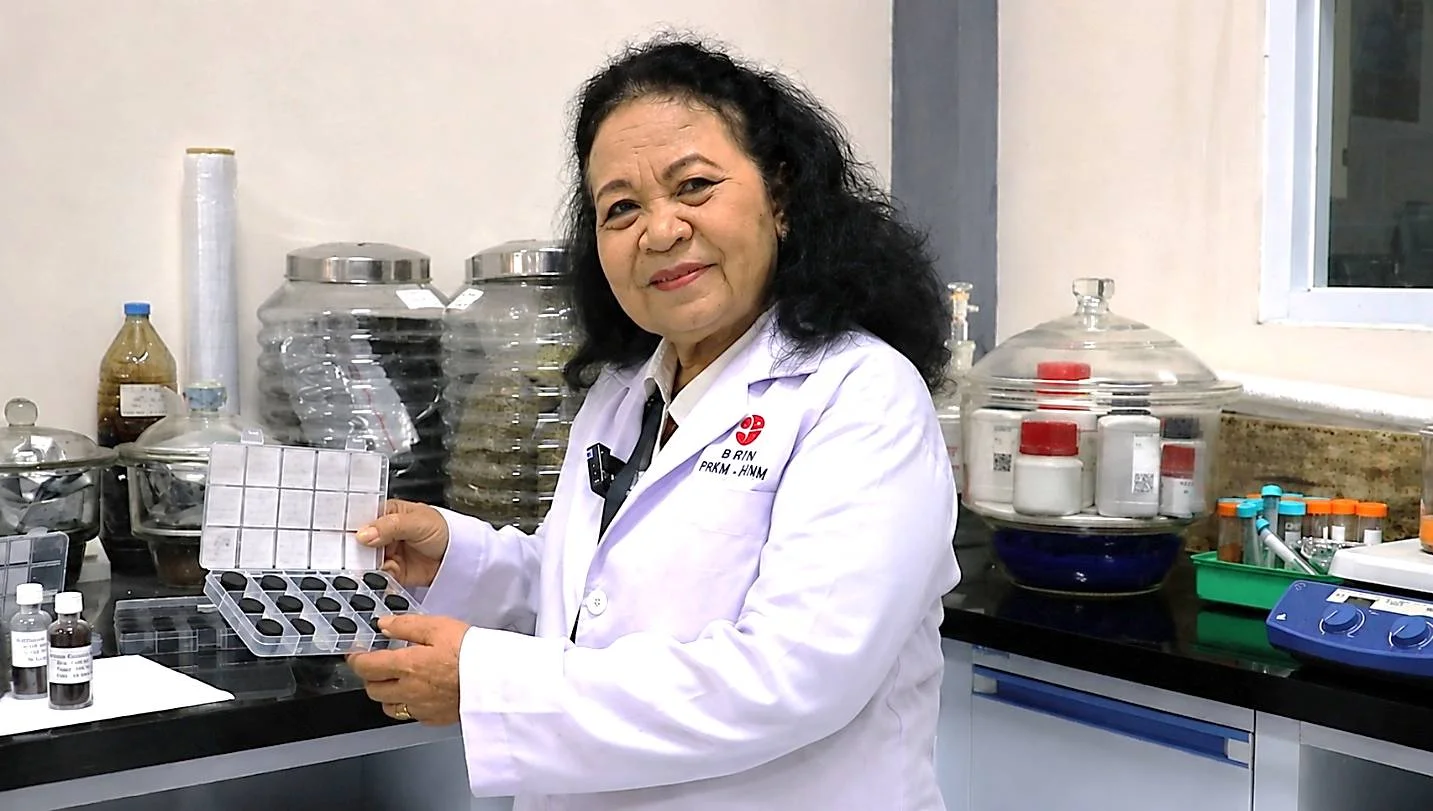
Researchers at the National Research and Innovation Agency (BRIN) have successfully transformed solid residues from the hydrodistillation of ginger rhizomes (Zingiber officinale) into high‑quality biobriquettes, offering a renewable alternative to fossil fuels and advancing the nation’s circular economy agenda.
A professor at BRIN’s Molecular Chemistry Research Center, Anny Sulaswatty, xplained that the growing production of essential oils-- from vetiver, lemongrass, cinnamon, clove, ginger, sandalwood, agarwood, and others--generates large volumes of solid biomass waste.
“These residues can be converted into biobriquettes to support biomass‑based energy alternatives,” she said, as quoted on BRIN's official website, noting that viable feedstock must contain at least 40 percent carbon.
Ginger waste, rich in lignocellulose and with a lignin content of nearly 46 percent, proved particularly suitable.
Through carbonization and pyrolysis, the team produced biochar, which was then mixed with various binders, molded into briquettes, and tested for moisture, ash, volatile matter, fixed carbon, density, compressive strength, burn rate, and calorific value.
The choice of binder significantly influenced the briquettes’ physical and thermal performance.
“Optimizing binder types allows us to produce biobriquettes that meet solid fuel standards, with stable combustion and strong mechanical properties,” Anny explained.
Laboratory characterization confirmed that carbonization enhanced carbon content and porosity, while the right binder improved density and durability.
Beyond technical gains, the research addresses a pressing environmental challenge: the accumulation of agro‑industrial waste from essential oil and herbal industries.
By converting ginger residues into renewable solid fuel, the project reduces pollution risks, creates economic value, and supports sustainable resource use.
The findings are expected to provide a scientific foundation for scaling up biomass waste utilization in industrial centers, herbal producers, and small‑to‑medium enterprises.
“Agricultural waste should no longer be seen as disposable residue, but as a renewable resource with high economic potential,” Anny emphasized, adding that such innovations can strengthen Indonesia’s transition toward sustainable energy systems. ***
News Recomendation
Loading latest news.....