



BRIN Silica Fertilizer Boosts Shallot Yields by Up to 70 percent
- 30 Jun 2026 10:35 WIB
- Voice of Indonesia
Key Points
- BRIN researchers found that silica fertilizer increased the productivity of Sanren true shallot seed (TSS) plants by 30–70 percent while strengthening plant defenses.
- The study also suggests silica fertilizer can reduce heavy metal accumulation in shallot leaves, improving crop quality and food safety.
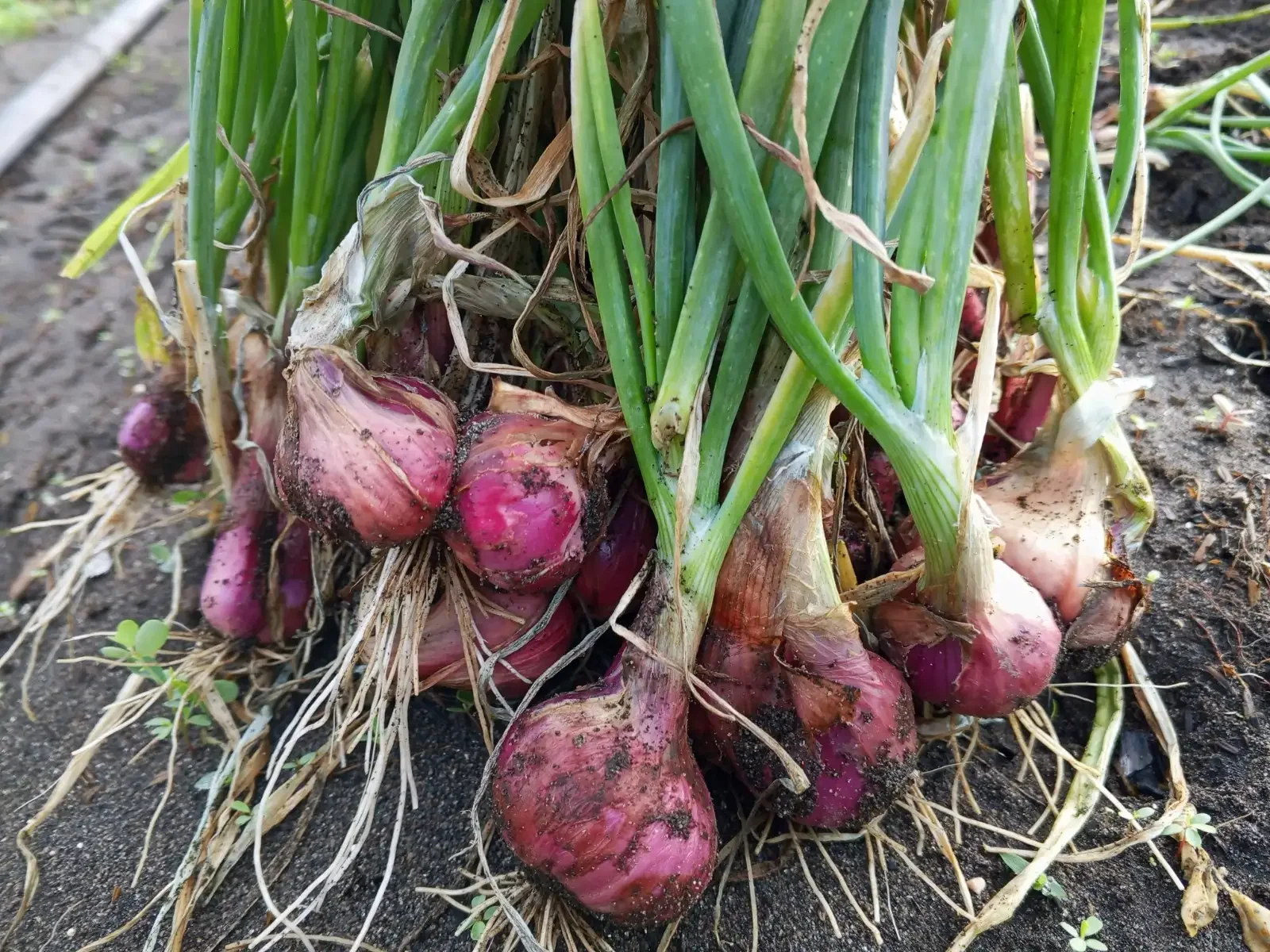
RRI.CO.ID, Yogyakarta - The National Research and Innovation Agency (BRIN) has successfully developed a silica-based fertilization technique that significantly accelerates the growth and productivity of shallots grown from true shallot seed (TSS), offering a scalable solution to nationwide supply chain shortages.
The research directly addresses a major structural bottleneck in Indonesian agriculture. While domestic demand for shallots rises annually, farmers remain heavily dependent on traditional bulb offsets for planting material.
Transitioning to TSS, true botanical seeds, presents massive advantages: it requires a fraction of the initial seed volume, slashes transport logistics, boasts a much longer storage life, and naturally carries higher productivity potential.
However, widespread adoption has stalled because botanical seed crops are highly sensitive to field management, often leading to volatile, inconsistent harvests.
To bridge this gap, researchers from BRIN’s Food Crops Research Center (PRTP) analyzed three prominent TSS shallot varieties, Sanren, Lokananta, and Merdeka, under varying liquid silica (Si) applications of 0, 5, and 10 mL per liter to assess its impact on leaf anatomy, nutrient absorption, and total yield.
"This condition makes plants stronger against pathogen attacks while increasing photosynthesis efficiency," explained lead BRIN researcher Arlyna Budi Pustika, as quoted on BRIN's official website.
The experiments revealed that the Sanren variety responded most aggressively to the mineral treatment. Under a dosage of 10 mL/L, the silica content within the leaves surged by up to 5.39 percent, while the protective leaf cuticle layer thickened by approximately 121 percent compared to untreated control groups.
This enhanced physical defense and optimized photosynthetic capacity translated into massive structural improvements at harvest. The total leaf count per plant more than doubled, while the average number of offshoots increased from 3.38 to 4.94 tillers per plant.
Furthermore, the total number of harvested bulbs jumped significantly from 4.50 to 7.38 per plant, with their average diameter widening from 2.31 centimeters to 2.86 centimeters.
“Overall, the productivity of the Sanren variety increased by around 30–70 percent compared to plants without silica application,” Arlyna concluded.
Beyond raw volume, the introduction of silica offers a vital food safety breakthrough. BRIN researcher Kristamtini noted that high silica absorption directly correlates with a significant reduction of toxic heavy metals, such as lead (Pb), copper (Cu), and cadmium (Cd), accumulating within the leaves.
"This finding opens up the possibility of using silica fertilizer not only to increase productivity but also to support the quality and safety of agricultural products. However, further research on the heavy metal content of tubers is still needed," Kristamtini stated.
The study underscores that variety selection is critical for farmers looking to adopt this technology. While Sanren proved highly responsive to silica, the Merdeka variety showed moderate gains, and Lokananta remained relatively unresponsive.
The tri-partite research initiative, collaboratively executed by BRIN, Universitas Pembangunan Nasional (UPN) Veteran Yogyakarta, and The University of Queensland, has been formally peer-reviewed and published in the international Chilean Journal of Agricultural Research under the title Use of Si-based Fertilizer Significantly Improves the Performance of 'Sanren' Botanical Seed-derived Shallot. ***
News Recomendation
Loading latest news.....