



BRIN Develops Merah Putih Waste-to-Energy Plant for Urban Solutions
- 16 Apr 2026 20:22 WIB
- Voice of Indonesia
Key Points
- BRIN has developed the "PLTSa Merah Putih" in Bantargebang, Bekasi, as a strategic technological blueprint to tackle Indonesia's urban waste crisis.
- The technology is capable of reducing waste volume by up to 80% while simultaneously converting it into renewable energy.
- A key highlight of the PLTSa Merah Putih is its specific design, which is highly adaptive to the unique characteristics of Indonesian waste.
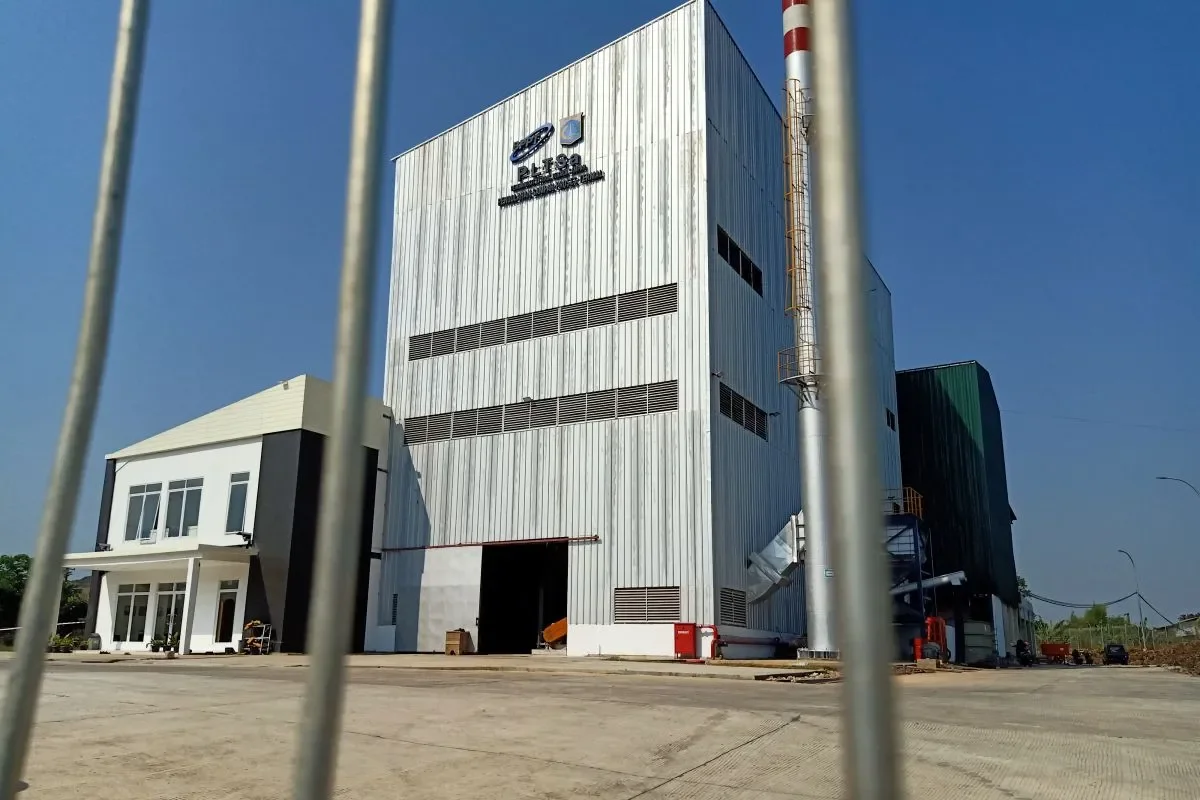
RRI.CO.ID, Jakarta - The National Innovation and Research Agency (BRIN) is pushing the boundaries of sustainable urban solutions with the development of the Merah Putih Waste-to-Energy Power Plant (PLTSa). This homegrown Waste-to-Energy power plant designed to address Indonesia's escalating municipal waste challenges.
Located in Bantargebang, Bekasi, West Java, this strategic project serves as a technological blueprint for converting massive volumes of urban refuse into a viable source of renewable energy. During a discussion in Jakarta on Thursday, April 16, 2026, a researcher at BRIN’s Research Center for Environmental and Clean Technology, Wiharja, detailed how the system transforms city waste into fuel.
The process involves rigorous sorting and drying to enhance caloric value before the waste is incinerated to produce steam, which subsequently drives turbines and generators to produce electricity. To ensure environmental safety, combustion gases are processed through advanced filtration systems that adhere to strict Environment Ministry quality standards.
| Baca juga: BRIN Converts Natural Asphalt Refining Waste |
"This approach is capable of processing and reducing waste volume rapidly and significantly by up to 80 percent while simultaneously converting it into energy," said Wiharja, as quoted by Antara.
Currently operating as a demonstrative pilot project, the PLTSa Merah Putih has a processing capacity of 100 tons per day. Developed in collaboration with the Jakarta Provincial Administration between 2018 and 2022, the facility generates 700 kilowatts (kW) of electricity.
While this output is currently dedicated to internal operations, the researcher highlighted the immense scalability of the technology.
"In a full-scale development, the energy potential from municipal waste in major cities like Jakarta could reach tens of megawatts, depending on the volume and characteristics of the waste," he explained.
A key highlight of the PLTSa Merah Putih is its specific design, which is highly adaptive to the unique characteristics of Indonesian waste, often characterized by high moisture content and a lack of initial sorting. This national research-based technology incorporates integrated pre-treatment systems to boost process efficiency and meet local needs.
Wiharja noted that incineration-based waste-to-energy systems are a proven global standard, utilized extensively by developed nations such as Germany, France, China, Japan, and Singapore.
Beyond waste reduction, the facility is projected to become a cornerstone of Indonesia’s integrated waste management system. By decreasing reliance on landfills and contributing to the renewable energy mix, the technology aligns with broader environmental goals.
Wiharja believes that with the right approach, waste-to-energy plants can play a significant role in supporting the transition toward a circular economy. Furthermore, this innovation is expected to reduce greenhouse gas emissions while simultaneously strengthening national energy security. ***
News Recomendation
Loading latest news.....