



Microalgae, Indonesia’s Hidden Key to Sustainability and Sovereignty
- 03 Apr 2026 12:45 WIB
- Voice of Indonesia
Key Points
- Microalgae, producing half of Earth’s oxygen, are highlighted as Indonesia’s hidden resource for sustainability.
- Eko Agus Suyono’s “Algaepark” proves commercial viability, turning microalgae into food, cosmetics, and biofuel innovations.
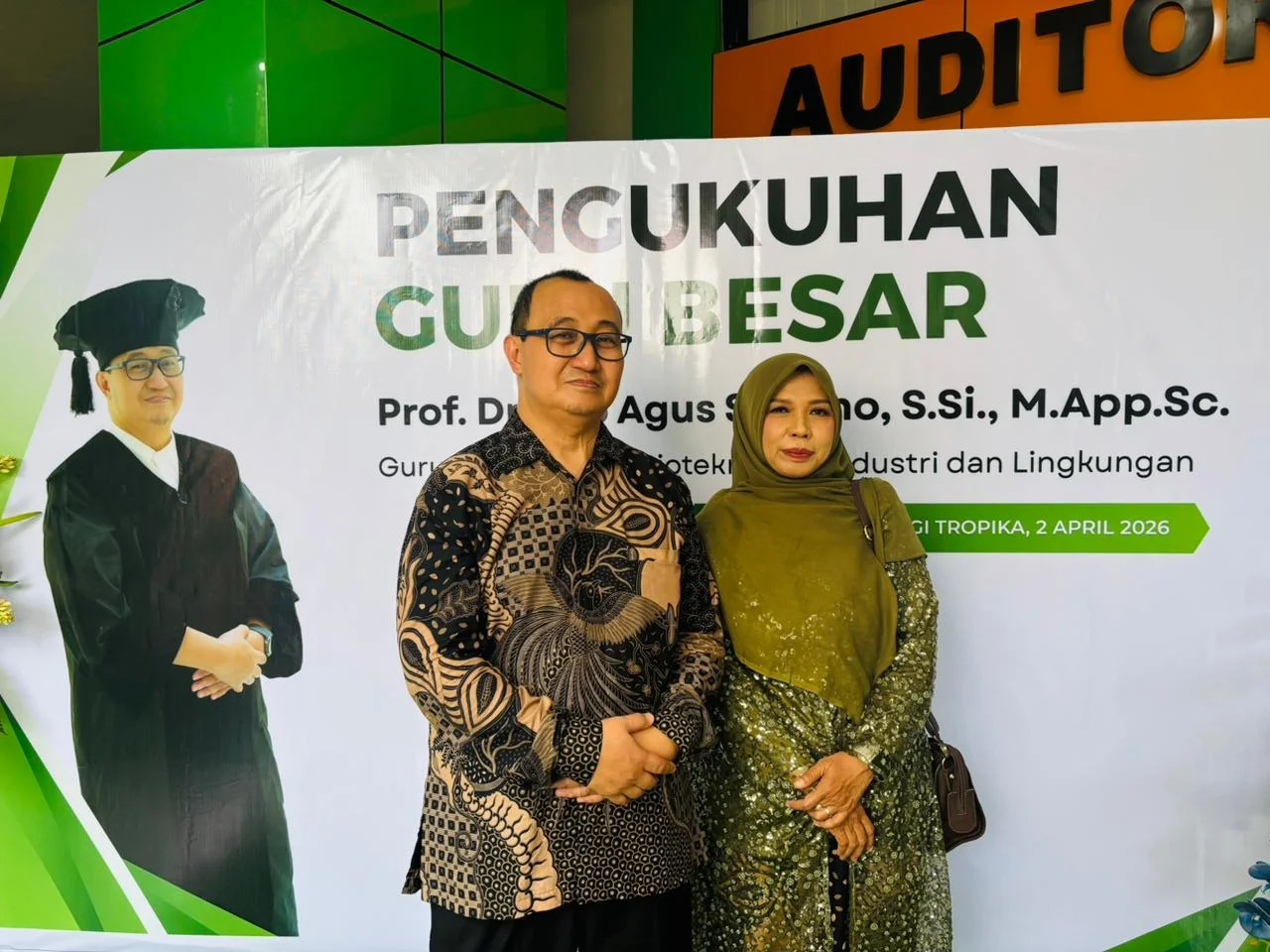
RRI.CO.ID, Yogyakarta - The future of sustainability and national sovereignty may not lie in forests or heavy machinery, but in microscopic organisms invisible to the naked eye. This vision was underscored by Eko Agus Suyono, newly inaugurated professor of industrial and environmental biotechnology at Gadjah Mada University (UGM).
Eko was formally inaugurated on Thursday, April 2, 2026, delivering a speech titled “Microalgae as the Biological Machines of the Future: Integrating CO2 Capture Technology and the Biorefinery Concept for National Independence.”
He described microalgae as the “unsung heroes” of Earth’s survival, producing nearly half of the world’s oxygen and serving as the foundation of the global food chain.
According to Eko, microalgae are highly effective carbon sinks, capable of absorbing atmospheric CO2 at rates far exceeding land plants. Their unique biological traits -- photosynthetic like plants, fermentative like bacteria, and motile like animals -- make them versatile “bio-factories” for producing food supplements, biofuels, and other high-value products.
Eko’s academic journey spans Australia, Sweden, and Finland, but his focus remains on Indonesia, which he calls a global hotspot for microalgal biodiversity. Despite this wealth, he noted that genomic research is dominated by China and Western nations.
“The largest carbon sink is not in forests, but in waters; 70 percent of Earth’s surface is the primary habitat for microalgae,” he explained.
Beyond environmental benefits, Eko highlighted practical applications: reducing stunting through nutrient-rich feeds, treating urban waste, and producing omega-rich poultry products.
His “Algaepark” startup in Klaten, Central Java, already produces four tons of Spirulina powder monthly, alongside specialized products for nutrition and cosmetics.
On energy independence, Eko argued that Indonesia cannot rely indefinitely on fossil fuels. While microalgae-based biofuels are still in early development, he believes they hold long-term promise.
“I am certain that one day, this will be the alternative to replace petroleum,” he said.
Eko credited his wife, Susi Sulistiani, for providing the family support behind his academic breakthroughs. He emphasized that integrating CO2 capture with biorefinery concepts is essential for Indonesia’s self-sufficiency in an era of dwindling resources.
Having already produced biodiesel, bioethanol, and gasoline from microalgae in laboratory settings, Eko is now focused on scaling production economically. He urged Indonesia to reclaim its sovereignty by maximizing its biodiversity.
“We must remain focused. Whether profitable or not yet, it is our duty to optimize our nation’s potential,” he declared.
Eko’s message was one of national pride and collective responsibility. By harnessing the silent power of microalgae, Indonesia could stand at the forefront of a green industrial revolution -- building a sovereign, sustainable, and independent future. ***
News Recomendation
Loading latest news.....