



BRIN Develops Nanocarbon Catalyst from Battery Waste for Hydrogen Production
- 02 Apr 2026 14:33 WIB
- Voice of Indonesia
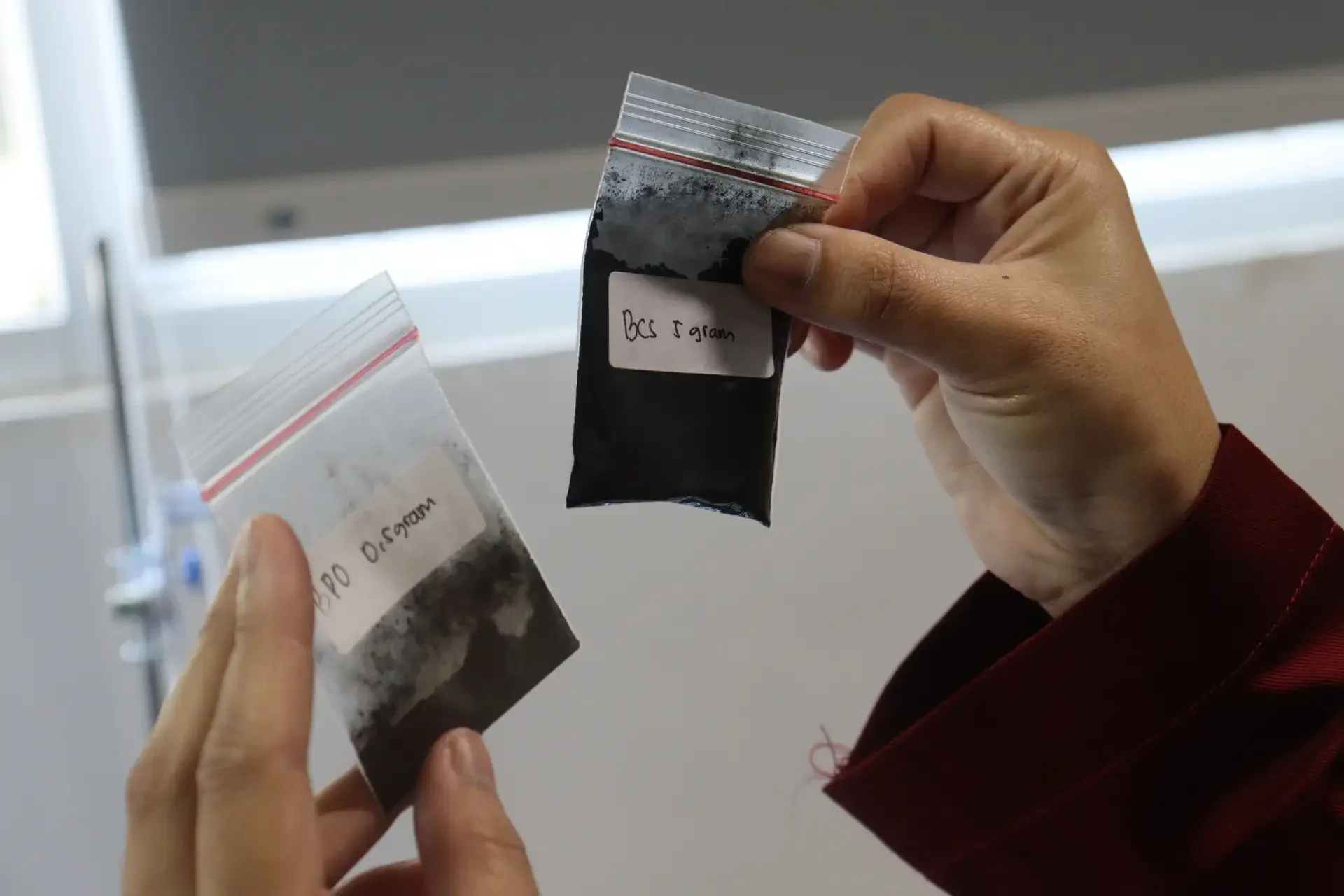
RRI.CO.ID, Tangerang – The National Research and Innovation Agency (BRIN) is developing a nanocarbon catalyst based on battery waste to support hydrogen production as an environmentally friendly energy source. In a statement released by BRIN on Thursday, April 2, 2026, Principal Researcher at the Research Center for Catalysis BRIN, Indri Badria Adilina, said the innovation is part of a green and sustainable chemistry approach that emphasizes efficient chemical processes and the use of sustainable raw materials.
“Battery waste contains carbon-based materials with the potential to be used as catalyst raw materials. Through modification using nanotechnology approaches, this material can be developed into advanced nanostructured materials that are effective for various catalytic reactions,” Indri said.
She explained that the development was driven by the increasing volume of battery waste due to the transition from fossil fuels to electricity, which poses potential environmental risks. In her research, Indri utilizes carbon from the “black mass” of used batteries as a nanocarbon catalyst for the electrocatalytic water splitting process to produce hydrogen gas as an alternative fuel.
According to her, carbon derived from battery waste has advantages after modification, particularly its high electrical conductivity, which enables effective electron transfer in the electrocatalytic process.
In addition, the catalyst has a large surface area and a porous nanostructure, which enhance electron transfer efficiency and accelerate hydrogen production.
“In this electrocatalytic process, water is split into hydrogen and oxygen using a nanocarbon catalyst, producing green hydrogen that can be used as an alternative hydrogen-based biofuel,” she said.
To ensure catalyst performance, the research involved various characterization tests, including analysis of surface area, morphology, structure, as well as pores and nanopores using techniques such as scanning electron microscopy (SEM) and transmission electron microscopy (TEM).
Further analysis was conducted using accelerator facilities such as synchrotron X-ray and neutron scattering to understand the chemical structure at the atomic level.
“Through advanced characterization, we can gain deeper insight into the chemical structure and pores of nanocarbon to obtain effective catalysts without unwanted structural changes,” Indri added.
She noted that more than 90 percent of industries require catalysts across various sectors, including healthcare, textiles, and food. Catalysts function to lower activation energy in chemical processes, thereby improving efficiency.
The research is a result of collaboration with various parties, including Universitas Gadjah Mada (UGM) and the Research Center for Nanotechnology Systems BRIN, as well as international partners from the United Kingdom and Thailand through the use of large-scale research facilities.
Indri emphasized the importance of collaboration between researchers and industry to realize a circular economy and promote the development of green technology in Indonesia.
“Industries certainly seek cost-effective catalytic chemical processes. This can be achieved by producing catalysts with long lifetimes and high efficiency, which will reduce production costs,” she said.
Going forward, BRIN aims to bridge cooperation with industry through the development of advanced technologies, including accelerator technology, to improve efficiency and the competitiveness of national industries. She expressed hope that such collaboration would accelerate the transformation toward a more modern, efficient, and sustainable industry.
News Recomendation
Loading latest news.....