



BRIN Revamps Nuclear Facilities to Boost Medical Independence
- 06 Feb 2026 11:42 WIB
- Voice of Indonesia
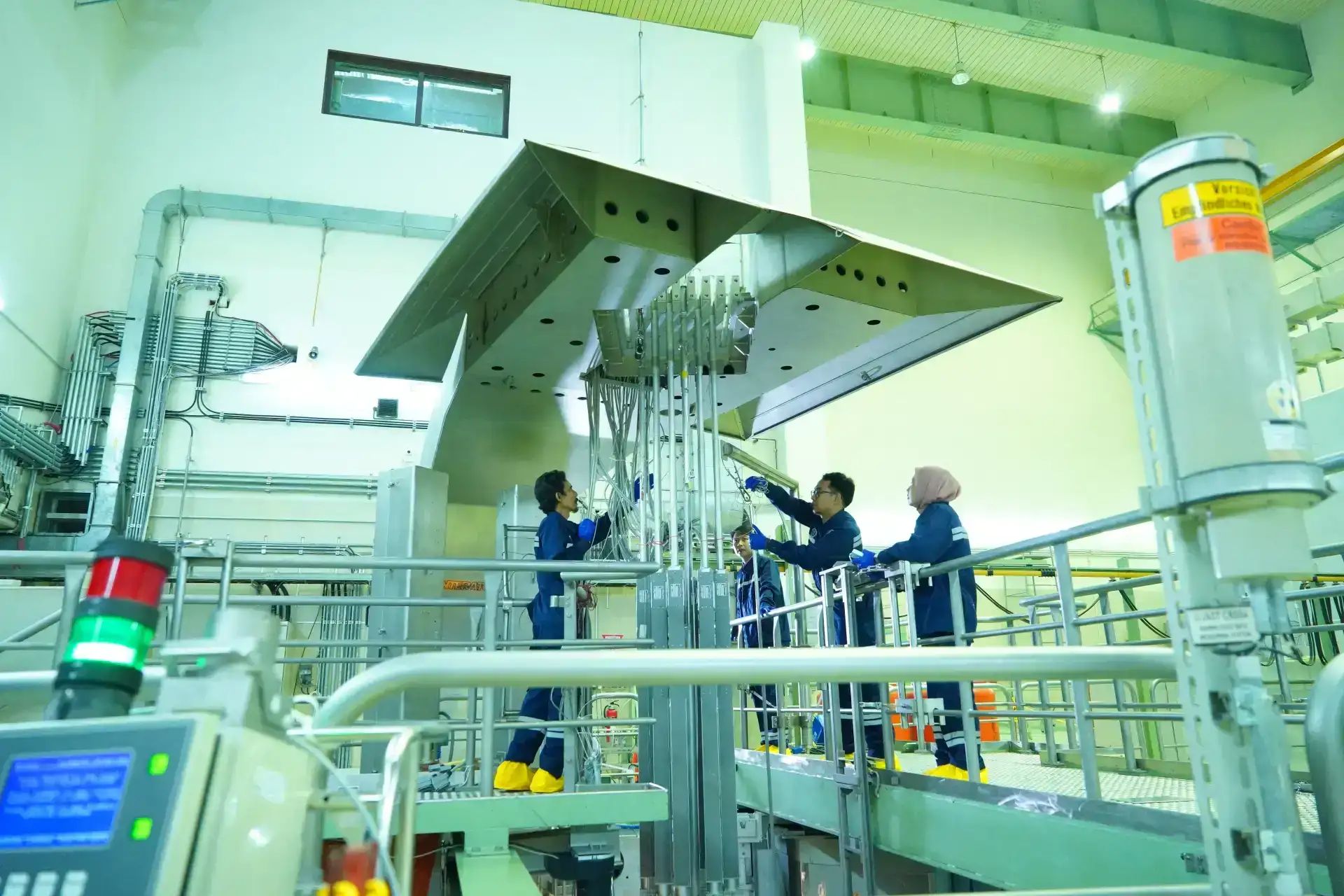
RRI.CO.ID, Jakarta - The National Research and Innovation Agency (BRIN) has embarked on a major revitalization of its nuclear infrastructure to strengthen Indonesia’s independence in producing radioisotopes and radiopharmaceuticals.
The initiative was announced by Aidhanis Kusuma Praja of BRIN’s Directorate of Nuclear Facility Management during the “BRIN Goes to Industry” talk show at the Soemitro Djojohadikusumo Auditorium, B.J. Habibie Building, Jakarta, on Thursday, February 6, 2026.
BRIN is investing more than IDR 500 billion to modernize four key installations that underpin the national nuclear ecosystem. These include the 30 MW G.A. Siwabessy Multipurpose Reactor (GAS), the Radioisotope and Radiopharmaceutical Technology Installation that applies Good Manufacturing Practice (GMP) standards, the Nuclear Fuel Fabrication Installation, and the Radioactive Waste Management Facility.
Aidhanis expressed hope that, once these facilities are revitalized, Indonesia will be able to fully produce radioisotopes and radiopharmaceuticals, achieving national self-sufficiency.
He recalled that Indonesia once held a prominent position as an exporter of radioisotopes and radiopharmaceuticals. With the revitalization, BRIN aims to restore optimal production capacity.
Aidhanis emphasized that the challenge today is no longer research, but ensuring that research outputs reach the public through collaboration with industry.
He noted that BRIN’s nuclear complex at the B.J. Habibie Science and Technology Park (KST) in Serpong already has an integrated upstream-to-downstream ecosystem, spanning nuclear fuel fabrication, irradiation reactors, production facilities, and waste management. In addition to Serpong, BRIN operates nuclear facilities in Yogyakarta and Bandung.
Aidhanis underlined that radioisotopes and radiopharmaceuticals are strategic national assets, but they will not deliver benefits without strong downstreaming. “BRIN is here as an enabler for downstreaming. We want to help industry utilize BRIN’s facilities and human resources so that radioisotope and radiopharmaceutical products can reach the public,” he said, as quoted on BRIN's official website.
He pointed to commercial opportunities such as the cold kit etambutol, which has a production cost of about IDR 200,000 but a market value of up to IDR 1 million. With high market demand, such products present significant potential for the industry.
BRIN is also creating opportunities to develop other products. In the production scheme, the research reactor in Serpong is likened to a “stove” for irradiation, while the Radioisotope and Radiopharmaceutical Technology Installation serves as the “kitchen” where products are processed before being distributed to hospitals and the public.
Currently, BRIN produces around 50 curies of radiopharmaceuticals per month, equivalent to about 40 percent of national demand for certain types.
Aidhanis warned that failing to maximize this capacity could lead to substantial economic losses. He estimated that Indonesia could lose up to IDR 160 trillion in outbound medical tourism, as transportation, accommodation, and healthcare costs that would otherwise be absorbed domestically are incurred abroad.
To support the industry, BRIN is preparing technical assistance, including regulatory guidance, cost-recovery schemes, and safety and technical support.
The agency is also creating opportunities to test radiation portal monitors, which are in high demand in Indonesia. “We are ready with human resources and facilities. The ultimate goal is one: to ensure nuclear technology provides tangible benefits for the Indonesian people,” Aidhanis concluded.
Through investment and collaboration with industry, BRIN expects the downstreaming of radioisotopes and radiopharmaceuticals to strengthen national health independence while driving economic growth based on science and technology. ***
News Recomendation
Loading latest news.....