



Indonesian Researcher Discovers Long-Lost Flying Frog in Sulawesi
- 11 Jun 2025 16:39 WIB
- Voice of Indonesia
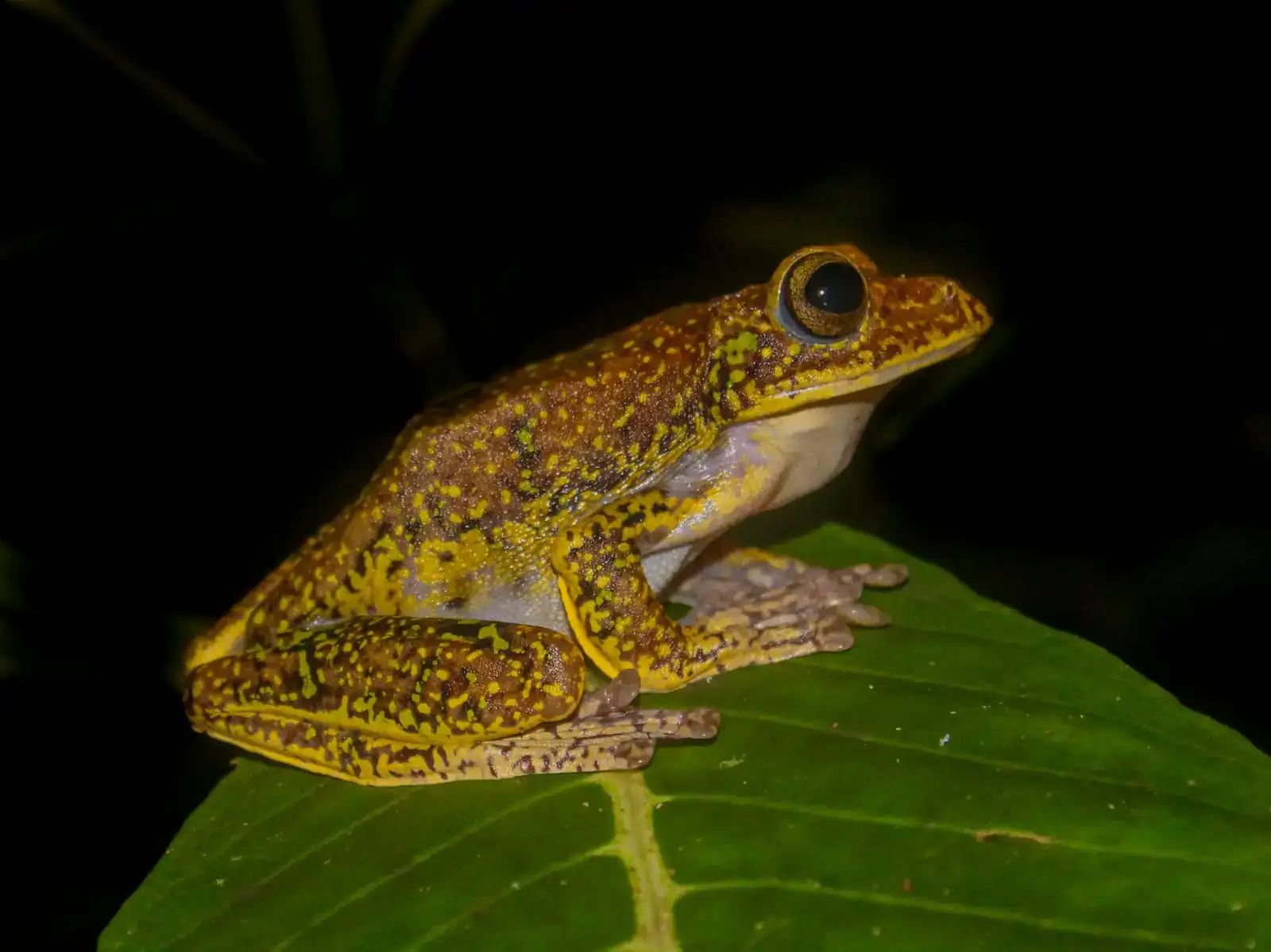
KBRN, Jakarta: After over a century, Indonesian researcher Alamsyah Elang N.H. rediscovered a flying frog species from Sulawesi, later classified as Rhacophorus rhyssocephalus.
This rare amphibian, found during an expedition in August 2023, is notable for its fully webbed fingers and toes, which enable it to glide while leaping—a characteristic that earned it the name "flying frog."
British naturalist Alfred Russel Wallace first introduced the term in his book The Malay Archipelago.
Alamsyah explained that frogs from the Rhacophorus genus have historically been found across India, China, Japan, Malaysia, Indonesia, and the Philippines.
However, in Indonesia, Sulawesi marks the easternmost extent of their known habitat.
"Currently, five species of Rhacophorus have been identified in Sulawesi: Rhacophorus edentulus, Rhacophorus monticola, Rhacophorus georgii, Rhacophorus rhyssocephalus, and Rhacophorus boedii," he said in a written statement on Wednesday, June 11, 2025, as quoted by brin.go.id.
Over the course of a 20-year expedition, researchers classified four distinct groups of flying frogs based on patterns and colors: Brown Batik, Black Web, Green, and White Cheek. Each group possessed unique physical traits.
Sulawesi’s Unique Biodiversity
BRIN's Evolutionary Biosystematics Research Center Head Arif Nurkanto highlighted Sulawesi's geological origins, which were shaped by the convergence of three tectonic plates: Asia, Indo-Australia, and the Pacific.
"From a biogeographical perspective, Sulawesi has never been fully connected to either Australia or Asia, leading to the evolution of unique endemic species," said Arif.
The discovery underscores Sulawesi's status as one of Indonesia's most biodiverse regions. Researchers suspect many amphibian species here remain undocumented, hinting at the island's untapped biological richness.
Further research is needed to unravel the evolutionary history and ecological interactions of Sulawesi's amphibians.
"This is just the beginning of exploration that will open up broader insights into the herpetofauna of Sulawesi and Indonesia," Arif concluded.
Herpetofauna—a classification that includes amphibians and reptiles—play a critical role in maintaining ecosystem balance and serve as vital indicators of environmental health.
These species are highly diverse in Indonesia and are often utilized in traditional medicine and cultural practices. ***
News Recomendation
Loading latest news.....