



Southeast Asia Unites to Strengthen Youth and Sports Cooperation
- 06 Mei 2026 16:41 WIB
- Voice of Indonesia
Key Points
- Indonesia initiated SEAMMYS 2026 in Bali, uniting Southeast Asian ministers to strengthen youth and sports cooperation.
- The meeting produced the Bali Declaration, affirming sports as a driver of peace, unity, and sustainable development.
- The declaration focuses on youth empowerment through innovation, digital engagement, and strategic partnerships.
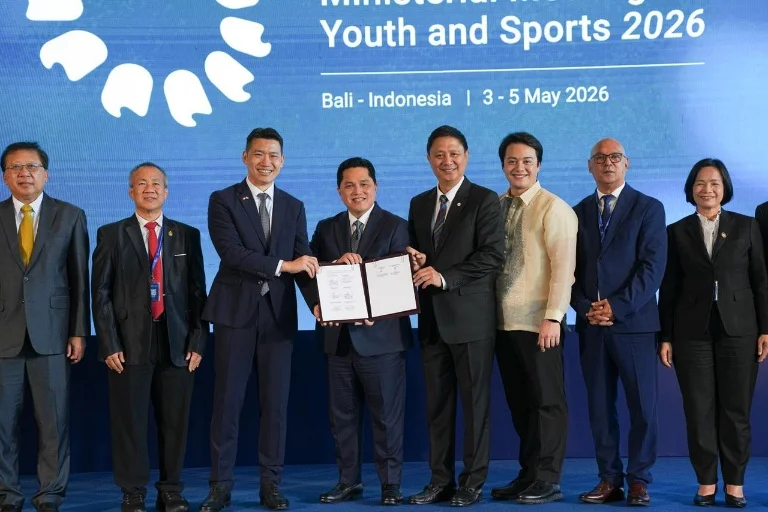
RRI.CO.ID, Jakarta - Indonesia’s initiative to convene Southeast Asia’s youth and sports leaders in Bali has culminated in the adoption of the Bali Declaration, a landmark agreement underscoring regional collaboration in youth empowerment and sports development.
The high‑level gathering, formally titled the SouthEast Asia Ministerial Meeting on Youth and Sports (SEAMMYS) 2026, was held on May 3-5 in Bali.
Organized by the Indonesian Ministry of Youth and Sports, the meeting brought together ministers and senior officials responsible for youth and sports from across Southeast Asia.
Indonesia played a dual role - not only as host but also as the driving force behind the initiative, facilitating open and constructive dialogue among regional counterparts.
Minister of Youth and Sports Erick Thohir highlighted the strategic importance of youth and sports in addressing global challenges, strengthening long‑term social and economic resilience, and enhancing each nation’s international engagement.
“Southeast Asian countries are facing shared challenges in building competitive sports systems, sustainable sports industries, and resilient youth communities amid rapid social, technological, and global change,” Minister Erick said as quoted on the ministry's official website on Wednesday, May 6, 2026.
“This meeting aims to reinforce cooperation and collective learning through collaboration, exchange of experiences, and policy dialogue to advance youth development and sports governance in line with national priorities,” he added.
Delegates included Brunei Darussalam’s Minister of Culture, Youth, and Sports Dato Nazmi Mohamad; Philippine Sports Minister Jhon Patrick Gregorio and National Youth Commission Chair Joseph Francisco Jeff Ortega; Singapore’s Minister for Culture, Community, and Youth David Neo; and Timor‑Leste’s Minister of Youth, Sports, Arts, and Culture Nelyo Isaac Sarmento.
Representatives from Cambodia, Malaysia, Myanmar, Laos, Thailand, and Vietnam also participated.
Comprising of six key commitments, the Bali Declaration adopted at the SEAMMYS 2026 reflects a shared vision among Southeast Asian nations to strengthen cooperation in youth and sports.
The declaration affirms that sports play a strategic role in fostering peace, unity, sustainable development, and healthy societies, while also enhancing the region’s visibility on the international stage.
The declaration underscores the importance of building stronger high‑performance sports systems through improved athlete development, coaching, sports science, and talent identification.
In this context, regional multi‑sport events such as the SEA Games were recognized as vital platforms for nurturing athletes and preparing them for higher levels of international competition, while respecting national priorities and existing frameworks.
Southeast Asian countries also agreed to explore collaborative approaches and share information on hosting major international sporting events, with the aim of boosting regional capacity and cooperation.
At the same time, the declaration reaffirmed the value of broad participation in sports as a foundation for talent development, public health, and the promotion of tolerance, respect, social inclusion, peace, and deeper integration among societies in the region.
Youth empowerment emerged as a central theme, with ministers emphasizing the need to strengthen partnerships with stakeholders to enable young people to contribute to peace, inclusivity, shared responsibility, and sustainable development.
The declaration further recognized youth as key drivers of resilience and innovation in Southeast Asia. Member states expressed a collective intention to empower young people - including vulnerable groups - through sports and policies that encourage critical thinking and responsible engagement in the digital era.
By doing so, the region aims to ensure that its youth become agents of their own well‑being, equipped with strong character and clear purpose to thrive in a dynamic, technology‑driven world. ***
News Recomendation
Loading latest news.....