



MUI Highlights Sharia Economy Paradox: IDR 2,000 Trillion Potential
- 27 Jul 2026 13:30 WIB
- Voice of Indonesia
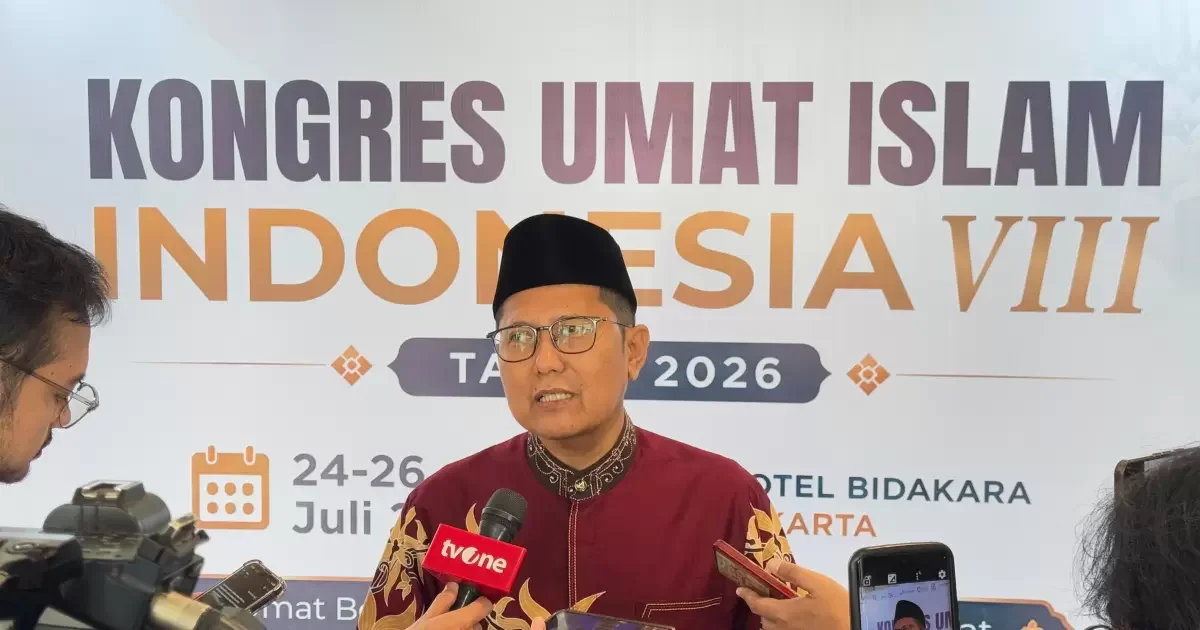
RRI.CO.ID, Jakarta - The Indonesian Ulema Council (MUI) has stated that the enormous potential of Indonesia's Islamic economy has yet to be matched by its level of utilization among the public. Despite being home to the world's largest Muslim population, Indonesia's Islamic financial inclusion rate remains only around 11–12 percent, while the market share of Islamic banking stands at approximately 7 percent.
Vice Chairman of MUI and Chairman of the Executive Board of the National Sharia Council of the Indonesian Ulema Council (DSN-MUI), KH M. Cholil Nafis, made the statement after attending a discussion on strengthening and expanding the Islamic economy and finance sector with Bank Indonesia (BI) and the Financial Services Authority (OJK). The discussion was held as part of the 8th Indonesian Islamic Congress (KUII VIII) in Jakarta on Sunday, July 26, 2026.
He also said this situation presents a paradox because Indonesia's Islamic investment potential is estimated to exceed Rp2,000 trillion, in addition to the country's substantial Islamic social finance assets, including zakat, infaq (voluntary charitable donations), and waqf (Islamic endowments). However, these resources have yet to be managed in an integrated manner.
"We have tremendous potential, but it has not been properly consolidated. Therefore, we need concrete measures to unite the strengths of the Islamic economy and finance sector so that their benefits can be more widely enjoyed by society," he said, as quoted by mui.or.id.
He underscored that the low level of Islamic financial inclusion remains a shared challenge. Although public literacy and awareness of the Islamic economy have improved, the number of people who actually use Islamic financial services remains significantly lower.
KH Cholil also dismissed the perception that Islamic financial products are more expensive than those offered by conventional financial institutions. According to him, differences in financing costs are primarily determined by the scale of financial institutions rather than whether they operate under Islamic or conventional principles.
"The issue is not whether an institution is Sharia-compliant or conventional, but rather the size of its business. The larger the financial institution, the lower its cost of funds, allowing it to offer more competitive financing," he conveyed.
As part of the proposed solution, the 8th Indonesian Islamic Congress (KUII VIII) has called for the consolidation of the Islamic economic ecosystem through the establishment of Danantara Syariah.
The proposed institution is expected to manage Islamic investments while also consolidating Islamic social finance assets—including zakat, infaq, and waqf—into a single integrated ecosystem.
The proposal will be discussed by the Sharia Economy and Finance Commission of the 8th Indonesian Islamic Congress. It is expected to become part of the Indonesian Islamic Congress Charter as a recommendation to the government to strengthen Indonesia's national Islamic economic and financial ecosystem.
News Recomendation
Loading latest news.....