



Govt Urges Stronger Spatial Planning to Safeguard Bali’s Tourism
- 20 Jul 2026 13:26 WIB
- Voice of Indonesia
Key Points
- Bali’s four development priorities are spatial planning, tourism improvement, connectivity, and environmental quality.
- Tourism in Bali brings both benefits and challenges, affecting the natural environment, local communities, and cultural traditions.
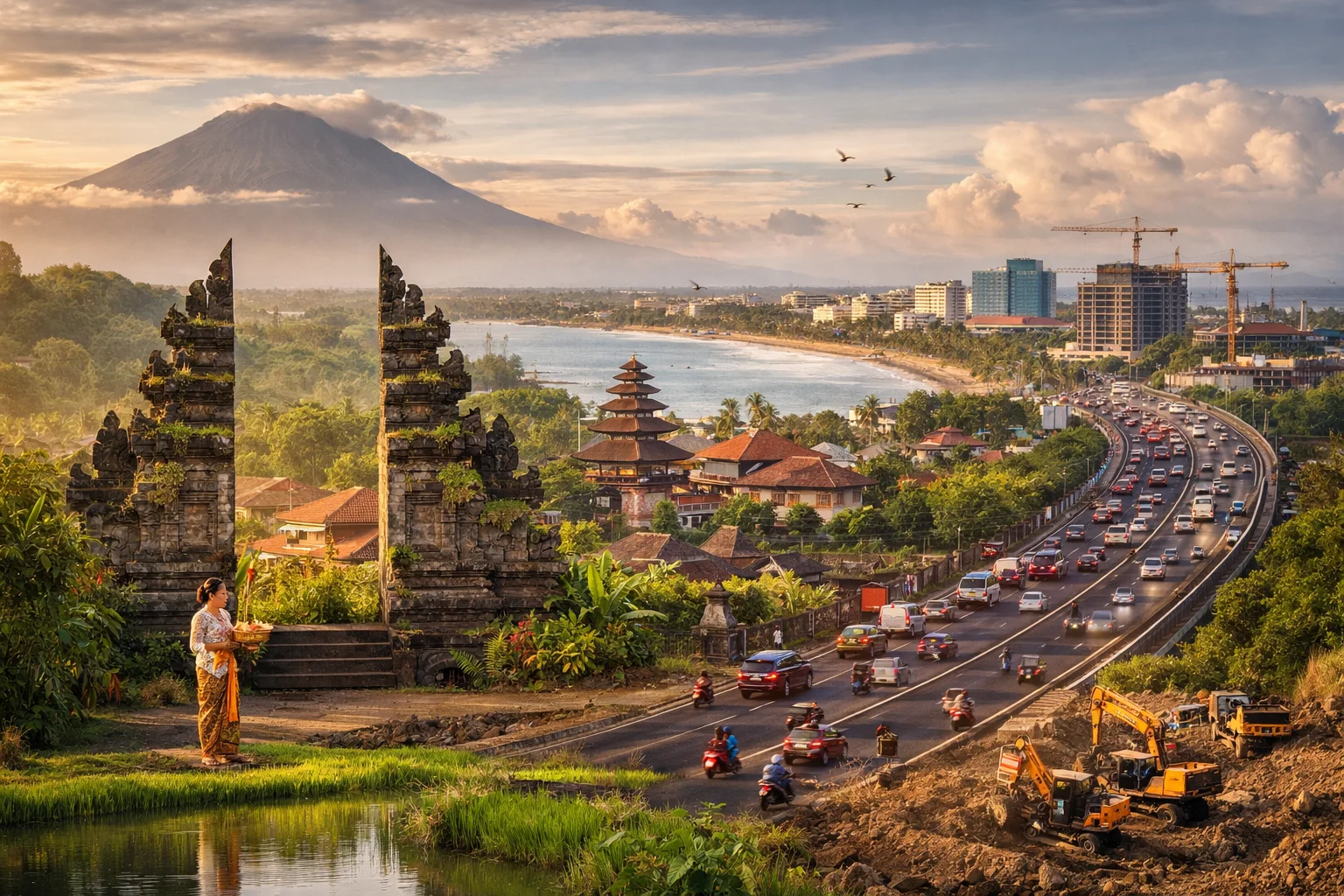
RRI.CO.ID, Denpasar - The Indonesian government has raised concerns over Bali’s increasingly unmanaged spatial planning, warning that unchecked development could worsen traffic congestion, land conversion, and environmental degradation and threaten the sustainability of the tourism sector. More organized spatial planning is seen as the primary solution.
“Spatial planning should be a top priority in development. Uncontrolled growth will trigger increasingly complex problems,” Coordinating Minister for Infrastructure and Regional Development, Agus Harimurti Yudhoyono (AHY), said at the Bali Regional Development Coordination Meeting in Denpasar on Monday, July 20, 2026, as quoted by Antara.
He noted that spatial planning is one of Bali’s four main development priorities, alongside tourism, connectivity, and environmental quality.
Minister AHY emphasized that tourism remains Bali's most vital sector, contributing IDR 176 trillion to Indonesia's total tourism foreign exchange earnings of IDR 319.9 trillion.
In 2025, 45.8 percent of foreign tourists entering Indonesia passed through Bali. The challenge, he said, is sustaining growth without exploiting the natural environment.
Tourism destination development must be continuous but not concentrated in just one or two areas, Minister AHY added, as this would strain environmental carrying capacity and increase infrastructure demands.
The government also highlighted worsening traffic congestion, particularly in South Bali, underscoring the need for better transportation networks and connectivity. Environmental degradation caused by waste, water pollution, coastal erosion, and shrinking productive land must also be addressed urgently.
Bali Governor Wayan Koster said the four focus areas reflect the provincial administration’s current needs in regional development, infrastructure acceleration, and inter-regional connectivity. While tourism brings many benefits, he acknowledged, it also creates challenges for nature, society, and culture.
“The most pressing issues are land conversion, waste, ecosystem disruption, water quality, and traffic congestion,” Koster said.
He added that Bali’s infrastructure and public transportation capacity remain inadequate, leading to widespread congestion and the erosion of authentic Balinese culture.
The provincial administration is working closely with national institutions, including the Coordinating Ministry for Infrastructure, to support development.
“We have compiled Bali’s infrastructure needs to improve connectivity between regencies. Bali has many tourist attractions, but infrastructure is lacking across regions. Connectivity between Denpasar and Badung, Klungkung, and Gianyar must also be prioritized,” Koster said. ***
News Recomendation
Loading latest news.....