



Vice President Gibran Highlights Cassava’s Role in Food Security
- 16 Jul 2026 22:03 WIB
- Voice of Indonesia
Key Points
- Government Commits to Cassava Development by adjusting the Highest Retail Price (HET) and providing agricultural machinery.
- Cassava Supports Food Security with strong potential as both a staple crop and an industrial raw material.
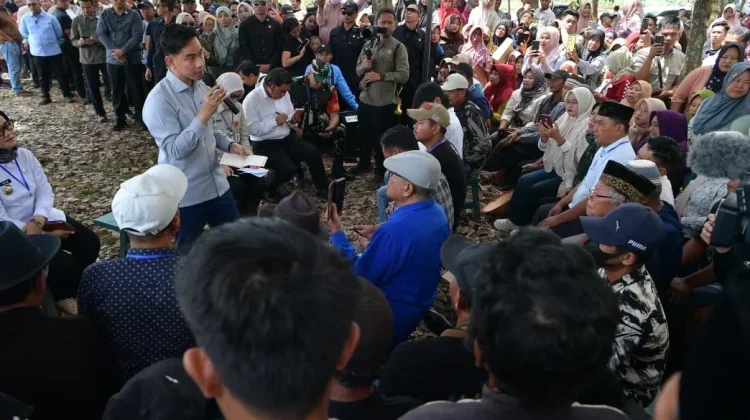
RRI.CO.ID, Lampung - Vice President Gibran Rakabuming has emphasized strengthening cassava as a key commodity in Indonesia’s food self‑sufficiency agenda. After progress in rice production, the government is expanding its focus to other strategic crops to bolster national food security.
“The President’s orders on food self‑sufficiency are clear. Fertilizer, irrigation, post‑harvest processing, and pricing have all produced significant results in rice farming,” VP Gibran said during a visit to a cassava farming center in Muara Jaya Village, East Lampung Regency, on Wednesday, July 15, 2026.
He met with representatives of the Farmers’ Group Association (Gapoktan) to discuss challenges in rice and cassava cultivation.
According to him, success in rice must be accompanied by strengthening other food commodities, including cassava, which has strong potential as both a food security crop and an industrial raw material. “Today I came to Lampung specifically to check on cassava, because this commodity still faces many dynamics and challenges,” he said.
Farmers raised several issues during the dialogue, including the need to adjust the Highest Retail Price (HET) for cassava, access to agricultural tools and machinery, improved plantation roads to ease harvest distribution, and stronger cooperative capital to secure fertilizer at affordable prices.
In response, VP Gibran underscored the government’s commitment to policies that support cassava development while maintaining price stability at the farm level. One measure under review is strengthening regulations to restrict imports of cassava and its derivatives.
“To maintain price stability, I believe this relates to regulations. Restrictions on imports of cassava and its derivatives,” he said.
He also pledged to immediately discuss farmer input with relevant ministries and institutions. This includes the HET for cassava, the standardization of measuring instruments, and the determination of starch content, which directly affects cassava’s selling price to tapioca factories.
“Once those three things are in place, I’m sure prices will stabilize, no longer fluctuate, and welfare will improve,” he said.
Farmers welcomed the government’s attention to cassava and expressed hope that upcoming policies will strengthen cassava’s role as a pillar of food self‑sufficiency while improving farmer welfare. “It is certainly a source of pride for us to further improve agricultural cultivation,” said Joko, a Gapoktan representative. (Misni Parjiati)
News Recomendation
Loading latest news.....