



Government Pushes Stronger Regional Autonomy as the Key to Fiscal Independence
- 03 Jul 2026 15:49 WIB
- Voice of Indonesia
RRI.CO.ID, Jakarta - The Association of Indonesian Regency Governments (Apkasi) has stated that strengthening adaptive regional autonomy is essential to enhancing local economic development and achieving fiscal independence for regencies.
Apkasi Chairman and Lahat Regent, Bursah Zarnubi, said that stronger regional fiscal capacity is needed to enable regency governments to implement strategic programs tailored to local needs. "Therefore, revisions to Law No. 23 of 2014 on Regional Government are necessary to ensure that decentralization policies become more adaptive to the unique characteristics of each region," Bursah said in an official statement on Friday, July 3, 2026, as quoted by infopublik.id.
According to Bursah, stronger fiscal capacity is crucial to supporting food security programs, basic infrastructure development, poverty alleviation, and the empowerment of micro, small, and medium-enterprises (MSMEs).
He added that greater room for innovation would accelerate the development of economic policies aligned with local potential while enhancing regional competitiveness. Bursah also affirmed that the association, along with the Regional Autonomy Implementation Monitoring Committee (KPPOD), has compiled a set of recommendations based on discussions with regency governments across Indonesia.
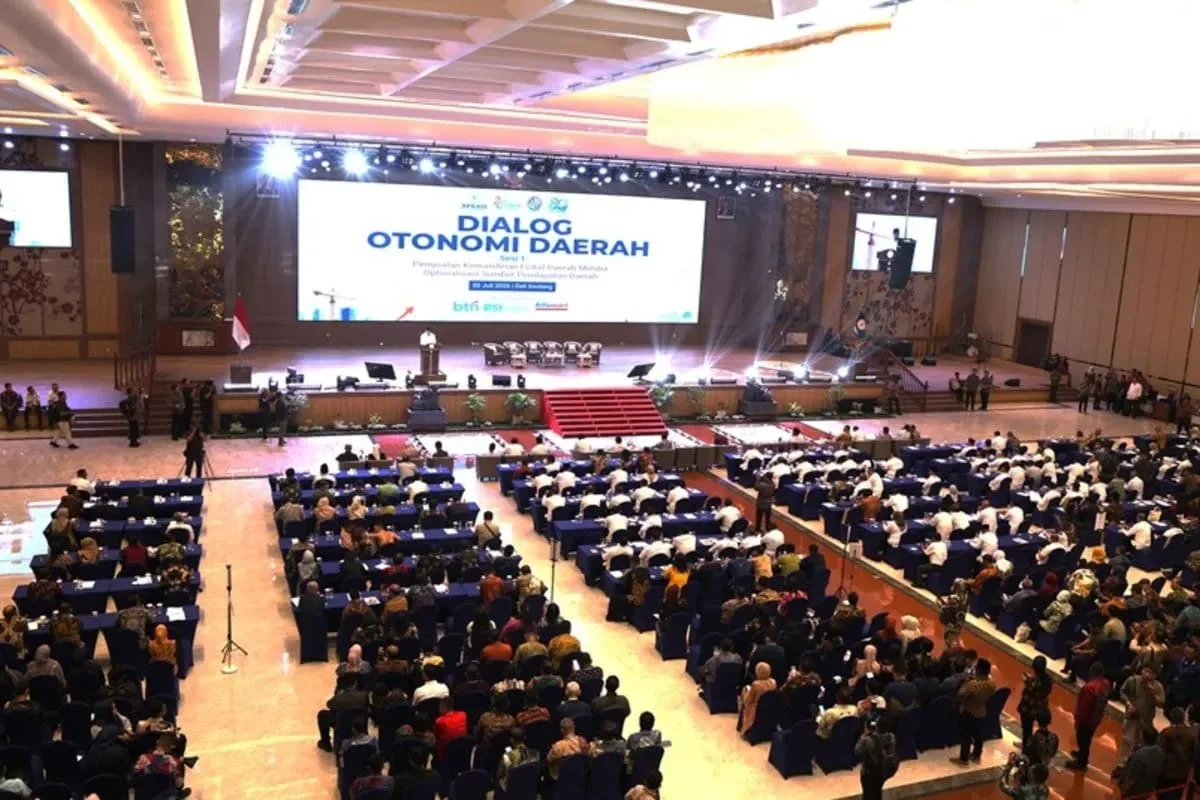
These recommendations are expected to serve as input for the government and the House of Representatives (DPR) in refining the division of authority between the central and regional governments. Earlier, similar views were presented during the Regional Autonomy Dialogue Forum organized by Apkasi in Deli Serdang Regency, North Sumatra, on Thursday, July 2, as part of association’s 26th anniversary celebrations.
The forum discussed expanding opportunities for regional innovation, optimizing locally generated revenue (PAD), and improving regulations to provide regency governments with greater flexibility in promoting economic growth.
Meanwhile, Vice Minister of Home Affairs, Bima Arya Sugiarto, said that regional governments must become increasingly innovative amid tighter Regional Financial Transfers (TKD). "Every leader faces challenges, and every challenge requires leadership. Today, regional leaders are confronted with tighter Regional Financial Transfers, making innovation in development management more important than ever," Bima said.
He noted that regional leaders need to create new sources of economic growth to ensure development continues despite increasingly limited fiscal space. According to the Vice Minister, President Prabowo Subianto has identified two key prerequisites for Indonesia to become a developed country: escaping the middle-income trap and maximizing the country's demographic dividend.
To achieve these goals, regional governments are expected to boost local economies by attracting greater investment, developing regional potential, and optimizing local government revenue.
News Recomendation
Loading latest news.....