



Forestry Ministry Pushes Integrity in Anti-Corruption Drive
- 15 Jul 2026 22:09 WIB
- Voice of Indonesia
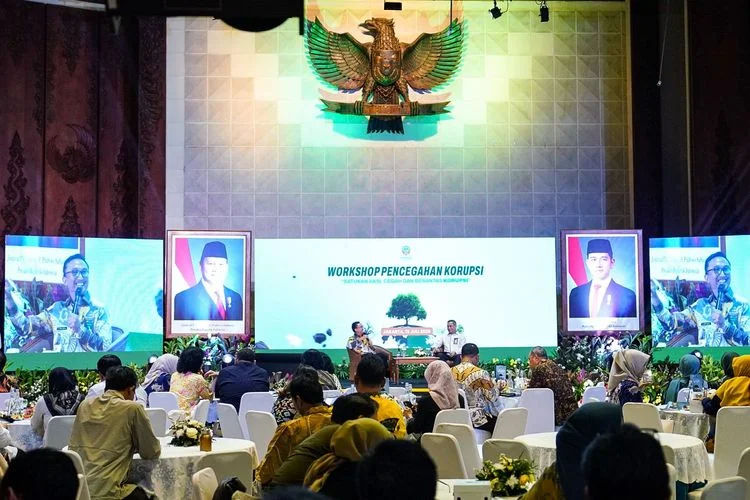
RRI.CO.ID, Jakarta - Deputy Minister of Forestry, Rohmat Marzuki, emphasized that integrity must be the character of every government official to achieve clean, transparent, and accountable forest governance.
Rohmat emphasized this during the opening of the 2026 Anti-Corruption Prevention Workshop themed "Unite Actions, Prevent and Eradicate Corruption," which was combined with the Kick-Off of the Conflict of Interest Management and Handling System within the Ministry of Environment and Forestry in Jakarta, Wednesday, 15 July 2026.
According to him, the success of the Ministry of Forestry is not only measured by the number of programs implemented, but also by the level of public trust built through clean, transparent, and accountable governance.
"Integrity must be the character of every employee and the identity of the Ministry of Forestry," Rohmat stated.
The Deputy added that practices of gratification (accepting gifts), bribery, extortion, and deviations in the procurement irregularities still pose challenges in the public sector. Therefore, every state apparatus must make integrity a moral responsibility in carrying out their duties professionally, objectively, transparently, and accountably.
As part of the anti-corruption efforts, the Ministry of Forestry continues to strengthen digital transformation through the development of SIGAP as a public information transparency platform and JAGA RIMBA (Decision Support System) that integrates data and business processes across work units. According to Rohmat, digitalization is not only a modernization of the system but also an important instrument to narrow the space for corruption to occur.
"Let's show the nation and all the people of Indonesia that the Ministry of Forestry is capable of promoting a clean and non-corrupt government," he said.
In the future, the Ministry of Forestry will continue to strengthen the digitalization of public services, the implementation of risk management, gratification control measures, the optimization of the Whistleblowing System, compliance with Report on the Wealth of State Organizers (LHKPN), and the development of Integrity Zones in all work units. These steps are expected to further strengthen an organizational culture that upholds integrity and supports the realization of clean governance.
News Recomendation
Loading latest news.....