



Indonesia Links Rural Development With National Health Goals
- 08 Jul 2026 14:33 WIB
- Voice of Indonesia
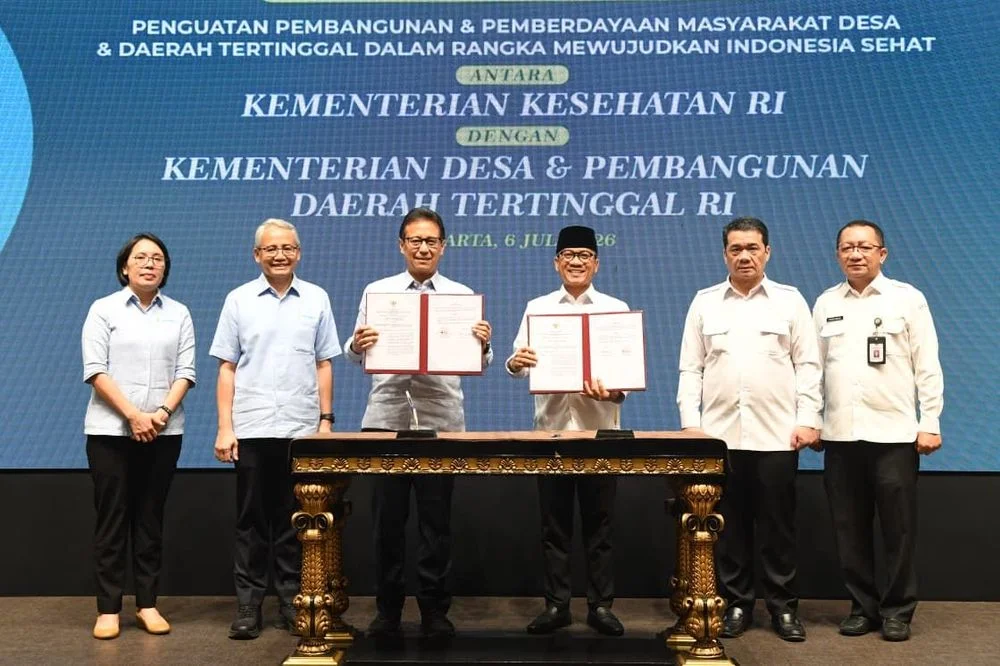
RRI.CO.ID, Jakarta - The Indonesian government has strengthened cooperation between the Ministry of Villages and Development of Disadvantaged Regions and the Ministry of Health to improve healthcare access in rural communities as part of the country's broader development agenda. The partnership is expected to accelerate the realization of a healthier Indonesia while supporting equitable development in villages and disadvantaged regions.
Indonesia's Minister of Villages and Development of Disadvantaged Regions, Yandri Susanto and Minister of Health, Budi Gunadi Sadikin, signed a memorandum of understanding (MoU) in Jakarta on Monday, July 6, 2026, witnessed by Vice Minister Ahmad Riza Patria. The agreement focuses on strengthening village development and community empowerment to support the national goal of achieving a healthier Indonesia.
Yandri said the collaboration would help implement President Prabowo Subianto's vision because nearly 73 percent of Indonesia's population—around 202 million people—live in villages. “If we can resolve health challenges in rural areas, we will be much closer to realizing the President's vision of a Healthy Indonesia,” he said.
The minister noted that around 9,300 of Indonesia's 75,266 villages remain categorized as underdeveloped or highly underdeveloped, with many lacking reliable electricity, healthcare facilities, roads, and bridges. He added that about 3,000 villages still experience limited or no mobile network coverage, creating additional barriers to healthcare access.
According to him, improving public health is an essential part of the government's sixth Asta Cita priority, which focuses on developing Indonesia from its villages to promote equitable economic growth and reduce poverty. He said the ministry's 12 Village Development Actions integrate health with food security, nutrition, and local economic development.
The ministry has introduced thematic village programs such as freshwater fish farming, egg production, catfish, corn, and melon villages to strengthen local food production and improve community nutrition. It is also promoting Export Villages, Zero-Waste Villages, and youth leadership initiatives, although some overseas employment programs still face strict international health screening requirements.
“For us, this collaboration is essential to ensure health services reach the right people. Every year we also allocate Village Funds to support stunting prevention programs,” Yandri said. He expressed hope that the agreement would strengthen targeted support for all villages and contribute to Indonesia's Golden Vision 2045.
The MoU covers cooperation in data sharing, health literacy, community empowerment through village health services and posyandu, nutrition improvement, disease prevention, and expanding access to quality primary healthcare. The government expects the partnership to create healthier rural communities while reinforcing sustainable and inclusive national development.
News Recomendation
Loading latest news.....