



Indonesia Pushes Ecology-Based Approach to Restore Mangroves
- 01 Jul 2026 20:38 WIB
- Voice of Indonesia
Key Points
- Indonesia Promotes Ecology-Based Mangrove Rehabilitation through the Ecological Mangrove Rehabilitation (EMR) approach.
- Conventional Planting Shows Low Success Rates of only 10–20 percent without restored ecosystem conditions.
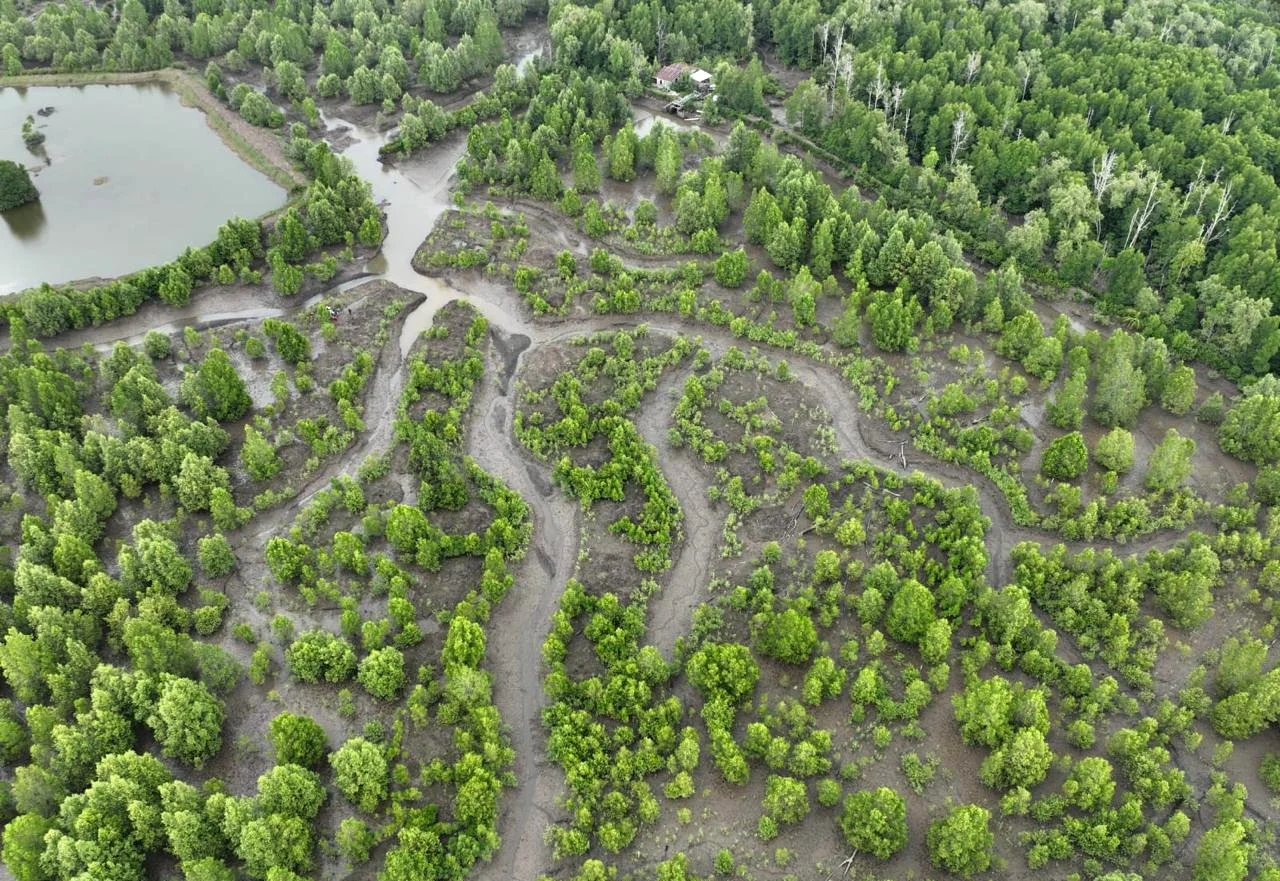
RRI.CO.ID, Jakarta - The Indonesian government is intensifying efforts to rehabilitate the national mangrove ecosystem through an ecology-based approach. The initiative is part of a broader strategy to protect coastal areas, improve community well-being, and support climate change mitigation.
Director of Mangrove Rehabilitation at the Ministry of Forestry, Nikolas Nugroho Surjobasuindro, said Indonesia is home to nearly 20 percent of the world’s mangrove ecosystems -- or about 54 percent of Asia’s total mangrove area. However, mangrove coverage has come under pressure in recent decades due to land conversion and degradation.
According to 2021 data from the Global Mangrove Alliance, the global mangrove area has decreased by approximately 4.3 percent. Indonesia alone lost about 1.3 million hectares of mangroves -- roughly 31 percent of its total national mangrove area -- between 1980 and 2025.
The 2025 National Mangrove Map records Indonesia’s current mangrove area at 3.45 million hectares. Nikolas said the government has taken strategic steps to restore damaged mangrove areas through rehabilitation, protection, and sustainable ecosystem management.
“Mangrove rehabilitation efforts are a crucial part of restoring, enhancing, and maintaining mangrove ecosystems through various models, schemes, and funding sources. In addition to restoring ecosystem functions, rehabilitation also creates economic opportunities that can improve the well-being of coastal communities,” Nikolas said at the workshop Restoration and Protection of Coastal Ecosystems through the Ecological Mangrove Rehabilitation (EMR) Approach in Bogor on Tuesday, June 30, 2026.
He emphasized that improving mangrove ecosystem quality will directly benefit coastal communities, from boosting fishing productivity and strengthening food security to meeting demand for animal protein.
Meanwhile, Coordinator of the Coastal and Delta Program at Wetlands International Indonesia, Aji Nuralam Dwisutono, noted that rehabilitation cannot rely solely on planting. Studies show conventional methods achieve only 10 to 20 percent success if ecosystem conditions are not restored.
His organization has introduced the Ecological Mangrove Rehabilitation (EMR) method, which emphasizes restoring habitat conditions. “The primary intervention in this approach is to improve topography and hydrology to align with the natural needs of mangroves, so regeneration can occur naturally without always requiring planting,” Aji said.
Civil society organizations, including the Wetlands Foundation, the Blue Forest Foundation, and the Nusantara Nature Conservation Foundation, have applied the EMR approach in regions such as Java, Sumatra, Kalimantan, Sulawesi, and West Nusa Tenggara.
Experiences in applying the method were discussed at the workshop, which brought together government officials, academics, civil society organizations, and development partners to strengthen ecology-based mangrove rehabilitation in Indonesia.
On that occasion, Wetlands International Indonesia and the Global Green Growth Institute also reinforced collaboration through the Nature-based Solutions for Climate-smart Livelihoods in Mangrove Landscapes (NASCLIM) program and the Return of the Mangroves (RTM) initiative.
These programs focus on protecting healthy mangroves while restoring degraded areas in the Kayan–Sembakung Delta in North Kalimantan and the Mahakam Delta in East Kalimantan.
Through ecosystem-based approaches and nature-based solutions, the collaboration aims to develop a mangrove rehabilitation model that is more effective, sustainable, and applicable across Indonesia’s regions. (Gusti Panji)
News Recomendation
Loading latest news.....