



Lawmaker Pushes Social Reintegration to Ease Prison Overcrowding
- 09 Jun 2026 06:08 WIB
- Voice of Indonesia
Key Points
- Indonesia’s prisons and detention centers house 272,577 inmates, far exceeding the official capacity of 146,860.
- Government urged to issue Presidential Regulation on the National Social Reintegration System to ease overcrowding and curb recidivism.
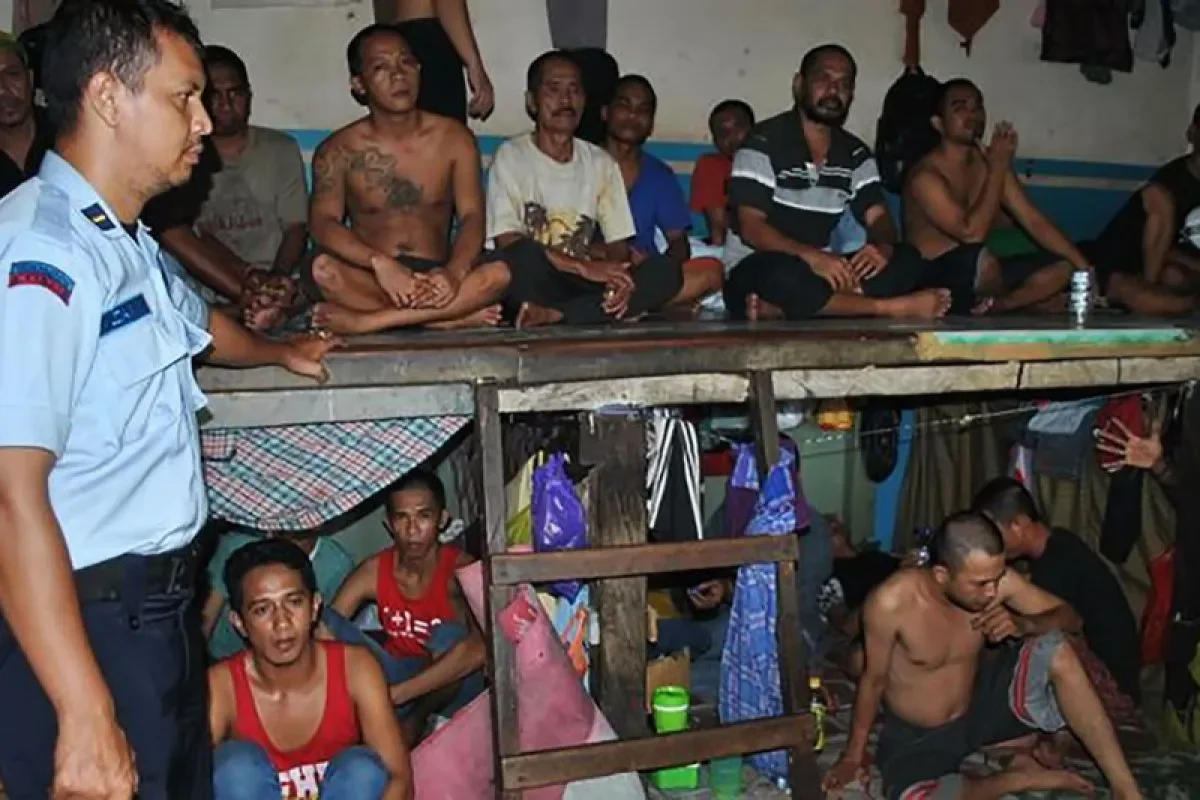
RRI.CO.ID, Jakarta - The condition of correctional institutions and detention centers in Indonesia is increasingly alarming. As of June 2, 2026, the number of inmates reached 272,577, far exceeding the official capacity of 146,860. With overcrowding at 86 percent, calls for reform of the correctional system are growing more urgent.
Amid these concerns, Commission XIII lawmaker Rieke Diah Pitaloka urged the government to immediately issue a Presidential Regulation on the National Social Reintegration System as a strategic step to reduce overcrowding and curb recidivism.
Rieke said addressing overcrowding requires more than building new prisons or tightening security. The government must also strengthen the role of correctional institutions (Bapas) in guiding, rehabilitating, and reintegrating inmates.
“The presidential regulation must serve as a national instrument to accelerate implementation of the new criminal code and criminal procedure code by designating correctional institutions as national case managers for supervised sentences, community service, social reintegration, and post‑conviction drug treatment programs,” Rieke said in Jakarta on Monday, June 8, 2026, as quoted by Antara.
Currently, institutional capacity is far from adequate. Only 94 of the ideal 514 Bapas are available nationwide, while the number of Community Guidance Officers stands at 2,623—well below the national requirement of 16,422.
The regulation is also expected to integrate data from the police, prosecutor’s office, courts, corrections, the National Narcotics Agency (BNN), and regional administrations into a single national digital system.
Rieke stressed that prison overcrowding is inseparable from the high number of drug cases. Data from the Directorate General of Corrections show that 146,365 inmates are serving sentences for narcotics offenses, including 96,030 dealers, distributors, receivers, or producers, and 50,335 users.
“This means more than 50 percent of correctional inmates are involved in drug cases. The overcrowding problem is essentially an unresolved drug problem from upstream to downstream,” she said.
She emphasized that narcotics management cannot rely solely on prison security. “We need a system that connects sentencing, rehabilitation, education, and job training to help ex‑inmates avoid reoffending. Local administrations must also provide social rehabilitation, health services, education, job training, competency certification, economic empowerment, and community support for correctional clients.”
Rieke called for curriculum reform in correctional institutions to improve human resources through equivalency education, digital literacy, vocational training, entrepreneurship, and certification aligned with workforce needs.
Partnerships with businesses, industry, state‑owned enterprises, cooperatives, MSMEs, universities, and training institutions are seen as crucial to providing educational pathways and employment opportunities for inmates.
“The true measure of success is how many inmates return to society with skills, jobs, economic independence, and no reoffending,” Rieke said.
She warned that without strengthening correctional facilities and establishing an integrated social reintegration system, overcrowding will persist, recidivism will remain high, and the goals of criminal law reform will be difficult to achieve.
“Within this framework, the Correctional Facility is a key institution. It must act as a liaison between the criminal justice system, local administrations, education, the workplace, health services, and the community,” she said. ***
News Recomendation
Loading latest news.....