



The Ministry Strengthens Coordination to Address Cross-Border Online Scams
- 25 Feb 2026 09:54 WIB
- Voice of Indonesia
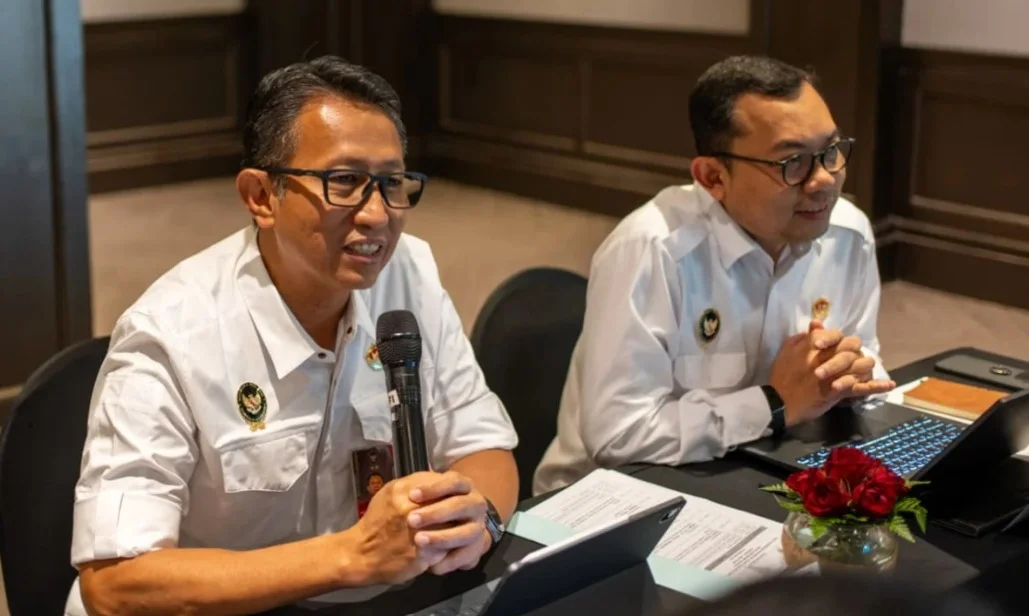
RRI.CO.ID, Surabaya - The Coordinating Ministry for Political, Legal, and Security Affairs is strengthening national coordination. It also encouraged operational cooperation at the ASEAN level in addressing increasingly massive and organized cross-border online fraud.
Deputy for Coordination of Foreign Political Affairs at the Coordinating Ministry for Political, Legal, and Security Affairs, Mohammad K. Koba, affirmed that online scams have evolved into transnational organized crime with serious impacts on the stability of the financial system and public trust.
"Online scams are no longer ordinary crimes. Their impact is not only financial loss but also erodes public trust in the security of digital systems and the government's response," Koba conveyed during the Cross-Border Online Scam Handling Coordination Meeting in Surabaya, Tuesday, 24 February 2026.
From November 2024 to December 2025, losses due to digital financial transaction fraud in Indonesia reached trillions of rupiah, with increasingly complex methods such as impersonation, Ponzi schemes, phishing, and love scams. Globally, the annual profit from online fraud operations is estimated to reach US$43.8 billion, with most activities concentrated in the Southeast Asian region.
Moreover, Koba underscored that the handling approach must be layered and integrated, prioritizing preventive measures thru system strengthening, literacy, and early detection. "Our main fortress is prevention." Therefore, strengthening national mechanisms is key to closing gaps from the outset. Meanwhile, law enforcement remains important as a follow-up step to provide a deterrent effect," Koba stated.
In this context, the Coordinating Ministry for Political, Legal, and Security Affairs encourages the strengthening of the National Mechanism for Handling Cross-Border Online Scams, which integrates all existing instruments at both the national and international levels. The formulation of this mechanism also involves input from the academic community to ensure a strong, operational, and binding legal basis across ministries/agencies.
Koba added that the main challenge currently is not the availability of regulations, but rather the implementation gaps at the operational level, including the limitations in cross-border data exchange, differences in digital evidence handling standards, and the suboptimal coordination between agencies.
News Recomendation
Loading latest news.....