



BRIN Develops Cassava-Based Bioplastics Innovation
- 23 Feb 2026 12:27 WIB
- Voice of Indonesia
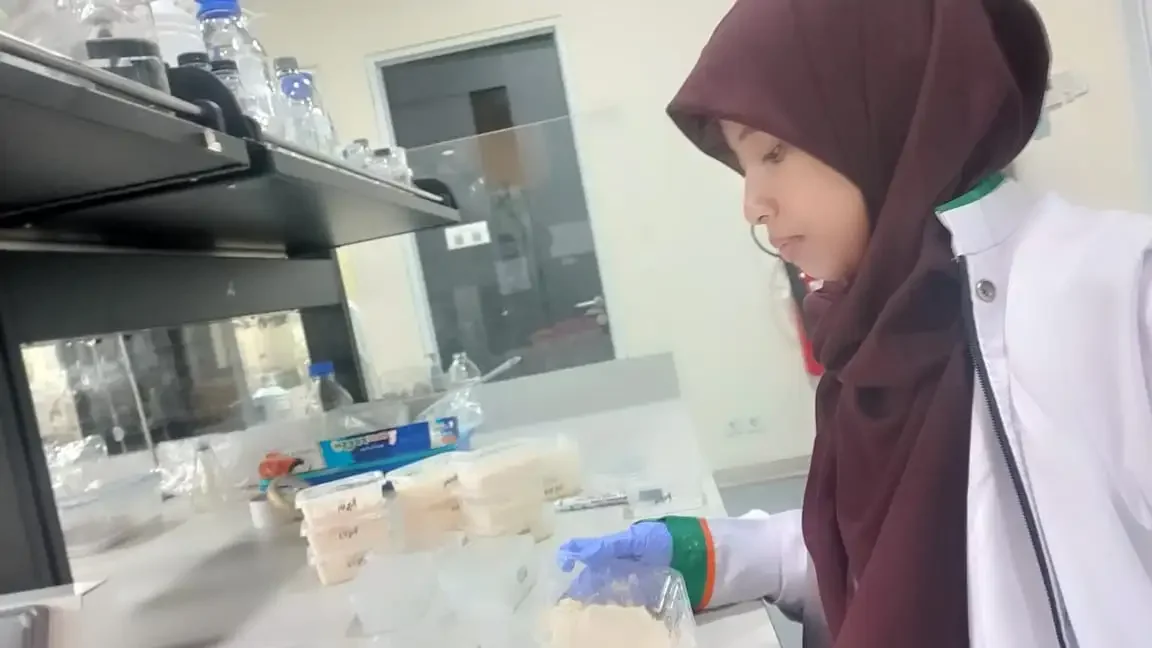
RRI.CO.ID, Yogyakarta - The National Research and Innovation Agency (BRIN) is currently intensifying its study into cassava starch-based bioplastics. While cassava is abundant and cost-effective in Indonesia, its natural form often lacks the durability required for industrial use.
To solve this, researchers are experimenting with a unique additive: gelatin extracted from the inner membranes of indigenous chicken eggshells (INCES).
Unlike conventional plastics that linger in ecosystems for decades, bioplastics offer a rapid return to nature. Rina Wahyuningsih, a researcher at BRIN’s Food Process and Technology Research Center (PRTPP), highlighted the environmental necessity of this shift.
“Bioplastics can be naturally decomposed by microorganisms, leaving no harmful toxins in the environment because of their natural ingredients,” Rina stated on Friday, February 20, 2026, as quoted on BRIN's official website.
According to the research, these biomaterials can degrade in soil by 60 percent to 90 percent within just six days, a stark contrast to the centuries required for synthetic polymers.
Despite their eco-friendly profile, pure starch bioplastics are notoriously "hydrophilic", meaning they absorb water easily and lack mechanical strength. To bridge this gap, BRIN is utilizing gelatin as a plasticizer to create a more elastic and stable film. Rina’s research specifically targets the membranes of indigenous chicken eggshells, which are often treated as waste despite their high collagen content.
“In Indonesia, especially the membranes of indigenous chicken eggshells are still widely available and have not been explored as a source of gelatin for bioplastic production. INCES contains 31 percent collagen, and this has great potential as a gelatin source,” Rina explained.
The study tested bioplastics enriched with 2 percent and 4 percent gelatin. While these versions showed a remarkable ability to degrade in soil within five days, the physical properties still require fine-tuning to reach optimal industrial strength.
The next phase of the research will explore "cocktail" mixtures, adding substances like chitosan, agar, or cellulose to further harden the material without sacrificing its biodegradable nature.
“Future research should conduct further studies on the addition of other substances such as chitosan, agar, and cellulose to improve its mechanical properties. Bioplastics that have tested mechanical properties but have high degradability are expected to support sustainable food packaging technology,” Rina concluded. ***
News Recomendation
Loading latest news.....