



BRIN Strengthens Silkworm Genetic Conservation for Natural Silk Industy
- 13 Jul 2026 17:49 WIB
- Voice of Indonesia
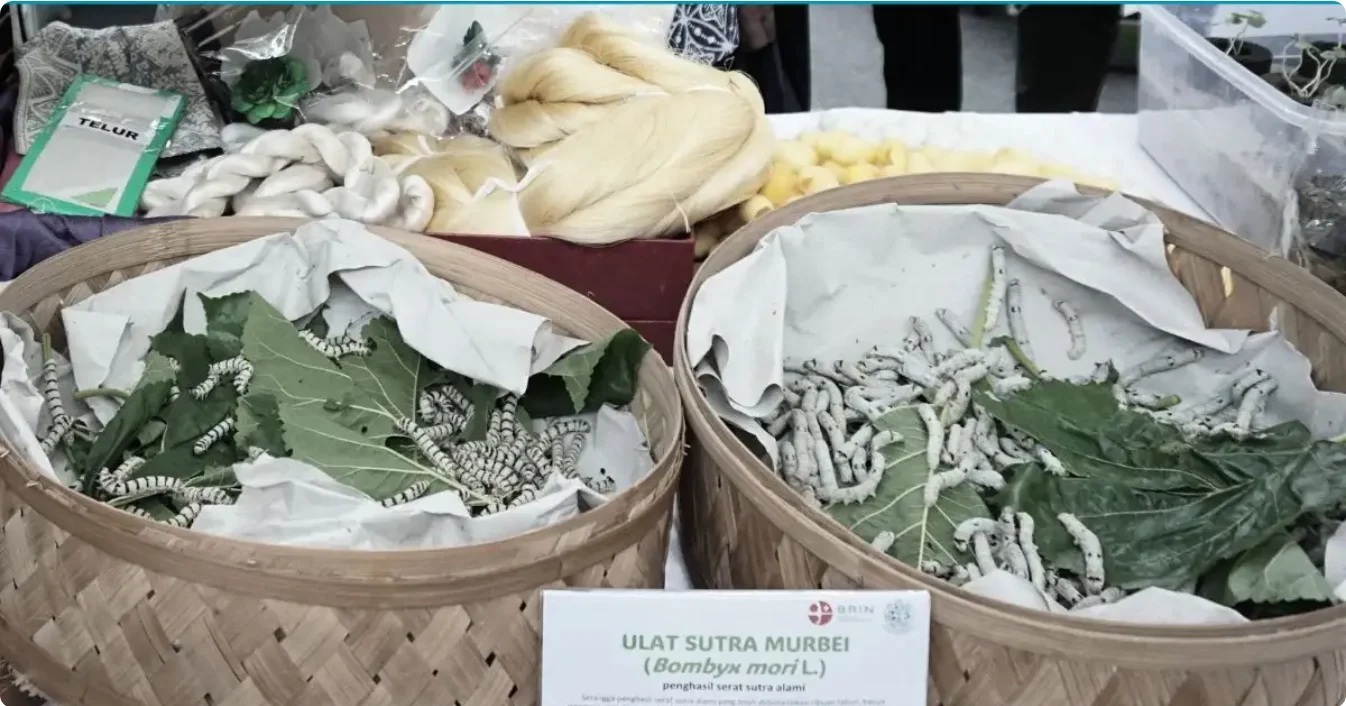
RRI.CO.ID, Cibinong - The Indonesia's National Research and Innovation Agency (BRIN) affirmed that the conservation of silkworm genetic resources is the main foundation for building a sustainable natural silk industry. Genetic diversity is not only a crucial asset for research and breeding, but also determines the ability to produce superior silkworm strains that are productive, high-quality, and adaptable to environmental changes and disease attacks.
In a statement received by RRI VOI on Sunday, July 12, 2026, Lincah Andadari, a researcher at BRIN's Applied Zoology Research Center, explained that the mulberry silkworm (Bombyx mori L.) possesses extremely rich genetic diversity. Each race and strain exhibits distinct characteristics, from egg and larval stages to cocoons, including productivity, silk thread quality, adaptability, and disease resistance.
He stated that this diversity is the foundation for producing superior varieties capable of meeting the challenges of the future silk industry. "Conserving genetic resources is a crucial step in maintaining the availability of genetic material needed for breeding activities and developing improved silkworm strains," Lincah said.
According to her, conservation efforts are carried out through maintaining collections of various silkworm breeds and strains, regular regeneration, characterization of important traits, and documentation of genetic information as part of germplasm management. These steps ensure that genetic wealth remains available to support future research and innovation activities.
Lincah added that maintaining genetic resources opens up opportunities to produce silkworm strains with superior characteristics according to needs. Through breeding programs, traits such as high productivity, good silk fiber quality, environmental adaptability, and disease resistance can be continuously improved.
In line with scientific developments, BRIN is also integrating various cutting-edge technologies in the management of silkworm genetic resources. Approaches based on biomolecular analysis, multi-omics technology, genome editing, and the use of artificial intelligence (AI) are being used to understand genetic traits more comprehensively and accelerate the breeding process.
However, Lincah cautioned that climate change, the shrinking genetic diversity due to domestication, and the increasing threat of disease pose serious challenges to the sustainability of the silk industry. Therefore, genetic resource conservation needs to be carried out sustainably and integrated with research and the use of technology.
He emphasized that the goal of conservation is not only to maintain germplasm collections, but also to ensure that these genetic resources are continuously utilized to produce innovations that strengthen the competitiveness of the national silk industry. "Technological developments provide opportunities to identify superior traits more quickly and support a more effective breeding process," he said.
News Recomendation
Loading latest news.....