



Japan Continues Bali Beach Conservation with IDR 1.08 Trillion Funding
- 12 Feb 2026 11:17 WIB
- Voice of Indonesia
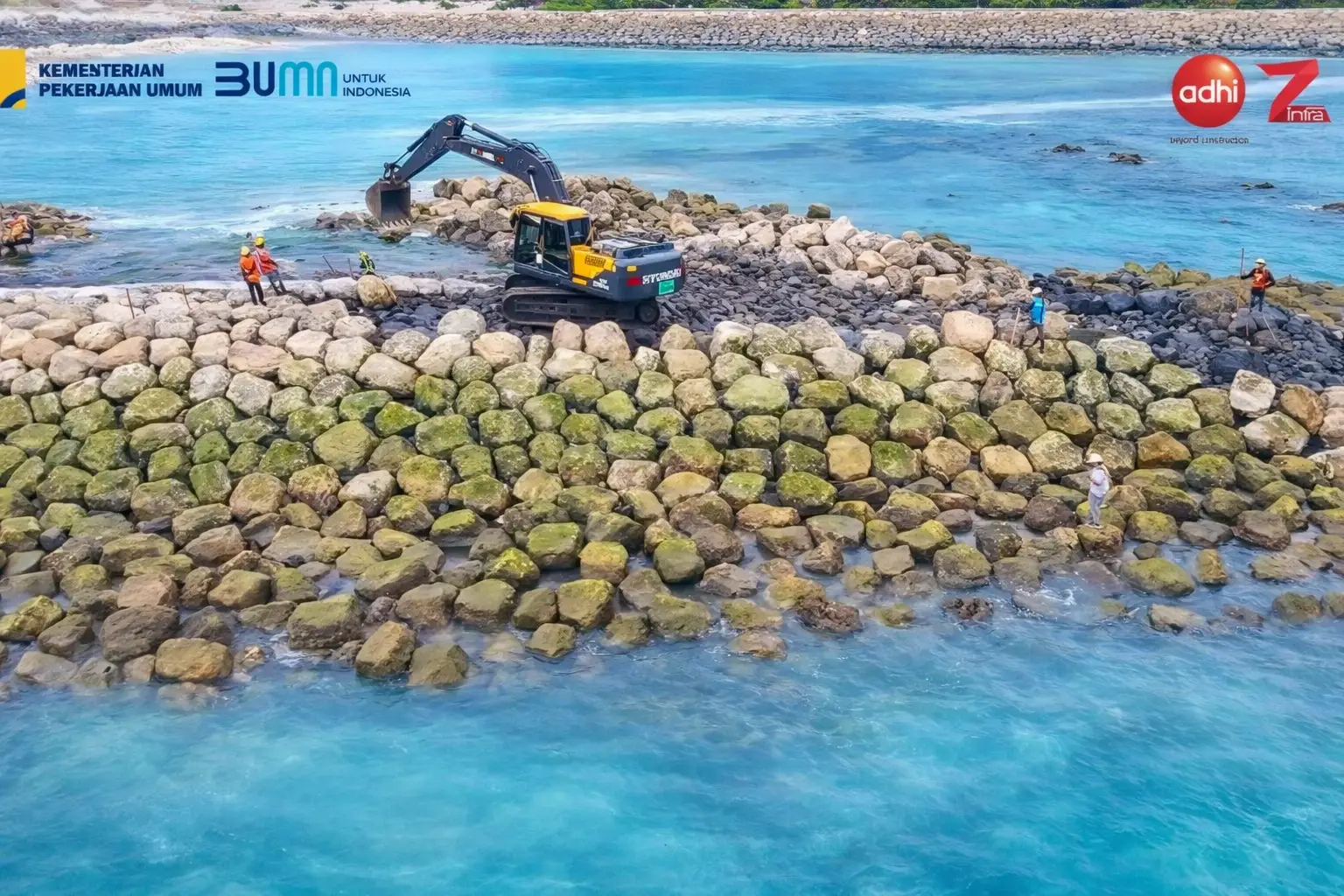
RRI.CO.ID, Jakarta – The Japanese government is continuing the second phase of its Bali beach conservation project, valued at 9.85 billion yen, or approximately IDR 1.08 trillion, with completion targeted by 2028 to curb coastal erosion on the resort island.
“Japan is committed to continuing its contribution to supporting the development of the Indonesia we love,” Japanese Consul General Miyakawa Katsutoshi said in Denpasar, Bali, on Thursday, February 12, 2026, as quoted by Antara.
The project covers Kuta, Legian, and Seminyak in Badung regency under Package II, as well as Nusa Dua and Tanjung Benoa in Badung and Sanur in Denpasar under Package III. Conservation efforts are also being expanded to Candidasa in Karangasem regency under Package I.
The Directorate General of Water Resources at the Public Works Ministry is implementing the project.
The second phase, which runs from 2021 to an estimated 2028, is funded at 9.85 billion yen, equivalent to approximately IDR 1.08 trillion at an exchange rateof IDR 109.9 per yen. The figure exceeds the 9.5 billion yen (about IDR 1.04 trillion) allocated for the first phase, which ran from 2000 to 2008.
The senior diplomat said the Bali beach conservation project is financed through Japan’s official development assistance to reduce abrasion and revitalize coral reefs.
During the first phase, works in Sanur included placing 300,000 cubic meters of sand and constructing groins and breakwaters. In Nusa Dua, the project involved 340,000 cubic meters of sand fill, groins, and headlands.
In Kuta, authorities placed 520,000 cubic meters of sand, built offshore breakwaters, and carried out coral transplantation. Additional works were undertaken along the coast near Tanah Lot Temple, including the installation of stone and coral panels.
Overall, the second phase applies methods similar to those used in the first phase. In Kuta, Legian, and Seminyak, the project includes sand nourishment and the construction of breakwaters. In Nusa Dua, Tanjung Benoa, and Sanur, workers will use sand from the Mertasari stockpile and from natural accumulation areas. In Candidasa, activities include sand filling, repairs to existing seawalls and groins, and maintenance.
A groin is a structure built perpendicular to the shoreline to prevent sand from being carried away by sea currents.
“Japan-Indonesia economic cooperation is not merely an exchange of funds or financial assistance, but a sincere joint collaboration to protect people’s lives,” Katsutoshi said on the sidelines of a reception marking the 66th birthday of the Emperor of Japan in Denpasar on Thursday. ***
News Recomendation
Loading latest news.....