



Indonesia Targets Mandatory EPR to Solve Growing National Waste Crisis
- 21 Des 2025 16:13 WIB
- Voice of Indonesia
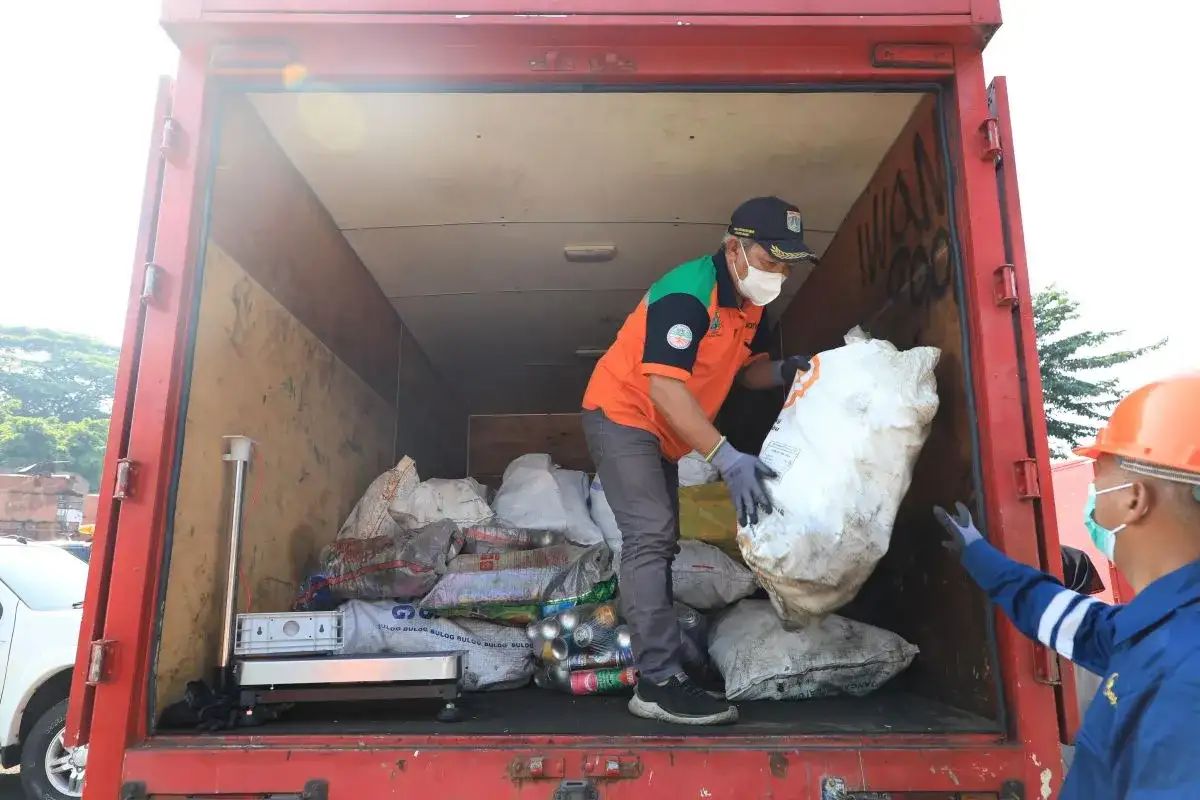
KBRN, Jakarta: The temporary closure of the Cipeucang Final Disposal Site (TPA) has triggered the emergence of a small trash heap near Cimanggis Market in South Tangerang, Banten Province, acting as a stark warning of Indonesia’s mounting waste crisis.
This local accumulation of market and household waste highlights the national struggle with waste management, as local authorities and citizens were faced with the immediate consequences of a disrupted disposal system recently.
The pile consists mostly of household and market waste, mixing organic and inorganic materials together in large plastic bags. This indicates a significant lack of waste sorting efforts by residents and businesses in the surrounding area.
The heap also contains numerous product packages that corporations should ideally reclaim under the principle of Extended Producer Responsibility (EPR). EPR dictates that manufacturers remain responsible for the entire lifecycle of their packaging, including the management of its resulting waste.
This approach is essential to reducing national waste generation, particularly regarding the persistent issue of plastic pollution. Data from the Ministry of Environment's National Waste Management Information System (SIPSN) in 2024 shows that plastic accounts for 19.46 percent of Indonesia's 38.59 million tons of total waste.
Plastic is now the second-largest waste category after food scraps, posing a serious threat as only about 24 percent of national waste is currently handled effectively. Environmentally, these plastics leak into the ecosystem and degrade into harmful microplastics that contaminate the surroundings.
Researcher Muhammad Reza Cordova from the National Research and Innovation Agency (BRIN) said that microplastic pollution can also originate from discarded cigarette butts. He noted that sources are not limited to food packaging, beverage containers, or products sold in small sachets.
Cigarette filters made of cellulose acetate break down into microplastic fibers when tossed into the environment. Prolonged heat exposure causes these fibers to release, eventually entering the food chain and potentially being consumed by humans.
Since plastic waste is incredibly difficult to decompose, consumer behavior regarding littering has become a critical factor. However, this must be supported by corporations implementing EPR schemes for the products they manufacture.
"We already know this, actually, EPR should be mandated for all waste originating from producers," said Reza, as quoted by Antara.
The government already has regulations to encourage producer involvement through the Ministry of Environment and Forestry Regulation No. 75/2019.
This regulation targets the manufacturing, food and beverage, and retail sectors, specifically focusing on consumer goods and personal care. Producers are expected to reduce waste through composting, recycling, or reuse, while also implementing product take-back schemes.
Implementation remains suboptimal, as Ministry data from June 2025 shows that fewer than 50 companies have submitted waste reduction roadmaps. The National Plastic Action Partnership (NPAP) highlighted that this is partly because EPR remains voluntary rather than explicitly mandatory in current regulations.
NPAP Community Coordinator Bunga Karnisa suggested that a Presidential Regulation (Perpres) is needed to legally require all producers to manage their plastic waste. Such a regulation would provide the necessary clarity and authority for the Ministry of Environment to enforce these obligations.
NPAP discussions revealed that many producers lack the resources or specialized knowledge to implement EPR on a broad scale. This highlights a need for more extensive socialization of EPR principles combined with strict rules to ensure industrial compliance.
Minister of Environment Hanif Faisol Nurofiq said that producer contributions are vital to achieving the goal of 100 percent waste management by 2029. Consolidation between the government, the public, and the business sector is necessary to address the global crisis of plastic pollution.
The Minister noted that many business actors have expressed concerns regarding regulatory certainty and the need to transition EPR from voluntary to mandatory. While mandated by Law No. 18/2008, the current legal framework does not yet explicitly enforce its implementation.
The Ministry plans to start the drafting process this year to ensure EPR obligations are implemented gradually across both upstream and downstream industries. This move is part of a larger effort to realize a circular economy within Indonesia’s industrial landscape.
Success requires cooperation between central authorities like the Ministry of Industry, local administration, corporations, and community representatives. Mandatory EPR will impact everyone, requiring active participation from local administrations and individual citizens alike.
For EPR to work, individuals must sort their waste, while local systems must ensure sorted trash reaches collection facilities for corporate pickup. Corporations must also redesign packaging to be multipurpose and develop logistics systems that prevent waste from burdening landfills.
Given Indonesia’s vast geography, establishing adequate waste management facilities across different islands remains a significant hurdle for both the state and private sectors. Government oversight is also crucial to ensure that industries remain compliant with these evolving environmental standards.
Ultimately, shared awareness between the government, business world, and society is the key to supporting national waste management targets. This collective effort is necessary to ensure that growing piles of trash on the streets do not become a permanent sight in Indonesian cities. ***
News Recomendation
Loading latest news.....