



Indonesia Pushes Global Digital Royalty Reform at WIPO
- 01 Des 2025 20:33 WIB
- Voice of Indonesia
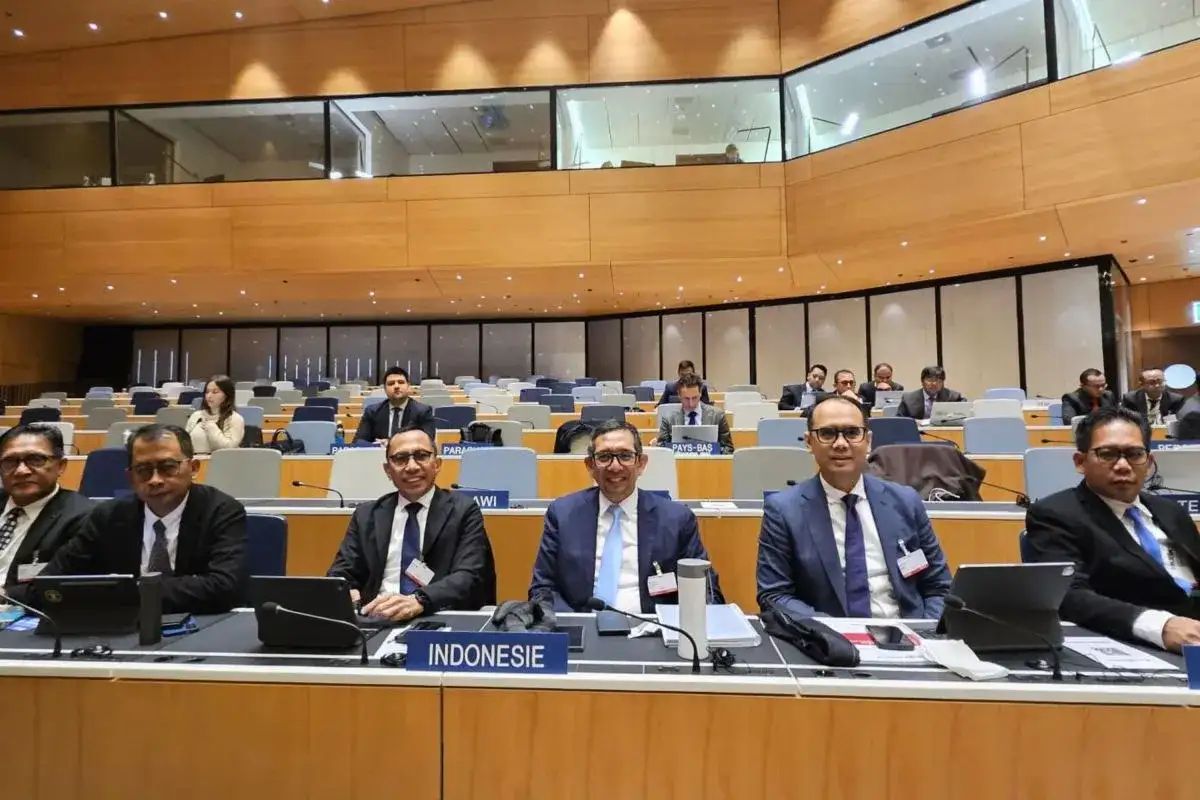
KBRN, Jakarta: The Indonesian government has officially submitted the "Indonesian Proposal for a Legally Binding International Instrument on the Governance of Copyright Royalty in Digital Environment" at the World Intellectual Property Organization’s (WIPO) Standing Committee on Copyright and Related Rights (SCCR) meeting. This marks a strategic move by Indonesia to advocate for fairness in global digital royalty governance.
Leading the Indonesian delegation at the session in Geneva, Switzerland, on Monday, December 1, 2025, Deputy Minister of Foreign Affairs, Arif Havas Oegroseno highlighted the common reality where creators often receive only a fraction of the income generated by their own work.
"This reality is not merely an economic issue, it is a matter of justice, fairness, and moral recognition," said Arif, as quoted in a confirmed statement in Jakarta, as quoted by Antara.
Therefore, he added, Indonesia is calling for renewed commitment and joint action through the Indonesian Proposal. According to him, the submission is a demonstration of the State's responsibility to fight for the economic rights protection of creators at the global level, not just domestically.
The Deputy Minister views the initiative for a legally binding international instrument as a response to the widening structural imbalance in the global digital royalty ecosystem.
Annually, UNESCO and the World Bank estimate that USD 55.5 billion in music and audiovisual royalties evaporate, never collected, never recorded, and never received by their creators.
Arif asserted that a fair and equitable royalty system must uphold the dignity of all creators, regardless of their geographical region or market size.
"Justice, in turn, demands transparency so that creators can understand how their royalties are calculated, distributed, and reported,” he emphasized.
The proposal was initially conceived by the Minister of Law, Supratman Andi Agtas, in May 2025 and began its journey at the WIPO SCCR session this December. Indonesia has already conducted bilateral meetings with regional groups like GRULAC (Latin America and the Caribbean), Japan, and the United States.
In a separate statement, Minister Supratman expressed confidence that the Indonesian Proposal would have a direct and significant impact on creators worldwide, including those in Indonesia.
He projected that creators would gain access to global data on the utilization of their works, know the countries with the highest consumption rates, understand the true economic value of their work's usage, and receive royalties that have previously been suboptimally distributed.
"The economic value of Indonesian music and audiovisual works even has the potential to increase by trillions of rupiah per year with the opening of global data access that has thus far been closed," said Supratman.
He called for support for the proposal's success, particularly from Indonesian creators, and encouraged them to actively protect their intellectual property through copyright registration to ensure their economic rights can be optimally defended.
The Minister of Law added that the existing imbalance stems from the strong dominance of global digital platforms in determining the economic value of creative works. These platforms control recommendation algorithms, licensing models, metadata standards, and revenue reporting systems.
"In the digital ecosystem, whoever controls the data, controls the value. This is the root of the current global royalty problem,” he revealed.
Indonesia identifies four main structural issues, fragmented metadata, dependence on unfair royalty-sharing models, differences in royalty valuation between countries, and non-transparent distribution governance.
To address these issues, Indonesia proposes a new, concrete, operational, and technical global royalty governance architecture built on three main pillars: first, the global standardization of phonogram and audiovisual metadata; second, an obligation for transparency in licensing, use, and cross-border royalty distribution; and third, the establishment of a global monitoring and accountability mechanism through international audits.
Supratman stressed that for these mechanisms to be effective, the instrument must be legally binding. He argued that a soft law approach is insufficient to counter the power imbalance between nations and giant digital platforms.
"Without legal obligations and strict sanctions, transparency will only be a moral commitment that lacks enforcement power,” Supratman asserted.
The WIPO meeting, attended by 194 member countries, is scheduled to run from December 1–5, 2025. Deputy Minister Arif is leading the Indonesian delegation, accompanied by the Director-General of Intellectual Property (DGIP) of the Ministry of Law, Hermansyah Siregar, and other key officials. ***
News Recomendation
Loading latest news.....