



Academics Develop Organic Fertilizers, Pesticides Using Local Ingredients
- 14 Okt 2025 20:24 WIB
- Voice of Indonesia
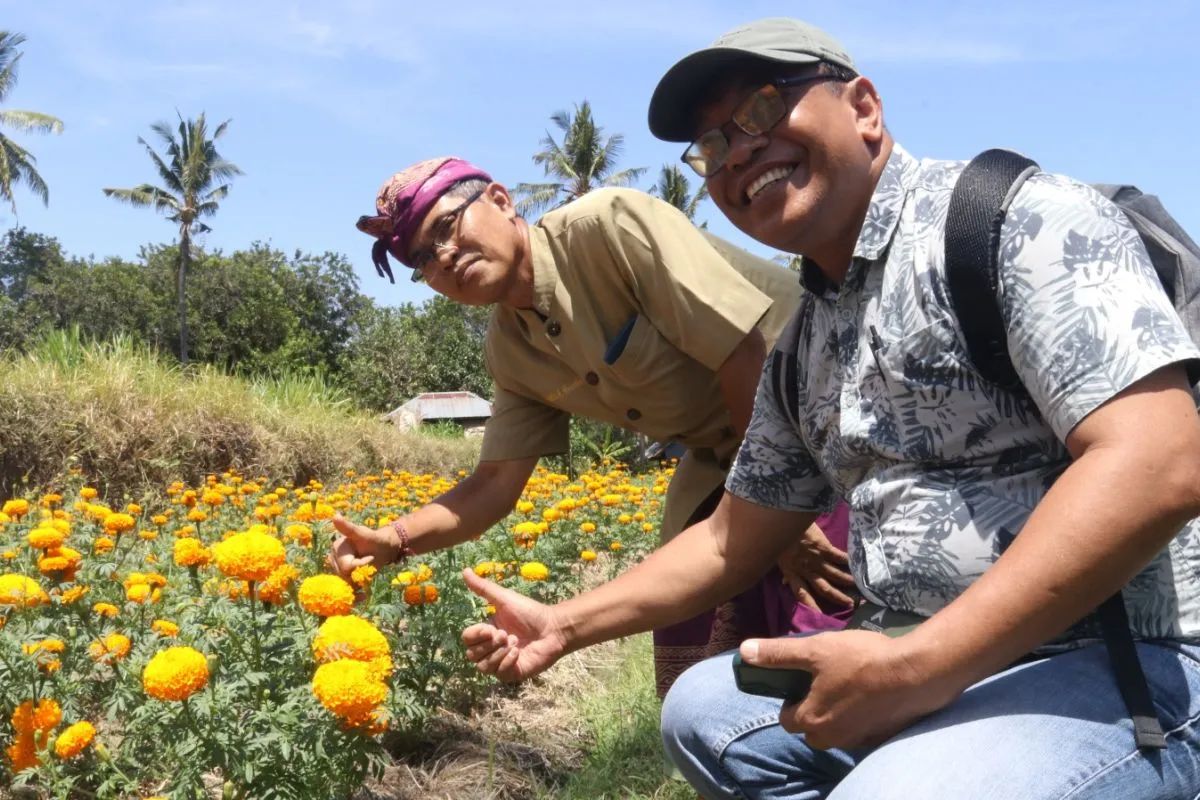
KBRN, Jakarta: Bali's commitment to sustainable farming just got a major boost. Academics at the Ganesha Education University (Undiksha) in Singaraja have successfully developed new organic fertilizers and botanical pesticides using nothing but local ingredients.
"This innovation is present as a real response to the major challenges faced by the agricultural sector, such as dependence on inorganic fertilizers, high production costs, and land damage due to excessive use of chemicals," Chairman of the Innovator Team, I Wayan Karyasa, said in Singaraja, Buleleng Regency, on Tuesday, October 14, 2025, as quoted by antaranews.com.
He stated that the innovative organic fertilizer, named L2Nano, is the result of research based on rice husk charcoal formulated with nanotechnology.
This fertilizer is designed to strengthen plant stems, especially rice, so they do not easily lodge (fall over) during the rainy season, while also reducing farmers' dependence on expensive and soil-damaging chemical fertilizers.
"L2Nano uses the principle of slow and gradual nutrient release (slow release), so nutrients are not immediately lost but are optimally absorbed by the plant. This is very important for fertilization efficiency and land sustainability," Karyasa explained.
In addition to the fertilizer, the Undiksha team also developed a botanical pesticide made from weeds, which are generally considered pests.
Through an innovative approach, the weeds are processed into an environmentally friendly pesticide combined with a biostimulant, capable of eradicating pests while strengthening the plant's resistance.
"We are turning a problem into a solution. Weeds that usually cause damage are now protecting the plants. This is a concrete example of utilizing local potential," he revealed.
The product has been directly tested on farmers' land in Jagaraga. The results were highly encouraging. One farmer, Putu Widianya, reported an increase in harvest yield of up to 25 percent.
"The growth is good and the fruit is more abundant. Production costs have also decreased because I no longer need to buy inorganic fertilizer. It is very helpful for us farmers," he said.
Jagaraga Village Head Nyoman Parta sees great potential in this innovation as a step toward boosting the village economy. His administration plans to expand the product trial and hopes it can be developed into a village economic resource managed through the Village-Owned Enterprise (BUMDes).
"The raw materials are very abundant in this village," he assured.
Moving forward, the program is expected to become a collaboration model between universities and village communities in developing appropriate technology based on local resources.
Meanwhile, Head of Undiksha Research and Community Service Institute (LPPM), I Gusti Agung Lanang Parwata, called the program a concrete implementation of the university's Impactful Campus concept.
"Undiksha belongs to the community, and innovations like this are proof of how science can directly address farmers' problems. This is Diktisaintek Berdampak (Impactful Science and Technology in Higher Education), research that touches the roots of the problem," he stated.
By combining science, local wisdom, and technology, the L2Nano innovation and botanical pesticides from Undiksha offer new hope for a more independent, efficient, and sustainable rural agricultural sector. ***
News Recomendation
Loading latest news.....