



Indonesia Showcases Smart Farming and Culinary Diversity at FAO
- 03 Jul 2026 09:35 WIB
- Voice of Indonesia
Key Points
- The Indonesian Embassy in Rome and the FAO co-organized a global culinary and agricultural exhibition.
- Indonesian farmers and fishermen showcased climate-resilient farming models developed in partnership with the FAO.
- Agricultural experts promoted precision technology and youth entrepreneurship to ensure long-term food security.
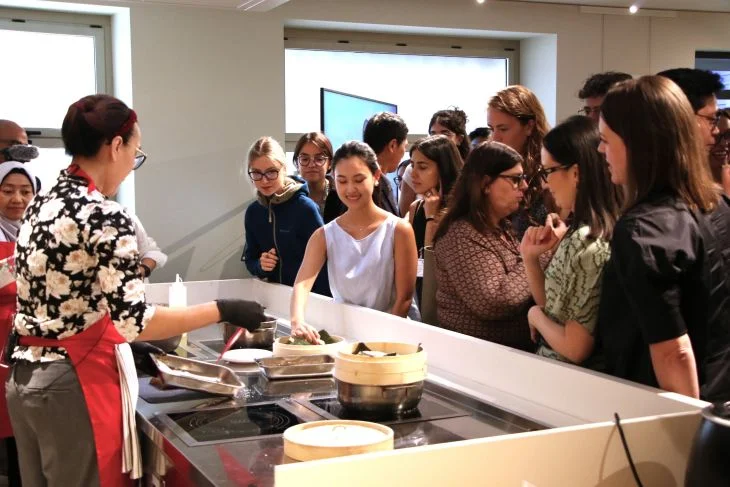
RRI.CO.ID, Jakarta - Indonesia’s drive to build resilient and sustainable agrifood systems took center stage at the Food and Agriculture Organization (FAO) headquarters in Rome, Italy, through the culinary exhibition “Flavours of the Archipelago: From Smart Farms to Diverse Foods.”
The event, held at the Foods Lab, FAO Museum on Wednesday, July 1, 2026, was organized by the Indonesian Embassy in Rome and FAO’s Representative in Indonesia as part of the FAO Global Conference on Smart Agriculture.
Indonesia’s Ambassador to Italy and the UN in Rome, Junimart Girsang, highlighted the country’s rich diversity.
“Indonesia’s extraordinary diversity is reflected in its culture and traditions, including our culinary and agricultural heritage,” he said on Thursday, July 2, 2026, as quoted by Antara.
He stressed that strong food and agriculture systems are the foundation of resilient societies, where tradition and innovation can work side by side.
FAO’s Director of the Plant Production and Protection Division, Yurdi Yasmi, pointed to urgent global challenges such as climate change, soil and water degradation, rising input costs, and labor constraints.
“Smart agriculture is the solution amid these challenges. By using data, technology, precision interventions, and automation, we can make better decisions to boost productivity,” he explained. He added that smart farming requires a balance between science, innovation, and local knowledge -- much like cooking requires harmony between spices and ingredients.
The exhibition showcased success stories from Indonesia’s collaboration with FAO, including sago producers in Papua, smart fisheries in West Java, chili farmers in Sumatra, and banana growers in East Java using precision agriculture.
To ensure authenticity, sago used in the dishes was sourced directly from local farmers, underscoring its resilience to climate change.
Guests sampled traditional dishes such as papeda (a sago-based porridge) with yellowfin tuna soup, spicy fried sago noodles, and eurimoo, a sweet dessert made from sago and ripe bananas.
“I have to admit that although I don’t usually like noodles, I am surprised by how much I enjoy these noodles made from sago. The taste is fresh, and it can be served as a salad -- it doesn’t feel too heavy,” said a participant from Rwanda, East Africa.
FAO Representative in Indonesia and Timor-Leste, Rajendra Aryal, emphasized the broader impact of the collaboration. “The diverse Indonesian dishes presented here reflect long-term partnerships between the government, local communities, and FAO. We combine tradition, innovation, and concrete action to achieve better production, better nutrition, a better environment, and better livelihoods for all -- leaving no one behind,” he said.
Examples of ongoing initiatives include modernizing sago processing in Yoboi, Papua, reducing production time from several days to just five hours. In Bogor, West Java, FAO and Indonesia’s Ministry of Marine Affairs and Fisheries are transforming traditional fishing communities into modern hubs aligned with the Blue Economy vision.
The program also highlighted Petani Keren (Cool Agripreneur), which encourages young Indonesians to pursue agriculture.
In Lampung, Sumatra, youth farmers are adopting greenhouse technology and entrepreneurship to grow chili and other crops. Meanwhile, in Lumajang, East Java, banana farmers benefit from FAO’s One Country One Priority Product (OCOP) initiative, which introduces precision farming and IoT-based soil monitoring to improve productivity and sustainability.
Indonesia’s showcase at FAO not only celebrated its culinary heritage but also demonstrated how smart agriculture and local wisdom can converge to build sustainable food systems for the future. ***
News Recomendation
Loading latest news.....