



Turkish Professor Shares How Türkiye Adapts to the Contesting Global Order
- 02 Jul 2026 11:26 WIB
- Voice of Indonesia
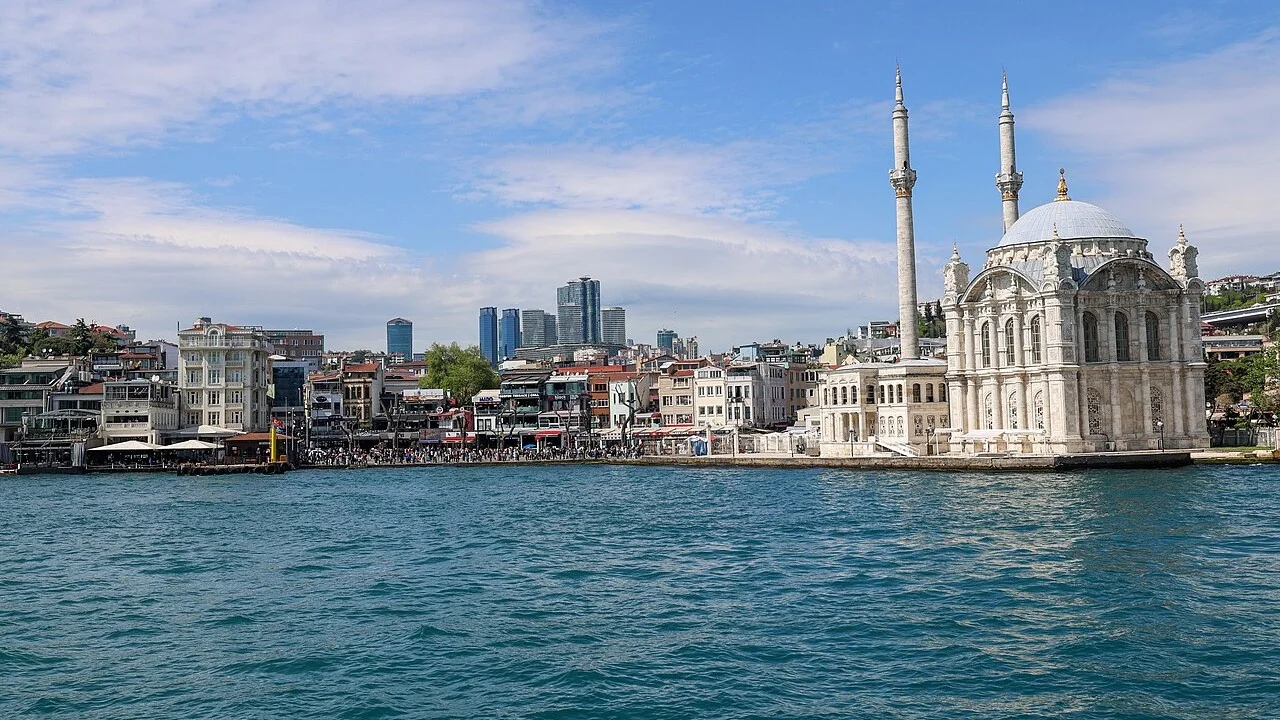
RRI.CO.ID, Depok - A Turkish professor explained that recent global dynamics have shaped Türkiye's policies, such as pursuing greater self-reliance in its defense sector and increasing shift toward Asia. The international community is encouraged to view Türkiye's current foreign policy as a strategic adaptation to an ever-changing world.
Prof. Hatice Çelik, a professor at the Social Sciences University of Ankara, said that the international system is undergoing a profound transformation, with global power becoming more dispersed, intensifying competition between the United States and China, and increasingly fragile global supply chains since the COVID-19 pandemic and rising geopolitical tensions. In this context, Türkiye, like Indonesia and other countries regarded as middle powers, cannot act entirely on its own and at the same time cannot remain passive.
"They (middle-power countries) don't have that capacity and that much power to transform or change the international system by themselves. But they are no longer only the actors adapting to external developments," Hatice said in IIFA Discussion Series #9 at the Indonesian International Islamic University in Depok, West Java, on Wednesday, July 1, 2026.
"They have some leverage or, let's say, some powers over great powers. When they come together, they can create a lot of pressure upon great powers," she said.
To adapt to these changes, Hatice argued that over the past decade, Türkiye's foreign policy has sought to diversify its partnerships while pursuing greater regional connectivity and strategic autonomy within the surrounding region. She, therefore, urged the discussion participants not to view the country's recent foreign policy simply as a shift from one geopolitical camp to another or as a turn toward hard power.
"Turkish foreign policy is not following a shift or pursuing a shift from east to west, nor is it simply a transition from soft power to hard power. But this is the strategic adaptation of a middle power to a contested global order," Celik said.
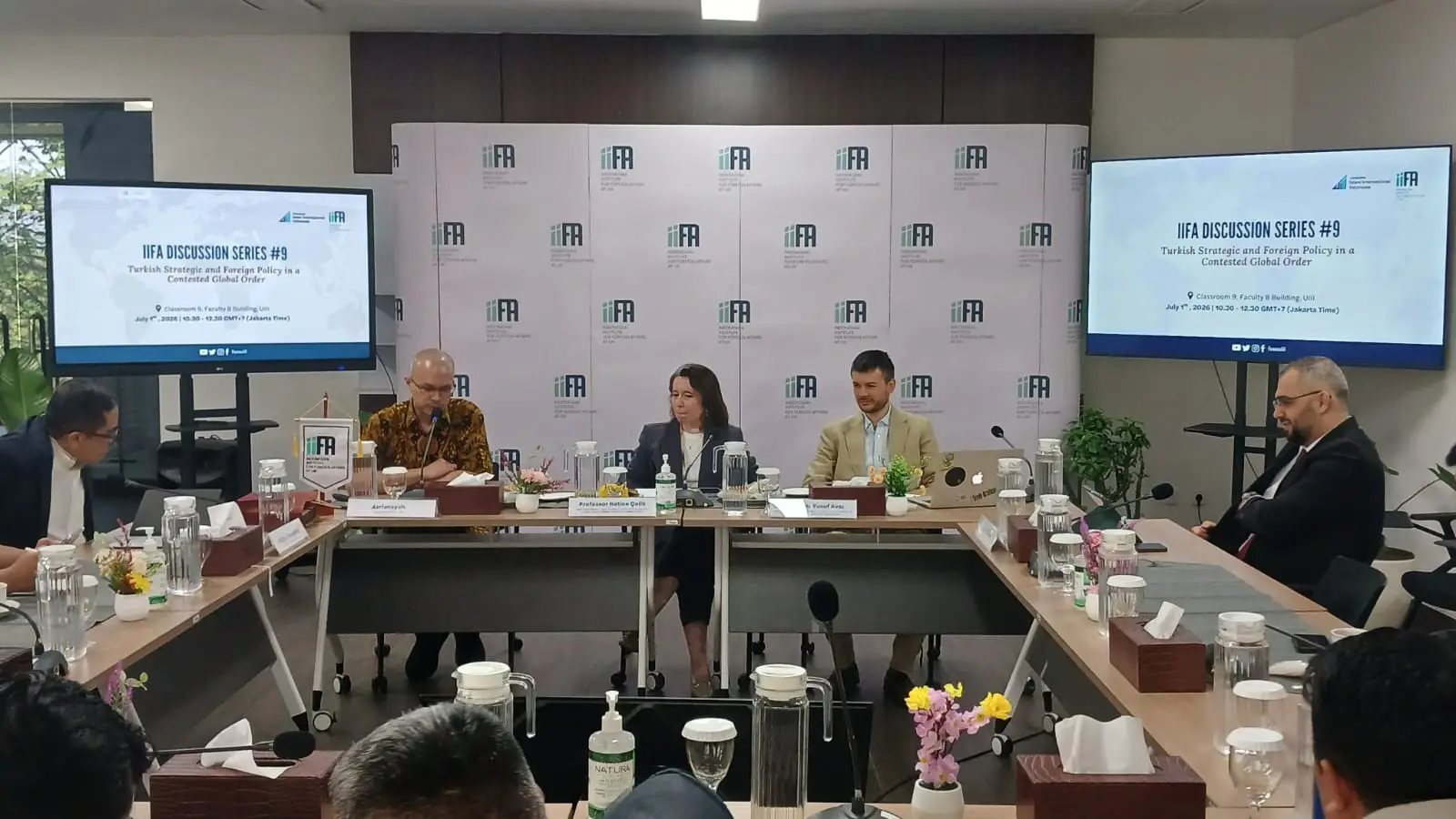
Hatice argued that one of the key pillars of Türkiye's strategic adaptation is strategic connectivity. Given her country's strategically important yet geopolitically vulnerable location, she maintained that strategic relevance is determined not only by geography but also by connectivity.
"When we say connectivity, we also understand the digital connectivity, the institutional connectivity, people-to-people connectivity, and also, of course, the political connectivity. So, actually, this connectivity issue makes states able to link multiple geopolitical spaces," she conveyed.
She also highlighted the Asia Anew Initiative, a policy launched in 2019 by former Turkish Minister of Foreign Affairs Mevlüt Çavuşoğlu, as part of efforts to deepen engagement with Asia and as a component of its strategic adaptation. According to her, Türkiye does not intend to shift its geopolitical orientation from one region to another, contrary to concerns expressed by some European countries.
"Rather, as I said, it's expanding its strategic geography, because during the 1990s we also put forward our Africa Initiative or Latin American Initiative. So, Asia Anew Initiative should be seen from this perspective," Hatice said.
She further argued that Türkiye's strategic adaptation is reflected in the growing prominence of its defense industry, which she described as a policy instrument shaped by the country's experience of multiple regional conflicts and arms embargoes imposed by the United States. She also pointed to Türkiye's expanding defense partnerships with Southeast Asian countries, including Indonesia, due to Türkiye's willingness to share its defense capabilities.
"I think Indonesia is one of our strongest allies, in terms of this defense industry and military cooperation network," she said.
News Recomendation
Loading latest news.....