



ITS-Curtin University Foster Collaboration Through Upcycling Design Exhibition
- 05 Jul 2026 20:02 WIB
- Voice of Indonesia
Key Points
- ITS and Curtin University held the Design Matters upcycling exhibition in Surabaya, East Java.
- Students used AI and global design standards to turn waste into innovative products.
- The program supports SDGs, promoting zero waste and sustainable international collaboration.
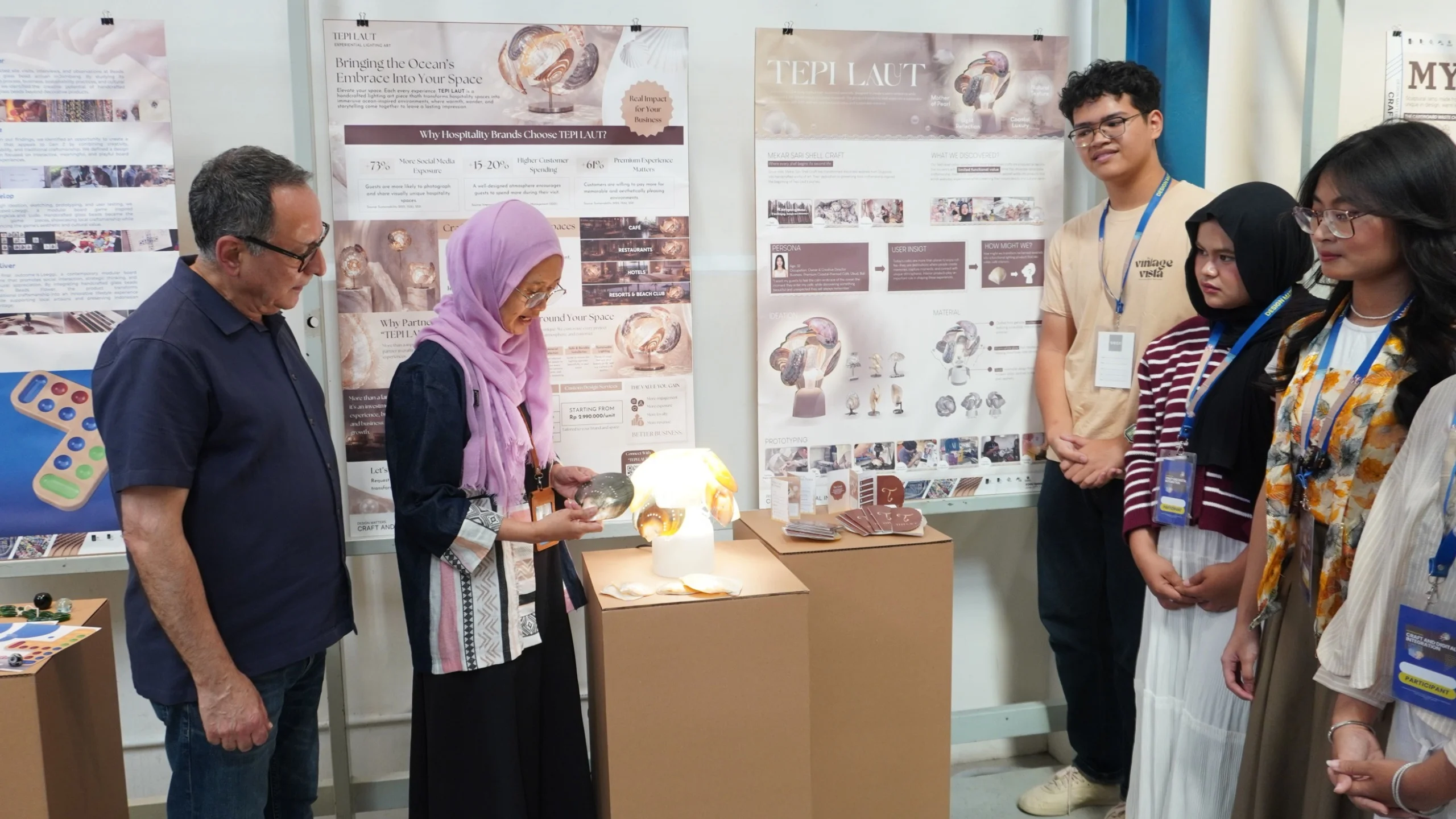
RRI.CO.ID, Surabaya - The Sepuluh Nopember Institute of Technology (ITS) in Surabaya, East Java, is strengthening its international partnerships by linking creative design with sustainability.
Through its Faculty of Creative Design and Digital Business (FDKBD), ITS collaborated with Curtin University, Australia, to host the Design Matters Exhibition on Friday, July 3, 2026, at KOGU Space, Surabaya.
The one‑day exhibition showcased student works based on upcycling, developed under the guidance of Curtin University’s Qassim Saad, who joined ITS as an adjunct professor for six months.
The program aimed to broaden students’ global perspectives and provide direct learning experiences with international academics, exposing them to global design standards.
Saad explained that the exhibition bridged traditional craft practices with digital technology, demonstrating how innovation can maximize available resources.
“Integrating technology with existing materials produces works that are both useful and impactful,” he said, as quoted on ITS official website.
FDKBD Dean Ellya Zulaikha emphasized that the exhibition was the culmination of six months of study involving students from Industrial Product Design, Visual Communication Design, and Business Management.
“This collaboration optimizes upcycling industries through digital approaches and sound business strategies,” Ellya Zulaikha said.
Twenty students conducted field observations to identify waste materials with potential for innovation, including cardboard, glass, textiles, and seashells.
Their designs were further developed using artificial intelligence to explore possibilities aligned with community needs. “AI is not replacing designers, but enhancing the potential of available resources,” Ellya explained.
The exhibition also involved partnerships with local industries. Dus Duk Duk collaborated with students to transform cardboard waste into lamp armatures, while seashells from Situbondo’s Mekarsari were repurposed into decorative lighting.
Upject in Mojokerto worked with students to create fashion items such as bags and sandals, and Beads Flower in Jombang partnered to turn glass bead waste into traditional toys like yoyos and ludo.
Ellya highlighted that the exhibition was designed to show how creative processes can generate meaningful impact. Open to the public, the event carried a vision of promoting upcycling toward a “zero waste Indonesia,” aligning with the Sustainable Development Goals (SDGs).
The initiative reflected SDG 12 on responsible consumption and production, SDG 8 on sustainable economic growth, SDG 17 on partnerships, and SDG 4 on quality education.
Through this collaboration, ITS reaffirmed its commitment to combining academic excellence, creative economy, and global partnerships to drive sustainable innovation. ***
News Recomendation
Loading latest news.....