



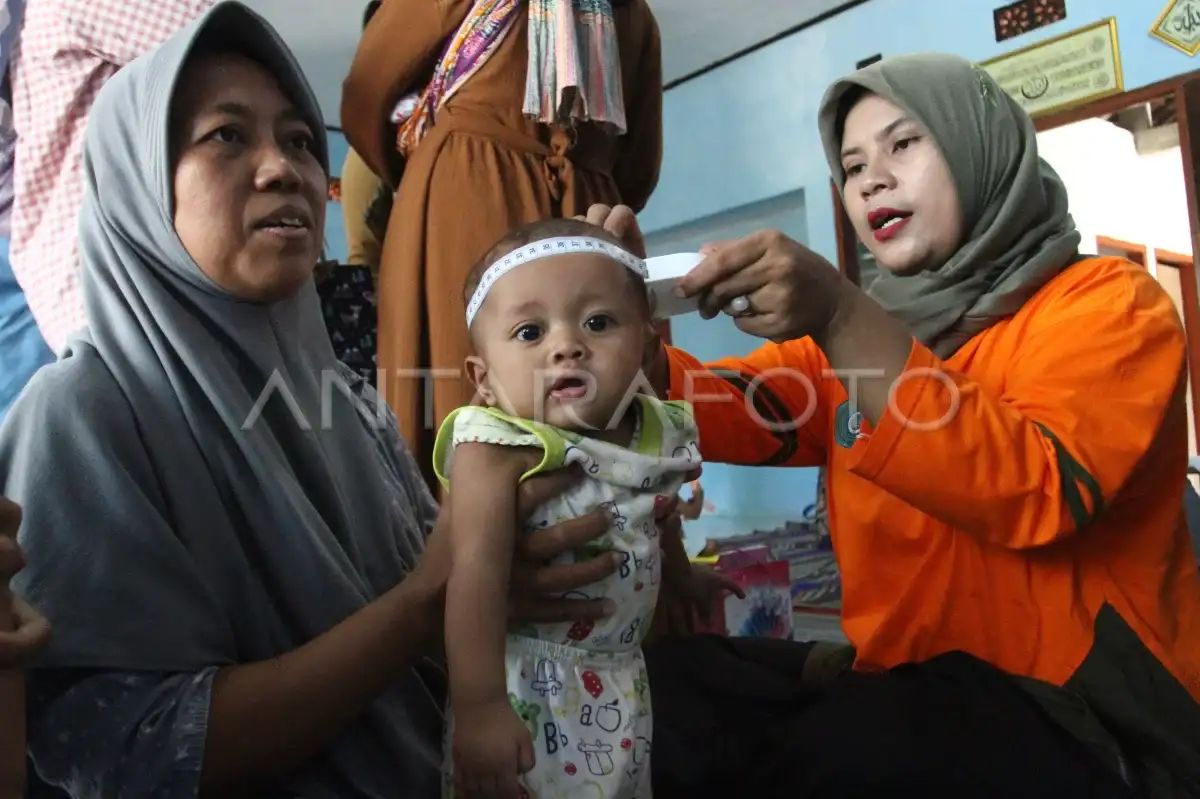
KBRN, Jakarta: The Ministry of Health (Kemenkes) RI through the Health Development Policy Agency (BKPK), announced the results of the 2024 Indonesian Nutrition Status Survey (SSGI). The survey recorded a decrease in the prevalence rate of stunting.
The incidence of stunting fell from 21.5 percent in 2023 to 19.8 percent in 2024. Minister of Health (Menkes) Budi Gunadi Sadikin affirmed the government’s commitment to reducing the national stunting rate to 14.2 percent by 2029.
"This target is not easy, but it is challenging to pursue. From 21.5 percent in 2023, we must go down to 14.2 percent in 2029," Minister Budi said in a statement received on Tuesday (May 27, 2025).
He explained that there was a reduction by about 7.3 percent in five years. The Minister also appreciated the hard work of various ministries, institutions, and stakeholders who supported the positive achievements in 2024.
"Alhamdulillah, the survey shows 19.8 percent, meaning we successfully exceeded the target by 0.3 percent," said the Minister.
However, he warned that the challenge remains significant. The 2025 stunting reduction target is 18.8 percent, which requires more intense efforts and closer collaboration.
The Minister is targeting six main provinces with the largest number of stunted toddlers: West Java, Central Java, East Java, North Sumatra, East Nusa Tenggara, and Banten.
"If we can reduce these six provinces by 10 percent, nationally we can decrease by 4-5 percent. This is because 50 percent of stunted children are in these six areas," Minister Budi explained.
Another important strategy, according to the Minister, is ensuring interventions from the pre-pregnancy period. This focuses on 11 specific health sector interventions, especially for adolescent girls and pregnant women.
"Stunting doesn't happen after birth, but even during pregnancy. Therefore, interventions for pregnant women are very important; pregnant women must not suffer from malnutrition or anemia," he added.
He also emphasized the importance of programs for measuring arm circumference and hemoglobin (Hb) levels in pregnant women, as well as the distribution of iron-folic acid tablets and micronutrient supplementation.
Furthermore, the program to improve the quality of measurements at Posyandu (community health posts) continues to be strengthened through the distribution of 300,000 anthropometric tools. This is supported by exclusive breastfeeding programs, supplementary feeding (PMT), and immunization. ***
Translator: Naura Sofia
News Recomendation
Loading latest news.....