



Indonesia–Norway Partnership Showcases Results-Based Climate Financing Model
- 01 Agt 2026 09:02 WIB
- Voice of Indonesia
Key Points
- Indonesia-Norway adopt results‑based climate funding, ensuring equal cooperation.
- Verified emission cuts earned Indonesia USD 216M for forest protection programs.
- FOLU Net Sink 2030 aims for forestry to absorb more emissions than it produces by 2030.
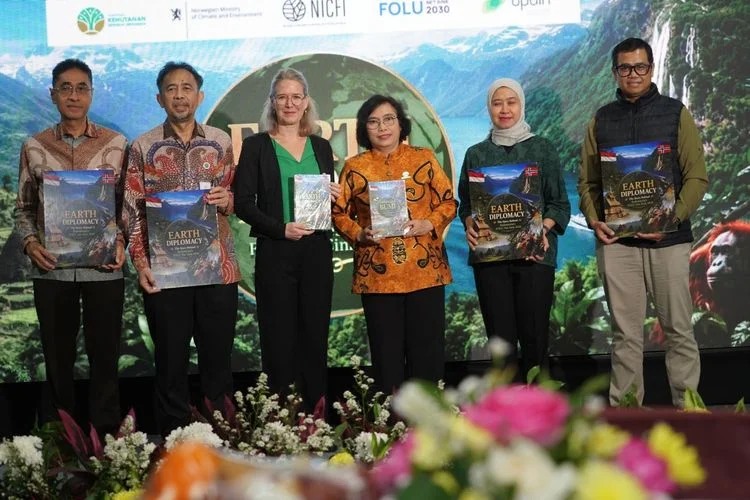
RRI.CO.ID, Jakarta – Indonesia and Norway’s collaboration on tropical forest protection and climate action is being recognized as a new model of international cooperation: equal, transparent, and results‑driven.
Through the Results‑Based Payment (RBP) mechanism, funding is released only after Indonesia achieves verified reductions in greenhouse gas emissions from forestry and land use.
This perspective was highlighted during the launch of Diplomasi Bumi: Cerita di Balik Indonesia’s FOLU Net Sink 2030 at the Ministry of Forestry headquarters in Jakarta on Thursday, July 30, 2026.
Officials emphasized that environmental diplomacy has become central to Indonesia’s development strategy, with success in curbing deforestation and improving forest governance boosting global confidence in the country’s Paris Agreement commitments.
Chief Editor of the book, Haruni Krisnawati, recalled the partnership’s origins in a 2010 Letter of Intent that pledged up to USD 1 billion in results‑based contributions.
Although the LoI ended in 2021 due to institutional challenges, both nations renewed ties with a 2022 Memorandum of Understanding, establishing a more balanced framework built on mutual respect and verified outcomes.
“The end of the LoI does not mean relations between the two countries have stopped. On the contrary, it marks a momentum to build a more equal and mature partnership,” Haruni said, as quoted on the Forestry Ministry's official website.
Under this scheme, Indonesia has already received four performance‑based payments totaling about USD 216 million. Funds are managed by the Environmental Fund Management Agency (BPDLH) and directed toward forest protection, ecosystem rehabilitation, fire prevention, social forestry, and community empowerment.
Project Director of the FOLU Norway Contribution Phase 1, Agus Justianto, noted that Indonesia’s FOLU Net Sink 2030 is among the country’s most ambitious strategies, aiming for forestry and land use to absorb more emissions than they produce by 2030.
This involves reducing deforestation, restoring peatlands and mangroves, rehabilitating forests, and conserving biodiversity.
Endah Tri Kurniawaty of BPDLH stressed that BPDLH ensures all payments are managed transparently and deliver tangible benefits for both the environment and local communities.
Speakers agreed that the Indonesia–Norway partnership demonstrates how tackling climate change requires trust, consistent policy, and long‑term commitment.
The model shows that protecting tropical forests can align with national development and community welfare. The Ministry hopes Indonesia’s experience will serve as a reference for other tropical nations seeking fair, results‑oriented climate cooperation. ***
News Recomendation
Loading latest news.....