



BRIN Discovers New Eggplant Species in Kalimantan
- 25 Mei 2026 09:31 WIB
- Voice of Indonesia
Key Points
- National Research and Innovation Agency (BRIN) scientists identified Solanum kalimantanense, a new wild eggplant species native to Kalimantan.
- The plant is traditionally used by Dayak communities as food and herbal medicine, but researchers warn it may face conservation risks.
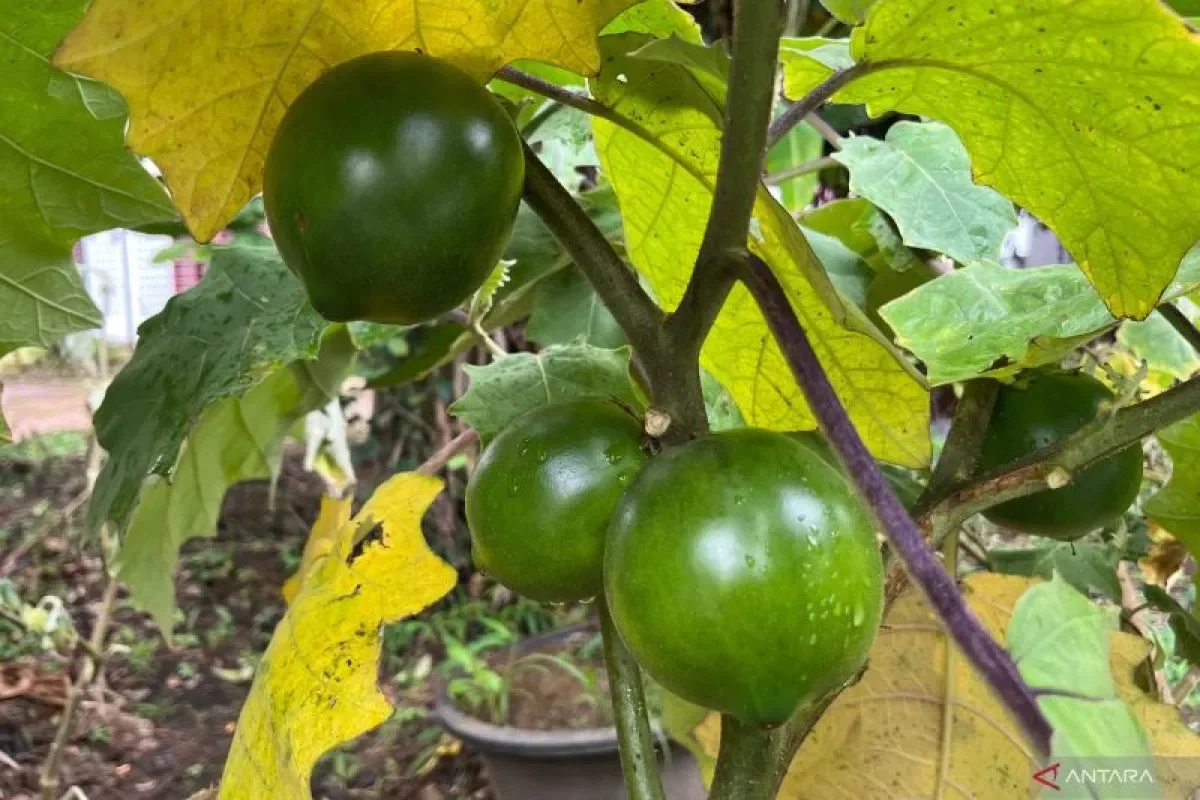
RRI.CO.ID, Jakarta - A team of scientists from the National Research and Innovation Agency (BRIN) has successfully uncovered a new species of prickly eggplant from the genus Solanum native to the forests of Kalimantan, Indonesia. The breakthrough underscores Indonesia's vast, undocumented biological wealth, proving that even plant groups heavily integrated into local community life still hold scientific secrets.
The newly identified species has been officially named Solanum kalimantanense T. Djarwaningsih, E. L. Agustiani, & M. R. Hariri. The scientific moniker honors the BRIN research team members behind the discovery, which includes Esthi L. Agustiani, Tutie Djarwaningsih, and Muhammad Rifqi Hariri from BRIN's Research Center for Biosystematics and Evolution, alongside Siti Susiarti from BRIN's Research Center for Ecology.
Through a comprehensive, integrative taxonomic approach combining traditional morphological analysis and advanced DNA barcoding, the team was able to map out the unique evolutionary profile of the plant. Genetic analysis utilizing Internal Transcribed Spacer (ITS) DNA markers revealed highly significant genetic variations that clearly separate Solanum kalimantanense from its closest botanical relatives.
BRIN Researcher Muhammad Rifqi Hariri detailed the exact physical traits that distinguish this newly documented flora from existing cataloged species on Sunday, May 24, 2026. The newly identified Solanum kalimantanense exhibits highly specific physical parameters, including a symmetrical leaf structure where the plant possesses leaves with unique proportions where the overall length and width are almost perfectly identical.
Additionally, the plant is characterized by shallow leaf indentations where the physical borders of the leaves feature exceptionally shallow lobes or indentations. It also displays a distinct fruit texture because, upon reaching maturity, the surface of the fruit is covered in sparse, fine, velvet-like hairs. Finally, the species showcases an increased specimen mass, as the physical size of the fruit is substantially larger when measured against its close relative, Solanum lasiocarpum.
"This finding shows that Indonesia still has enormous biodiversity potential that has not been fully scientifically documented, including plant groups that are already known and utilized by the community," Hariri said in a press release on Sunday, May 24, 2026, as quoted by Antara.
The wild eggplant has demonstrated remarkable ecological resilience and soil adaptability across its geographic range. According to BRIN Researcher Esthi L. Agustiani, the species thrives across diverse soil profiles, ranging from sandy clay to highly acidic black soils. It has been documented across a wide altitudinal range spanning 9 to 1,700 meters above sea level, with wild populations scattered across parts of both East Kalimantan and South Kalimantan.
"An integrative approach through morphological observations and DNA barcoding helped us distinguish this species from its close relatives more accurately," Esthi added.
Despite its broad geographical footprint, preliminary conservation assessments indicate that Solanum kalimantanense faces immediate survival threats. Based on initial studies, the species is suspected to have a limited population density, meaning it could potentially be categorized as Vulnerable under the official threatened species criteria established by the International Union for Conservation of Nature (IUCN).
While the species is entirely new to Western academic literature, BRIN Researcher Tutie Djarwaningsih revealed that the indigenous peoples of Kalimantan have interacted with the plant for generations. Locally termed terong asam or terong dayak, the sour fruit has long been harvested as a staple culinary ingredient. It is regularly traded in the floating markets of Banjarmasin and is commonly cooked as a household vegetable.
Beyond its nutritional value, the flora holds significant ethnobotanical importance as a traditional medicine. In the Kenohan District of East Kalimantan, local communities harvest the leaves and undeveloped fruit buds to formulate a traditional herbal remedy known locally as wikat, which is actively utilized in the alternative treatment of cancer. ***
News Recomendation
Loading latest news.....