Ministry of Religious Affairs Pushes Mosques-Pesantren Into Energy Transition

  • 16 Apr 2026 11:08 WIB
  •  Voice of Indonesia

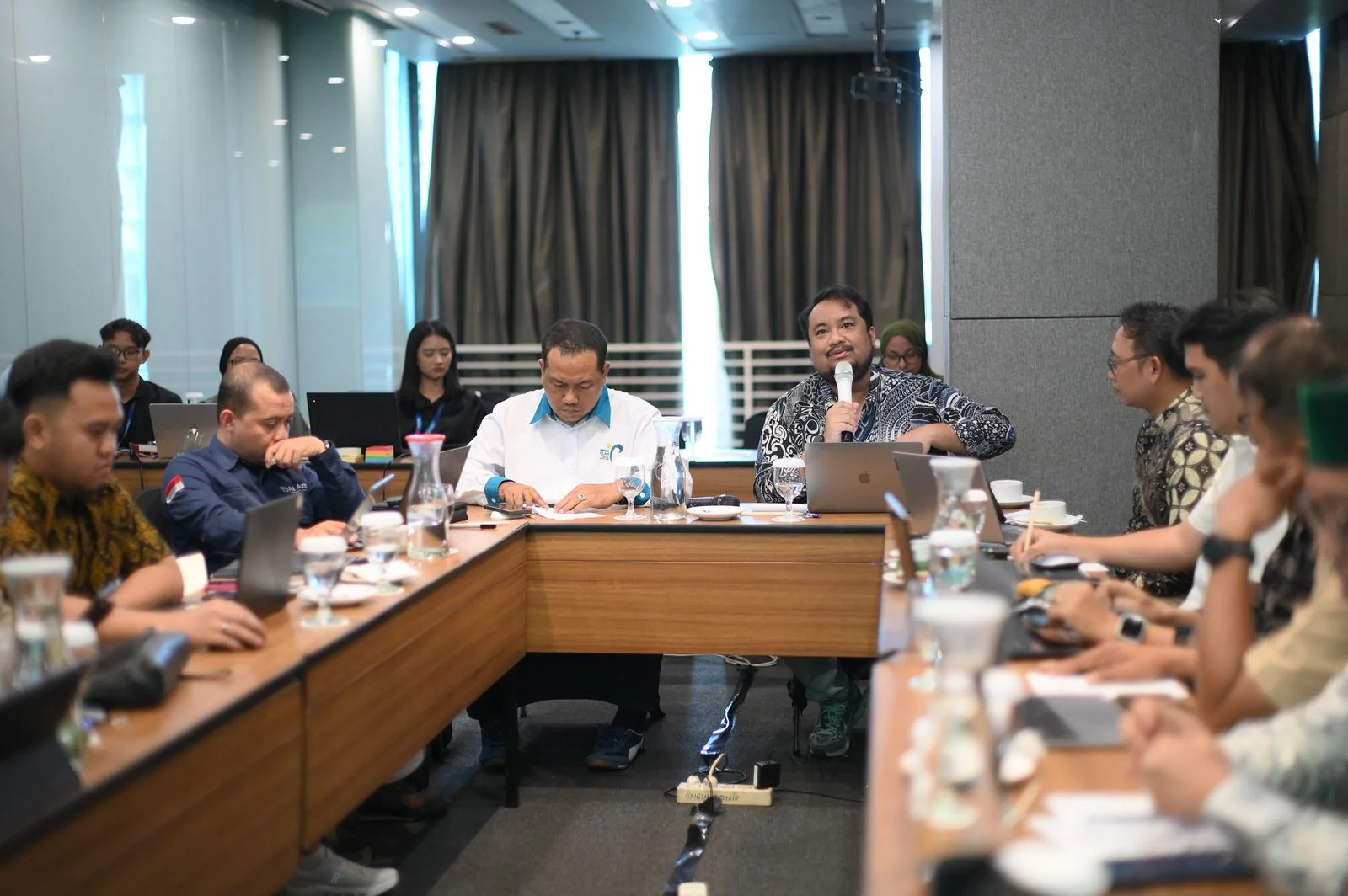
RRI.CO.ID, Jakarta – The government fully expands collaborative efforts to make mosques and Islamic boarding schools’ part of the social infrastructure of the national energy transition. Through synergy between the Ministry of Energy and Mineral Resources (ESDM) and the Ministry of Religious Affairs, the solarization houses of worship is being promoted not merely as a technical project, but as a collective movement that brings together energy resilience, public literacy, and community empowerment.

Coordinator of Directorate of Renewable Energy at the Ministry of Energy and Mineral Resources, Erick Tadung, made the statement during the Coordination Meeting on Energy Waqf and Charity in Jakarta. The forum underscored that houses of worship hold a strategic position in expanding the use of solar energy amid the country’s vast national potential, which has yet to be utilized optimally.

He further conveyed that the government sees mosques and Islamic boarding schools as capable of serving a dual role: as centers of worship and as spaces for social learning about clean energy, efficiency, and ecological responsibility. The director stated that the ministry considers the solarization houses of worship an important entry point for building up the adoption of renewable energy in ways which are closer to the public.

“Solar energy has the greatest potential, amounting to 3,294 gigawatts, exceeding other energy sources such as wind, water, ocean, and geothermal. However, the overall utilization of renewable energy has only reached 0.4 percent of installed capacity. Specifically for solar energy, the utilized capacity is only 1.49 gigawatts,” he said in an official statement received by RRI VOI in Jakarta, Thursday, April 16, 2026.

On the other hand, the Ministry of Religious Affairs places this agenda within the framework of ecotheology and the strengthening of productive waqf. The government wants houses of worship not to stop at their ritual function, but to grow into centers of civilization that also care for the environment, drive philanthropy, and build changes in public behaviour.

The Eco Mosque, Eco Pesantren, and Waqf City approaches show that clean energy issues are now beginning to be understood as part of religious social service, rather than merely a technocratic issue.

On the same occasion, Head of the Sub directorate for Institutional Development and Cooperation in Zakat and Waqf at the Ministry of Religious Affairs, Muhibuddin, stated that the collaboration is highly aligned with the Ministry’s 2026 Ecotheology Action Plan, which targets 50 mosques ready to adopt green technology. He also underscored the strengthening of financing schemes and public education as the two main pillars of acceleration.

“We will encourage all mosques to become Zakat Collection Units (UPZ), so that funding for solarization can come from the mosques themselves. What is also most important is the literacy aspect. At the Ministry of Religious Affairs, we have 50,000 religious counsellors, and we can work together to provide understanding to the public about why we must use renewable energy and transition away from fossil energy,” he conveyed.

Meanwhile, MOSAIC (Muslims for Shared Action on Climate Impact) Program Director, Aldy Permana, explained that the forum was not only a coordination meeting, but also a step toward scaling up a movement that has already been tested in the field. The organization views mosques and Islamic boarding schools as the most effective spaces for bringing together Islamic values, climate action, and public participation.

In addition, Aldy Permana conveyed that through the energy charity approach, MOSAIC underscores that installing solar panels in houses of worship is not only about technology, but also about creating examples that are easy for the public to see and experience. “When religious facilities adopt solar energy, the impact goes beyond saving operational costs. We have already implemented the Energy Charity Program in six mosques in Indonesia, with a total installed solar panel capacity of 23,525 WP,” he said.

MOSAIC has pioneered the Energy Charity Program over the past several years. To date, more than 21,000 people have participated as donors, and solar panel installations have been successfully set up in six locations: Sembalun, Yogyakarta, Tasikmalaya, Garut, Dharmasraya, and Sijunjung. This field experience has become a concrete foundation for the coordination agenda discussed in this forum.

Moreover, the forum agreed on several locations that will become the focus of pilot projects this year, consisting of points included in the Ministry of Religious Affairs’ Waqf City program and the Ministry of Energy and Mineral Resources’ solar power plant development program. The forum also agreed to collaborate through wakafenergi.id, initiated by the Al Azhar Islamic Foundation as a shared platform, in order to create a stronger ecosystem between government institutions and civil society organizations.

These are represented by MOSAIC, Wakaf Al Azhar, Wakaf Energi, Enter Nusantara, Al Washliyah Medan City, Green Justice Indonesia, the Productive Waqf Forum, the Zakat Forum, Ruang Eskalasi, and ActionLab, with support from the Ministry of Religious Affairs and the Ministry of Energy and Mineral Resources.

News Recomendation

Latest News

Loading latest news.....