



MRT Jakarta to Integrate Dukuh Atas Area with Best Practices from Asian Countries
- 31 Jul 2026 22:56 WIB
- Voice of Indonesia
Key Points
- The government-owned transportation company, MRT Jakarta, will build the Dukuh Atas Pedestrian Deck to connect four separate areas that are currently split apart by the Sudirman flyover and the West Flood Canal.
- The new deck will link all public transit options in the Dukuh Atas area, cutting transfer times by 2 to 5 minutes and making walking easier in hot or rainy weather.
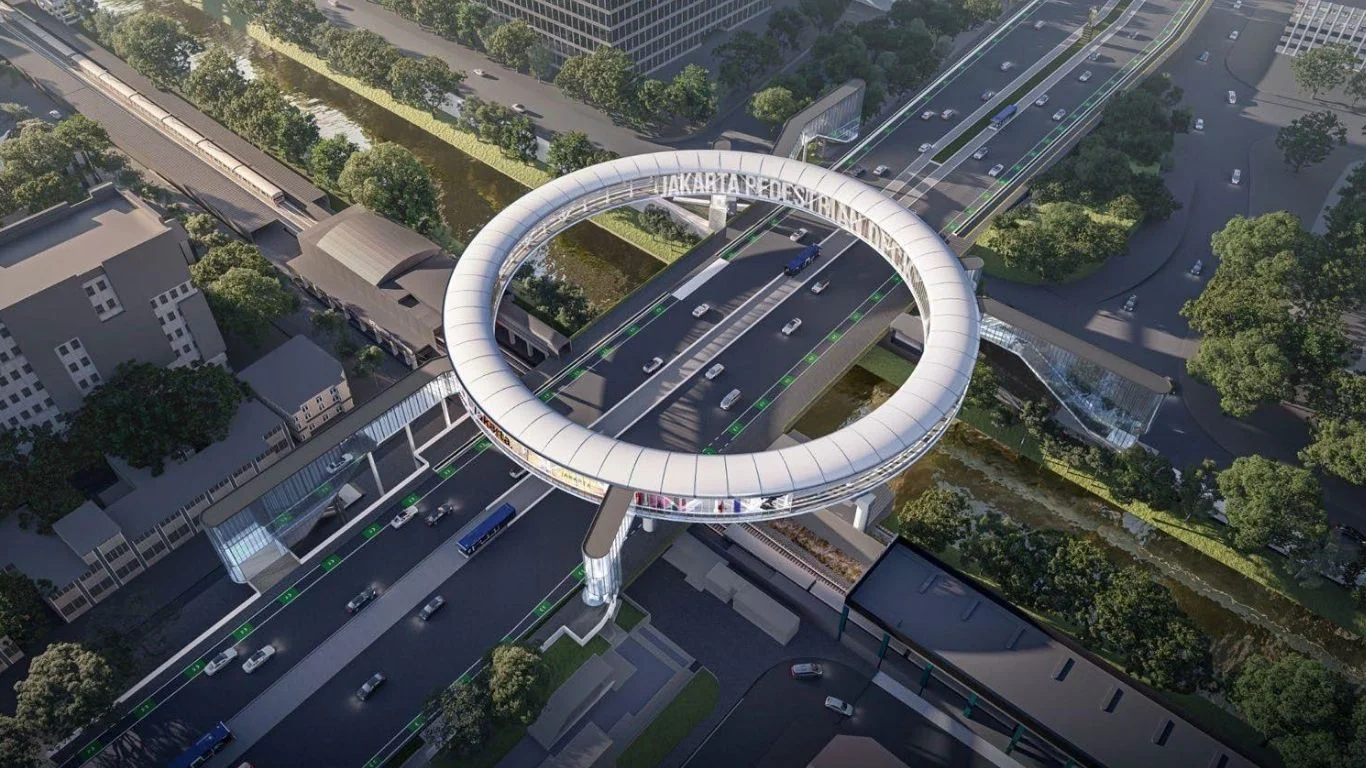
RRI.CO.ID, Jakarta – Within the next two years or more, Jakarta is projected to have a pedestrian deck connecting all modes of public transportation in the Dukuh Atas area, one of Jakarta’s major business areas. The construction of this infrastructure incorporates benchmarking results from several Asian countries.
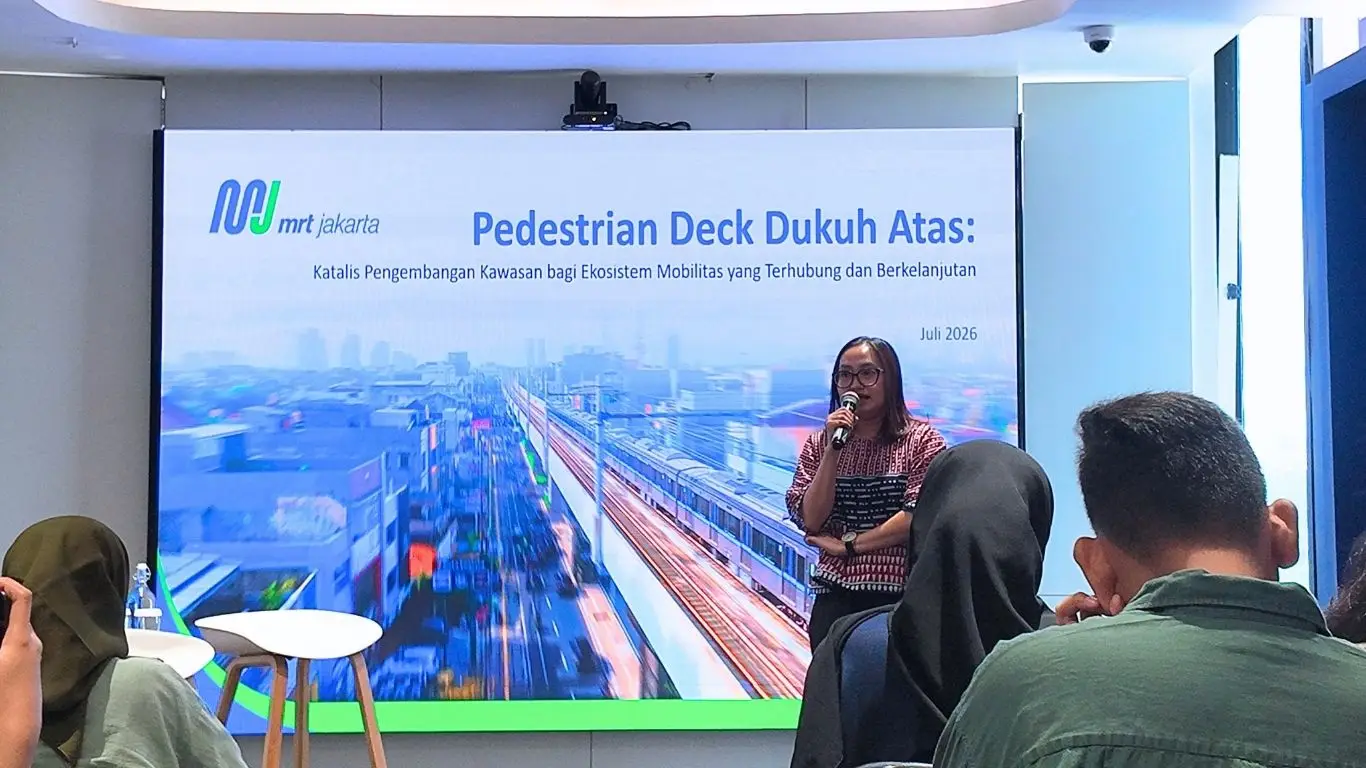
The construction of the Dukuh Atas Jakarta Pedestrian Deck aims at addressing the area’s fragmented connectivity caused by the Sudirman flyover and the West Flood Canal. Head of the TOD Planning Department at MRT Jakarta, Sagita Devi, made the statement during the first session of the 2026 MRTJ Fellowship Program at the Dukuh Atas Transport Hub in Menteng, Jakarta, on Thursday, July 30, 2026.
“Therefore, we’re undertaking this project, a pedestrian deck, which actually started from the problem that this area is fragmented into four distinct zones, divided by the Sudirman flyover and the West Flood Canal,” Sagita convyed, outlining the project’s background.
On the same occasion, Advisor to the Program Management Office Division at MRT Jakarta, Agus Trihan, noted that public transportation access in Dukuh Atas is actually adequate. However, pedestrian access remains somewhat circuitous and less than ideal, as the area is geographically divided into four main sections, namely the All Seasons side, the Dukuh Atas Transport Hub, the Wisma BNI, and the Landmark Building.
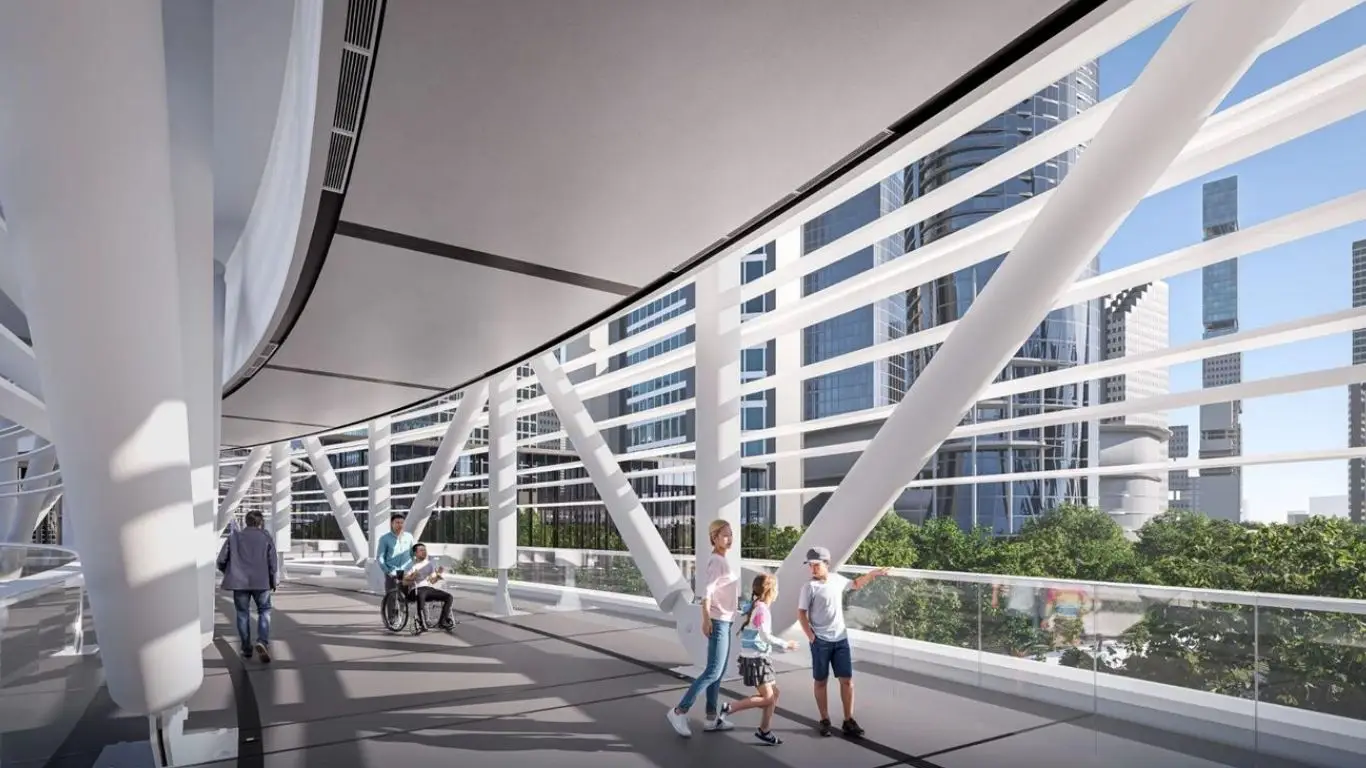
To integrate these four areas, MRT Jakarta, in collaboration with a Japanese consulting firm, has proposed the construction of the pedestrian deck. This initiative aims to enhance the comfort and safety of pedestrians at the Dukuh Atas integrated transit hub, which serves the MRT Jakarta, LRT Jabodebek, KRL Commuter Line, Soekarno-Hatta Airport Rail Link, Transjakarta, and LRT Jakarta.
“According to our consulting firm’s study, the construction of this deck will reduce travel time for both public transit users and pedestrians in these areas, making their journeys more comfortable. Especially in hot or rainy weather, this infrastructure will make commuting more pleasant,” Agus said.
Based on the feasibility study, this pedestrian deck is estimated to save public transit users approximately 2 to 3 minutes in transfer time. The most significant time savings were recorded on the route from the Landmark Building to Shangri-La, amounting to 4 to 5 minutes.
In respons to a question from RRI Voice of Indonesia, Sagita mentioned that loan support from the Japan International Cooperation Agency (JICA) has ensured that Jakarta’s MRT railway system and stations adhere to Japanese standards. However, in terms of architectural design, MRT Jakarta continues to actively conduct comparative studies with other developed countries in Asia, such as Singapore and South Korea.
“Actually, in terms of design, we’ve certainly conducted quite a few comparative studies with other cities like Singapore, Japan, South Korea, and others, where each country likely has examples of both successful and unsuccessful projects, which we can later adapt for Jakarta, whether in terms of policy, regulations, or design inspiration,” she said. Besides the architectural aspects, she added that MRT Jakarta is also studying partnership management strategies and incentive schemes for landowners and transportation operators.
Moreover, Agus added that technical benchmarking studies in different countries also cover methods for handling unique soil conditions, drawing on Singapore’s infrastructure development experience.
Agus stated, “So first we learned from Singapore how they handle unusual soil conditions. Then, regarding the tunnel boring machine itself, we also learned a great deal from benchmarks in Singapore and Japan. Back then, we were still quite unfamiliar with tunnel boring machine construction. As for the technical benchmarks for station and tunnel construction, we’ve drawn heavily from Japan and Singapore.”

Currently, the basic design phase for the Dukuh Atas Jakarta Pedestrian Deck has been completed, and the project has entered the contractor bidding process. The winning contractor is scheduled to begin work in November, with the goal of completing construction and achieving full operation by the end of 2028.
Previously, Jakarta Governor Pramono Anung launched the Dukuh Atas Jakarta Pedestrian Deck on Sunday, June 21, 2026, and expressed hope that construction will be completed on time while prioritizing user comfort. On that occasion, he also praised Jakarta’s achievement of ranking 2nd for the best public transportation system in Southeast Asia, 8th in Asia, and 17th in the world.
News Recomendation
Loading latest news.....