



East Nusa Tenggara Showcases Tourism, Fisheries to Chinese Investors
- 16 Nov 2025 13:44 WIB
- Voice of Indonesia
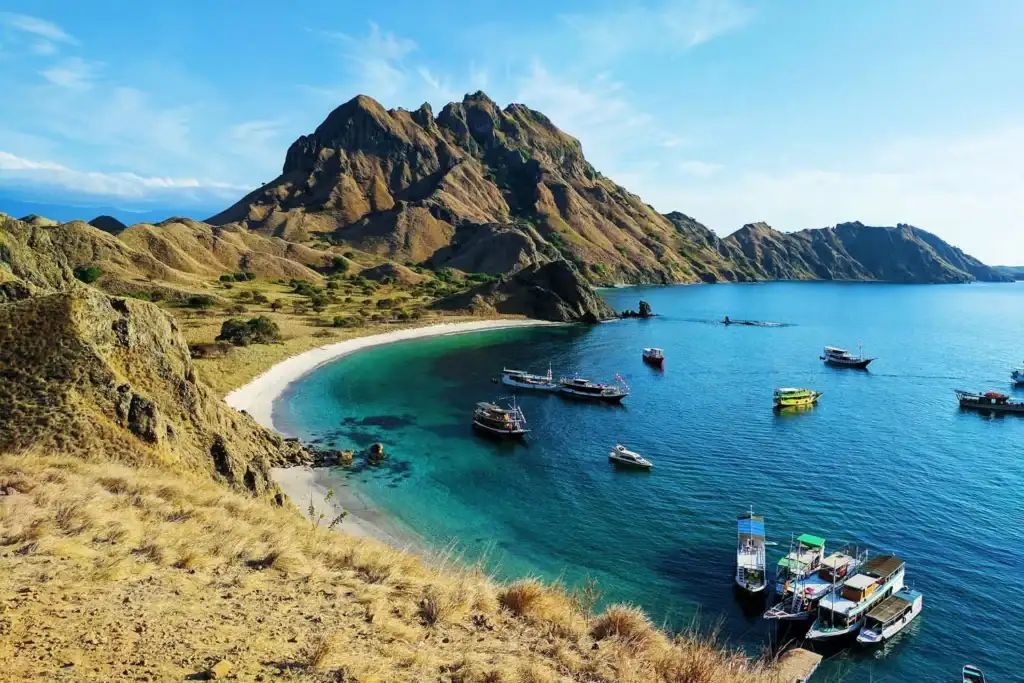
KBRN, Beijing: Governor of East Nusa Tenggara (NTT) Melki Laka Lena promoted the province’s vast potential in fisheries, livestock, energy, and high-value tourism to Chinese business executives and associations during a visit to Beijing.
He emphasized that NTT is actively seeking international partners to capitalize on its wealth of natural resources.
“The NTT Provincial Administration is targeting investment focused on downstreaming, labor-intensive industries, and environmentally friendly practices. We are ready to partner with international investors to achieve inclusive and sustainable growth,” Melki said in Beijing on Saturday night, November 15, 2025, as quoted by Antara.
Melki delivered his pitch at the “Connecting East Nusa Tenggara Province with China” event, organized by the Indonesian Embassy in Beijing.
The event was attended by the Indonesian Ambassador to China and Mongolia, Djauhari Oratmangun, and around 15 Chinese business leaders and association representatives. Melki and his delegation were in Beijing primarily for a language conference and university visits.
Between 2018 and 2024, NTT recorded total realized investment of USD 2.34 billion, comprising USD 704.8 million in foreign investment and USD 1.63 billion in domestic investment. These investments focused on five main sectors: marine and fisheries; livestock, agriculture, and plantations; energy; untapped assets; and tourism.
Melki highlighted NTT’s dominance in the marine sector. “In fisheries, we excel in wild-caught fish such as mackerel and tuna, totaling 91,000 tons in 2024. Meanwhile, farmed fish production, including milkfish, tilapia, and catfish, reached 1.49 million tons, reflecting our strong maritime culture and diverse marine ecosystem,” he explained.
In line with President Prabowo Subianto’s national vision for salt self-sufficiency, NTT is positioned as a key salt production center under the state-owned enterprise PT Garam. “We are mandated to seek investors for this salt self-sufficiency drive. NTT produced 15.79 million kilograms of salt from Nagekeo and Sabu, and we can utilize unproductive lands for future salt production sites,” Melki added.
Seaweed is another prominent commodity, with NTT producing up to 1.3 million tons annually from regions such as Kupang, Rote Ndao, Sabu Raijua, and Sikka. Research from universities and companies has found that NTT seaweed ranks among the world’s finest, capable of meeting consumption demands in multiple countries.
The Ministry of Marine Affairs and Fisheries has identified NTT as having “blue economy” potential through carbon storage, estimated at 2.15 million tons valued between USD 100–500 million. “But we need partners to market this to the international carbon market,” Melki said.
NTT also holds substantial renewable energy potential, including geothermal, solar, hydropower, and biomass energy sources.
According to the provincial energy roadmap, NTT aims to reach a renewable energy capacity of 24,306 MW by 2060, with solar power accounting for 15,022 MW. The province plans to phase out diesel power plants by 2031 and begin developing wind power by 2035.
In the livestock sector, Melki noted that NTT is one of Indonesia’s largest pork producers and consumers. “We are the third-largest producer of pork in Indonesia, with 13,829 tons per year. We also produce beef cattle, and importantly, all our livestock are free of Foot-and-Mouth Disease,” he said.
NTT’s total grazing area spans 330,201 hectares, with an additional 549,026 hectares of pasture and 218,825 hectares still unutilized.
He pointed to investment opportunities in developing local feed mills to reduce dependency on external suppliers, which currently drives up costs.
Establishing local feed mills could meet up to 70 percent of feed needs within three years, boosting farmer income and accelerating livestock growth cycles.
Tourism remains a major draw. In 2024, NTT ranked eighth nationally in tourism investment realization, with a total of USD 89.4 million, including USD 61 million from foreign investors, primarily from Singapore, Qatar, the UK, and France.
Foreign direct investment interest is fueled by UNESCO-recognized icons, including Labuan Bajo, Kelimutu Lake, Komodo National Park, and Wae Rebo Village.
In 2024, tourist arrivals exceeded 1.17 million, comprising 291,105 foreign visitors and 885,362 domestic tourists.
Beyond Labuan Bajo, Melki promoted hidden gems such as Sumba, Kellaba Madja, Alor Semau, and Sabu Raijua. He also highlighted infrastructure improvements, including the 664-km Trans-Flores highway and plans for amphibious aircraft operations connecting Nihiwatu (West Sumba) to Labuan Bajo, Rote Ndao, and Alor, aimed at promoting premium tourism.
Melki concluded the event by inviting the Chinese business delegation to visit NTT and presented several guests with traditional woven scarves from the province. ***
News Recomendation
Loading latest news.....