



Unsoed Boosts Riau Economy via Zero-Waste Pineapple Tech
- 01 Okt 2026 19:54 WIB
- Voice of Indonesia
Key Points
- Jenderal Soedirman University (Unsoed) is developing Penampi Village’s abundant pineapple potential into a source of value-added community income.
- Through a zero-waste approach, pineapples are processed into diversified products rather than being sold only as fresh fruit.
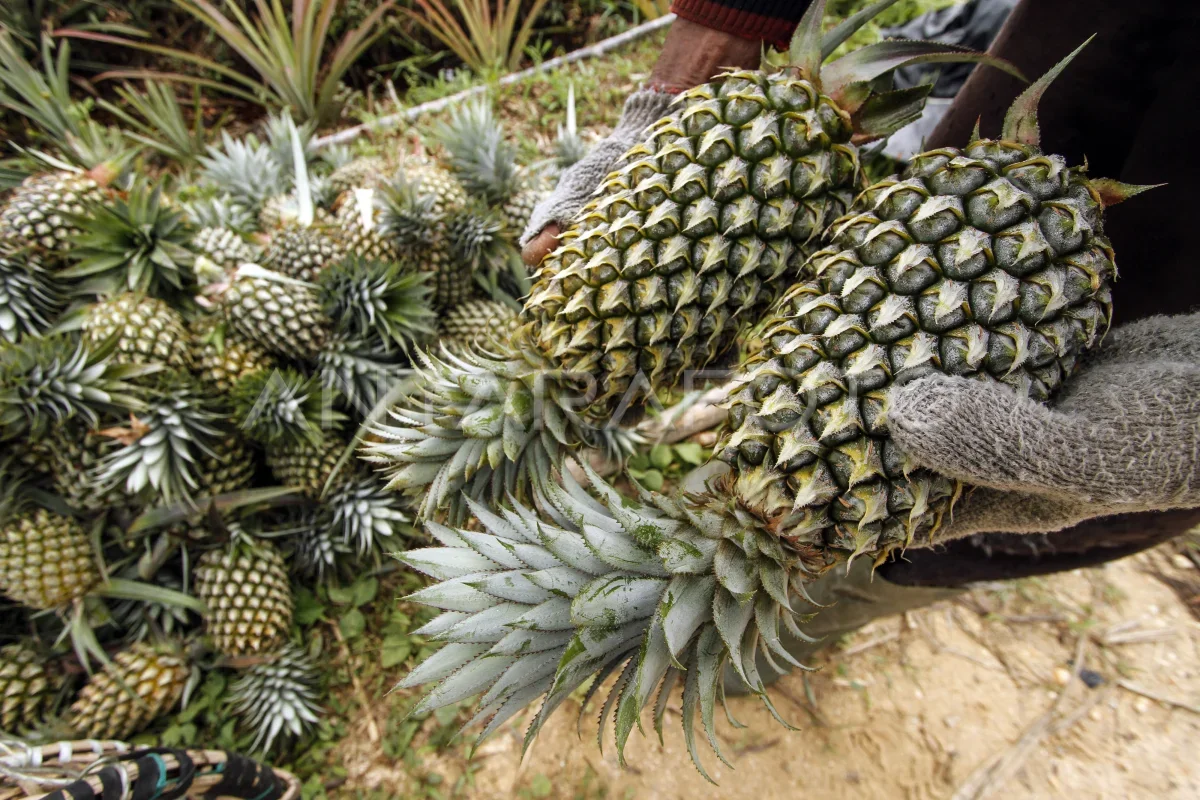
RRI.CO.ID, Banyumas - The abundant pineapple potential in Penampi Village, Bengkalis Subdistrict, Bengkalis Regency, Riau Province, is being developed into a new source of community income. Through technology downstreaming, pineapples are no longer marketed solely as fresh fruit but are processed into value-added food products, while their waste is repurposed into economically valuable items.
This effort is being carried out by the Research and Community Service Institute (LPPM) of Jenderal Soedirman University (Unsoed). The initiative is spearheaded through its Center for Innovation, Downstreaming, and Food Self-Sufficiency Acceleration (Puskor IHSP).
The initiative is part of the Priority and Strategic Program of the Industry Invitation from the Higher Education, Science, and Technology Ministry. The program, under the title Zero-Waste-Based Pineapple Fruit Processing Technology Downstreaming to Increase Value Added and Competitiveness of the Merah Putih Cooperative in Commodity Center Areas, is being implemented in partnership with Penampi Village.
A series of activities held on September 21–22, 2026, included technology transfer, training, and production mentoring for processed pineapple products and waste utilization. Unsoed also provided coaching on cooperative business management and assisted in preparing the physical development of the Merah Putih Cooperative in Penampi Village.
Until now, most Penampi pineapples have been sold in fresh form. Fruit that does not meet sorting standards has not been optimally utilized. A small portion has been processed into jam and dodol (a traditional sweet), but product quality and market readiness still need improvement.
Through a zero-waste approach, Unsoed is developing product diversification including jelly drinks, ready-to-drink beverages, fruit tea, cocktails, squash, and jam. Pineapple waste is also being processed into liquid and solid organic fertilizers.
Head of Unsoed’s LPPM, Elly Tugiyanti, said universities have a responsibility to ensure research innovations can be utilized and developed by the community and business sectors.
“Unsoed has technology to process pineapple fruit and its waste into various value-added products. Through the Industry Invitation Program, we are transferring and mentoring the implementation of this technology so that partners can apply it, develop it into market-ready products, and ultimately provide added value to the community,” she said on Thursday, October 1, 2026.
Head of the Industry Invitation Program and Coordinator of Puskor IHSP at Unsoed’s LPPM, Santi Dwi Astuti, explained that collaboration with Penampi Village began in late 2025.
| Baca juga: IKN Craft Training Boosts Local Economy |
“This program is designed not only as a production training activity, but as a comprehensive technology downstreaming process. Partners are not only learning to make products, but we are also mentoring them in process standardization, product development, consumer acceptance testing, business management, and commercialization readiness,” she explained.
The program also includes the preparation of standard operating procedures (SOPs), provision of production equipment, consumer acceptance testing, certification preparation, and the compilation of appropriate technology books and video tutorials. Mentoring is conducted both in person and online to ensure the technology can be applied independently.
Institutional strengthening is an important component, through cooperative business management coaching, business model development, feasibility studies, and the development of production, quality, distribution, and marketing systems. The Merah Putih Cooperative is expected to become a hub for business activities based on local superior commodities.
The program involves multidisciplinary collaboration from civil engineering, agribusiness, food engineering, and agricultural engineering fields. The technology development targets an increase in the Technology Readiness Level (TKT) from an initial level of 5 to 7 or 8.
Looking ahead, Unsoed will continue to serve as a technology partner, while partners are encouraged to drive production and commercialization. Program sustainability will also be strengthened through synergy with Bengkalis State Polytechnic.
With this approach, Penampi pineapples are expected to no longer remain merely a fresh commodity, but to evolve into raw materials for various food products. Their waste can also be utilized, thereby creating a pineapple-based business ecosystem that supports the application of a circular economy and increases community value addition. (Annaila Azzahra-EN)
News Recomendation
Loading latest news.....