



Jakarta Studies Copenhagen Waste-to-Energy Model
- 19 Mei 2026 09:40 WIB
- Voice of Indonesia
Key Points
- Jakarta is studying Copenhagen’s Copenhill as a model for converting urban waste into clean energy and public recreational spaces.
- The facility processes up to 610,000 tons of waste annually while generating electricity and district heating for thousands of households.
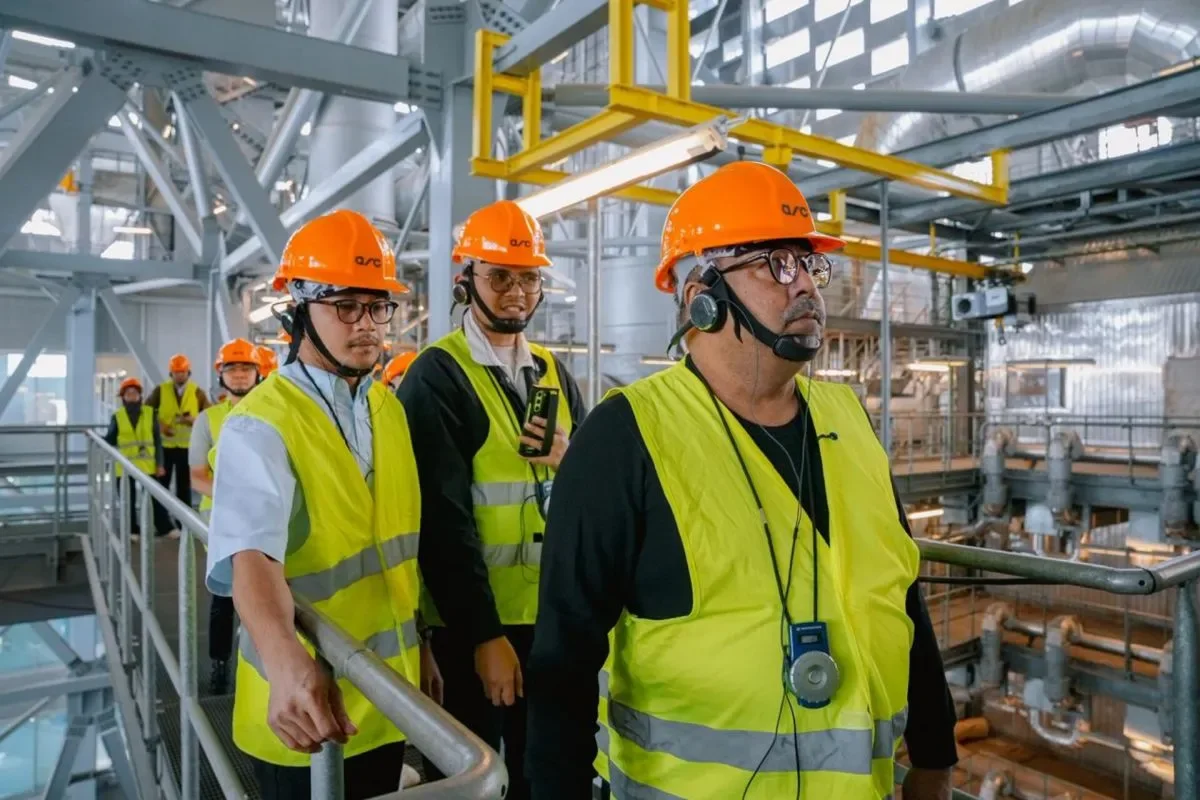
RRI.CO.ID, Jakarta - Jakarta Deputy Governor Rano Karno has expressed deep inspiration following a strategic working visit to the world-renowned Copenhill (Amager Bakke) waste-to-energy facility in Copenhagen, Denmark. The study tour, conducted on Sunday, May 17, 2026, aims to provide a functional blueprint for Jakarta as the Indonesian capital moves to accelerate its own sustainable, integrated municipal waste management systems.
The Copenhill facility is globally celebrated not just for its advanced thermodynamic efficiency, but for fundamentally shattering the stigma surrounding municipal dump sites.
“The technology is highly advanced. Not only does it process waste into energy, but the residual ash from combustion can also be utilized as an asphalt additive. Interestingly, this area is designed to be public-friendly, featuring an educational zone, a cafe, and even a synthetic dry ski slope. Thus, environmental facilities are no longer viewed as closed off and squalid,” he said in an official release on Tuesday, May 19, 2026, as quoted by Antara.
Operating seamlessly since 2017 under the management of the Amager Resource Center, Copenhill processes between 440,000 and 610,000 tons of municipal waste annually.
The engineering process behind the facility relies on high-temperature incineration, beginning with the sorting and feed stage where non-recyclable household waste is funneled directly into a specialized combustion chamber. Once inside, the facility initiates ultra-high combustion, incinerating the waste at sustained temperatures reaching up to 1,000°C.
This intense heat drives the steam generation phase by boiling water into highly pressurized steam, which is then used to spin heavy-duty industrial turbines. Ultimately, this efficient thermodynamic cycle facilitates grid distribution, successfully generating approximately 283 GWh of electricity and 1,383 GWh of thermal district heating annually to fulfill the power and warming requirements of 100,000 to 150,000 local Danish households.
Meanwhile, organic food scraps are strictly diverted to independent anaerobic digestion plants to manufacture pressurized biogas, ensuring zero organic mass is left to rot in open landfills.
While the European machinery is impressive, Danish environmental officials emphasized that advanced engineering is useless without strict civilian compliance.
A representative from the Amager Resource Center, Flemming G. Nielsen, noted that Copenhagen's success is rooted in an aggressive 10-category sorting system mandated at the household level. Before garbage trucks even arrive at the plant, citizens have already systematically separated glass, plastics, organic matter, and metals right from their kitchens.
The Deputy Governor acknowledged that importing expensive machinery into Jakarta would fail unless accompanied by a massive paradigm shift in public behavior across the city's neighborhoods (RT/RW).
“Upstream waste separation at the source is the ultimate key. Technology can easily be built, but its long-term success is strictly determined by citizen participation. With a unified commitment between the government and the community, Jakarta holds a massive opportunity to mitigate its urban waste crisis,” Rano Karno concluded. ***
News Recomendation
Loading latest news.....