



NTB Rice Production Surges Toward 2026 Self-Sufficiency Goal
- 20 Jan 2026 15:00 WIB
- Voice of Indonesia
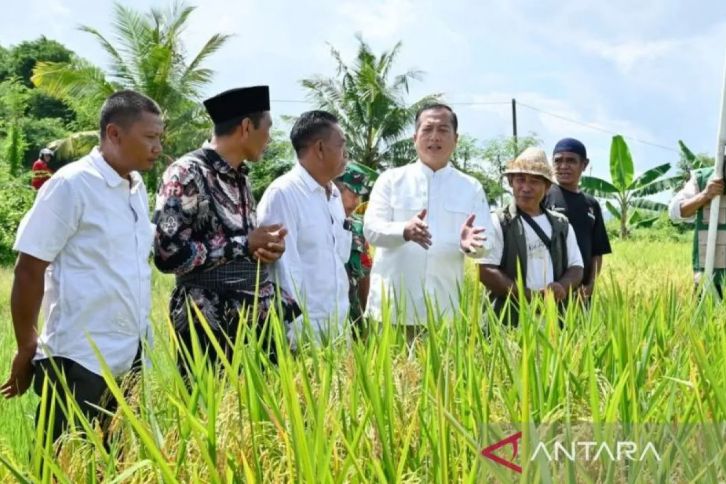
RRI.CO.ID, Mataram — West Nusa Tenggara (NTB) has emerged as a pivotal pillar in Indonesia’s agricultural resurgence, reporting a substantial 16.85% increase in rice production as the province aligns itself with the 2026 national food self-sufficiency targets.
Moving beyond traditional agrarian reports, the latest data suggests that the region is successfully reviving the "golden era" of the 1980s through aggressive land optimization and cross-sector collaboration.
Ahsanul Khalik, Head of the NTB Communication, Informatics, and Statistics Agency and administration spokesperson, announced in Mataram on Tuesday, January 20, 2026, that the province's production of Milled Dry Rice (GKG) reached 1,698,283 tons in 2025. This figure marks a significant leap from the 1,453,408 tons recorded in 2024, driven by a strategic expansion of harvested areas from 281,718 hectares to 322,927 hectares over the past year.
"This is in line with the President's directives, which emphasize the importance of restoring the glory of food self-sufficiency as seen in the 1980s. Such efforts are carried out through strengthening production, expanding planting areas, and increasing agricultural productivity across all regions of Indonesia, including in NTB," said Ahsanul, as quoted by Antara.
He noted that the average rice productivity also saw an uptick, rising from 51.59 quintals per hectare to 52.59 quintals per hectare.
The production data, verified by the Central Bureau of Statistics (BPS) through the Area Sampling Frame (KSA), highlights Central Lombok and Sumbawa as the region’s primary rice bowls, contributing 421,941 tons and 398,864 tons of GKG respectively. These figures are further supported by East Lombok, which yielded 243,474 tons, and Bima Regency with 208,018 tons, showcasing a balanced distribution of agricultural output across the province.
Further contributions came from Dompu with 151,335 tons and West Lombok with 135,678 tons, while West Sumbawa and North Lombok added 74,496 tons and 33,320 tons to the provincial total. Notably, urban centers also displayed high efficiency, with Mataram City recording the highest productivity rate in the province at 64.78 quintals per hectare, followed by Kota Bima which produced 13,431 tons from its limited harvest area.
Ahsanul attributed this success to a suite of pro-people initiatives, including the use of certified superior seeds, subsidized fertilizer allocations, and a stable Government Purchase Price (HPP) of 6,500 IDR (0.38 USD) per kilogram.
Additionally, another supporting factor is the strengthened collaboration between the central government, regional authorities, the Indonesian Military, the National Police, technical agencies, and the farmers.
Looking ahead to 2026, Eva Dewiyani, the Acting Head of the NTB Agriculture and Food Security Agency, emphasized that the province will not rest on its current achievements. She conveyed that the administration will continue to mobilize regional potential through strategic programs to ensure the local agenda remains synchronized with the central government’s long-term food security vision.
The administration remains confident that this upward trajectory will serve as a foundation for even greater resilience in the coming year.
"NTB is optimistic that it can continue to maintain the trend of increasing production while strengthening regional food security. This effort is part of a real contribution to realizing the national dream of Indonesia's food self-sufficiency revival," said Eva. ***
News Recomendation
Loading latest news.....