



Gobak Sodor: A Childhood Game Increasingly Rare in Jakarta
- 31 Agt 2026 00:02 WIB
- Voice of Indonesia
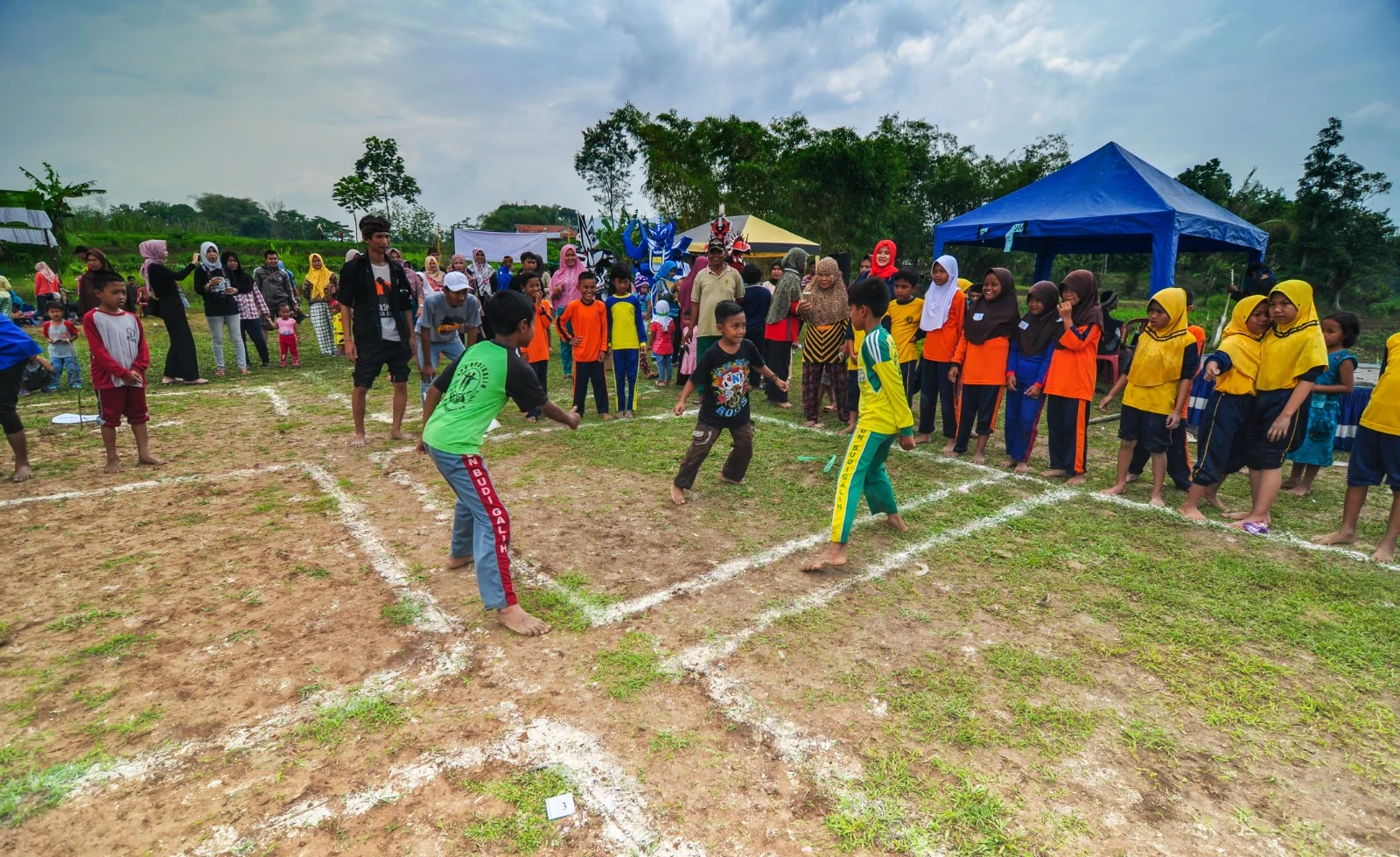
RRI.CO.ID, Jakarta – For generations who grew up before gadgets became part of everyday life, schoolyards, vacant lots, and open fields could easily become exciting playgrounds. No expensive equipment was needed—just some chalk or lines drawn on the ground, a few friends, and plenty of energy for running.
One traditional game that was once a familiar part of Indonesian childhood is gobak sodor, also known as galah asin in some parts of the country.
The game relies on speed, agility, strategy, and teamwork. Two groups compete against each other. One team is responsible for guarding the lines, while the other attempts to cross the entire playing area and return to the starting point without being tagged by the guards.
Gobak sodor is known as a traditional game played in various parts of Indonesia. The game is associated, among others, with the Special Region of Yogyakarta, while the term galah asin is closely associated with West Java and Sundanese culture.
Although the game has different names and variations in its rules across regions, its basic objective remains largely the same: getting past the opposing team’s guards without being tagged.
The Thrill of Running and Dodging Guards
Gobak sodor cannot be played individually. The game requires at least two teams, usually consisting of three to five players each.
Before the game begins, the two teams determine their roles through a draw. The winning team becomes the attackers, while the other team serves as the guards.
The guards then take their positions along the lines drawn on the playing field. Meanwhile, the attacking team must look for openings to get past the guards and reach the finish line.
Guards can only move along the lines assigned to them. They must try to tag opposing players attempting to cross the area. If an attacking player is tagged, the two teams may switch roles, depending on the rules being followed.
This is where the excitement of gobak sodor comes in.
One player may run in one direction to distract the guards while a teammate looks for an opening from another side. Communication and teamwork are essential for the entire team to cross the lines without being tagged.
The game is not simply about who can run the fastest. Players must read their opponents’ movements, decide when to advance and when to wait, and figure out how to create opportunities for their teammates.
No Complicated Equipment Needed
One of the most appealing aspects of gobak sodor is its simplicity. The playing field is rectangular and divided into several sections using horizontal and vertical lines. These lines serve as both movement paths and guarding areas.
Under commonly used rules, a gobak sodor field measures approximately 15 meters long and 9 meters wide. However, when played by children, the size of the field can be adjusted according to the space available.
No ball, racket, or special equipment is required. Chalk or lines drawn on the ground are enough to create the playing area. This simplicity once made gobak sodor easy to play in many places, including residential neighborhoods and schoolyards.
Once a Childhood Favorite in Jakarta
Gobak sodor was also once a familiar game among children in Jakarta. In the city’s densely populated environment, children could use schoolyards, neighborhood fields, or available open spaces to create their own playing areas. A few lines drawn on the ground were enough to transform an empty space into a place for gathering and playing together.
However, the changing landscape of Jakarta has made games such as gobak sodor increasingly difficult to find.
The availability of fields and open spaces where children can play together has become increasingly limited in some areas. Spaces that were once used for running and playing have been converted into buildings, parking areas, roads, or other urban facilities.
As a result, games that require relatively large playing areas, such as gobak sodor, are becoming increasingly rare among children in Jakarta.
Not because the game has lost its appeal, but because the space needed to play it is becoming increasingly difficult to find.
News Recomendation
Memuat berita terbaru.....