



Indonesia’s Wildfire Timeline, from Sumatra to Kalimantan
- 23 Agt 2026 09:12 WIB
- Voice of Indonesia
Poin Utama
- President Prabowo Subianto inspected the site of forest and land fires in West Kalimantan.
- Wildfires occur mainly in Sumatra and Kalimantan, causing environmental, health, social, and economic impacts.
- The government has strengthened wildfire prevention, monitoring, and response measures after major fire events.
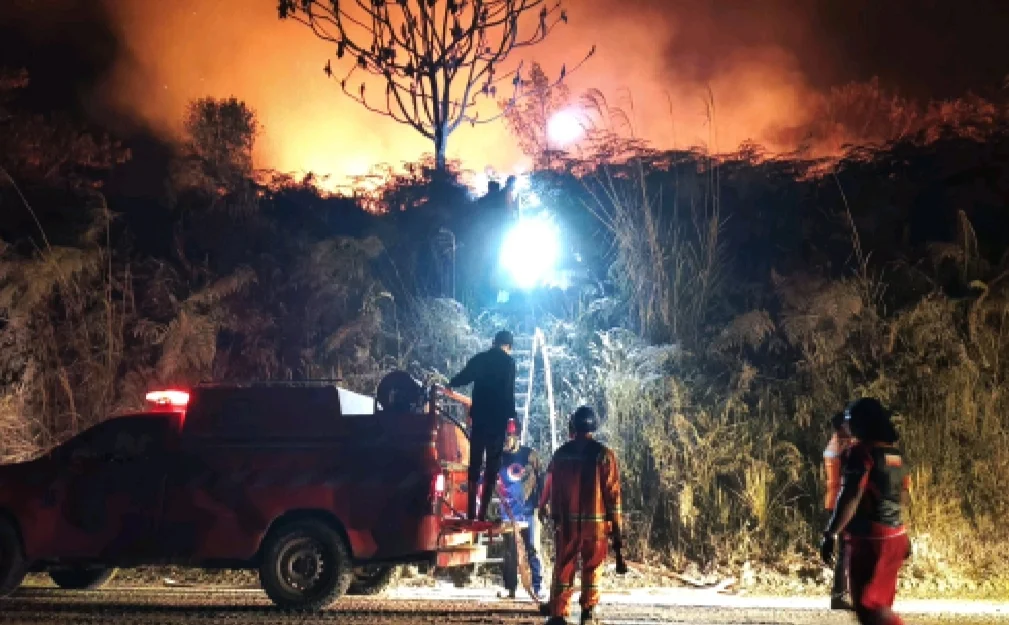
RRI.CO.ID, Jakarta - President of Indonesia, Prabowo Subianto, inspected the site of forest and land fires in West Kalimantan on Saturday, August 22, 2026. The visit underscored the long history of wildfires that recur every dry season in Indonesia.
Wildfires occur mainly in Sumatra and Kalimantan, causing environmental, health, social, and economic impacts. The fires have also produced haze that crosses national borders and disrupts community activities.
According to the National Disaster Mitigation Agency (BNPB), one of the largest wildfire events occurred from 1997 to 1998, when El Niño triggered a prolonged drought. Fires spread widely, particularly across peatlands in Sumatra and Kalimantan, with millions of hectares burned.
Large-scale wildfires re-emerged in 2006, 2013, and 2015 in various regions. The 2015 fires were among the most severe, with an estimated 2.6 million hectares burned.
The impacts affected public health, transportation, education, economic activity, and environmental conditions. Haze also reached several neighboring countries, turning wildfires into a transboundary environmental issue.
Various studies show that human activities remain one of the main drivers of wildfires. Land clearing by burning is still practiced because some consider it cheaper and faster.
Fire risk increases during the dry season, when vegetation dries out and becomes highly flammable. Vulnerability is even higher on peatlands that have dried due to canal construction and changes in water management.
Peatland fires can smolder beneath the surface, making them more difficult to extinguish. Forest degradation caused by illegal logging and land conversion also increases a region’s susceptibility to fires.
El Niño can prolong the dry season and heighten the potential for fire spread. However, climate factors are not the sole cause, as human activities continue to play a major role in many incidents.
Wildfires have multidimensional impacts, from ecosystem damage to increased public health risks. Fires also release large amounts of carbon emissions that contribute to global climate change.
Following a series of major fires, the government strengthened wildfire prevention, monitoring, and response measures. These include tightening regulations, enforcing laws, restoring peatlands, and developing early-warning systems.
The government also conducts integrated patrols and empowers communities through various fire-prevention programs. At the regional level, Indonesia works with ASEAN member states to address transboundary haze.
Despite these efforts, wildfire management still faces challenges, including law enforcement issues and communities’ continued reliance on slash-and-burn practices. Preventive measures therefore need to be implemented alongside efforts to improve the welfare of communities living near forests and land.
Expanding alternatives to slash-and-burn land clearing is essential to provide communities with safer land-management options. Learning from wildfire history is crucial to prevent fires from recurring every dry season. (Gusti Panji)
News Recomendation
Memuat berita terbaru.....