



Field Hospital Set Up in Manggarai After NTT Earthquake
- 19 Agt 2026 21:11 WIB
- Voice of Indonesia
Poin Utama
- Emergency surgical tents have been set up at Ruteng Regional Hospital in Manggarai Regency to maintain surgical services after the earthquake.
- Orthopedic support is urgently needed as broken bones are among the most common injuries reported after the quake.
RRI.CO.ID, Jakarta - The Indonesian Ministry of Health is establishing a field hospital in Manggarai Regency, East Nusa Tenggara (NTT), to ensure earthquake victims continue receiving medical care despite severe damage to existing health facilities.
At Ruteng Regional Hospital (RSUD Ruteng), staff are currently performing surgical procedures in emergency tents while preparing the field hospital. The temporary facility will include inpatient wards, an emergency department, and a dedicated operating room.
Health Minister Budi Gunadi Sadikin said damage to RSUD Ruteng must not prevent patients -- especially those suffering fractures and trauma from collapsing buildings -- from receiving immediate treatment.
“Broken bones are one of the most common conditions following an earthquake, so we need orthopedic specialists to ensure these patients receive immediate treatment,” Minister Budi said during a visit to RSUD Ruteng on Tuesday, August 18, 2026, as quoted on the ministry’s official website.
One of the patients he met was Yosef, a 12‑year‑old boy who suffered a fractured femur after a neighboring house collapsed during the quake. “If he doesn’t undergo surgery, he could recover with a disability. He might not be able to play football again. He loves football and wants to become a member of the national team,” Minister Budi said.
To strengthen trauma care, the ministry has mobilized orthopedic specialists from several hospitals and medical institutions, including Dr. Soetomo Hospital in Surabaya, Sardjito Hospital, Ben Mboi Hospital, and Hasanuddin University. “We are grateful to our colleagues from these hospitals who have come to help. The orthopedic doctors are ready to treat patients who require specialized care,” he said.
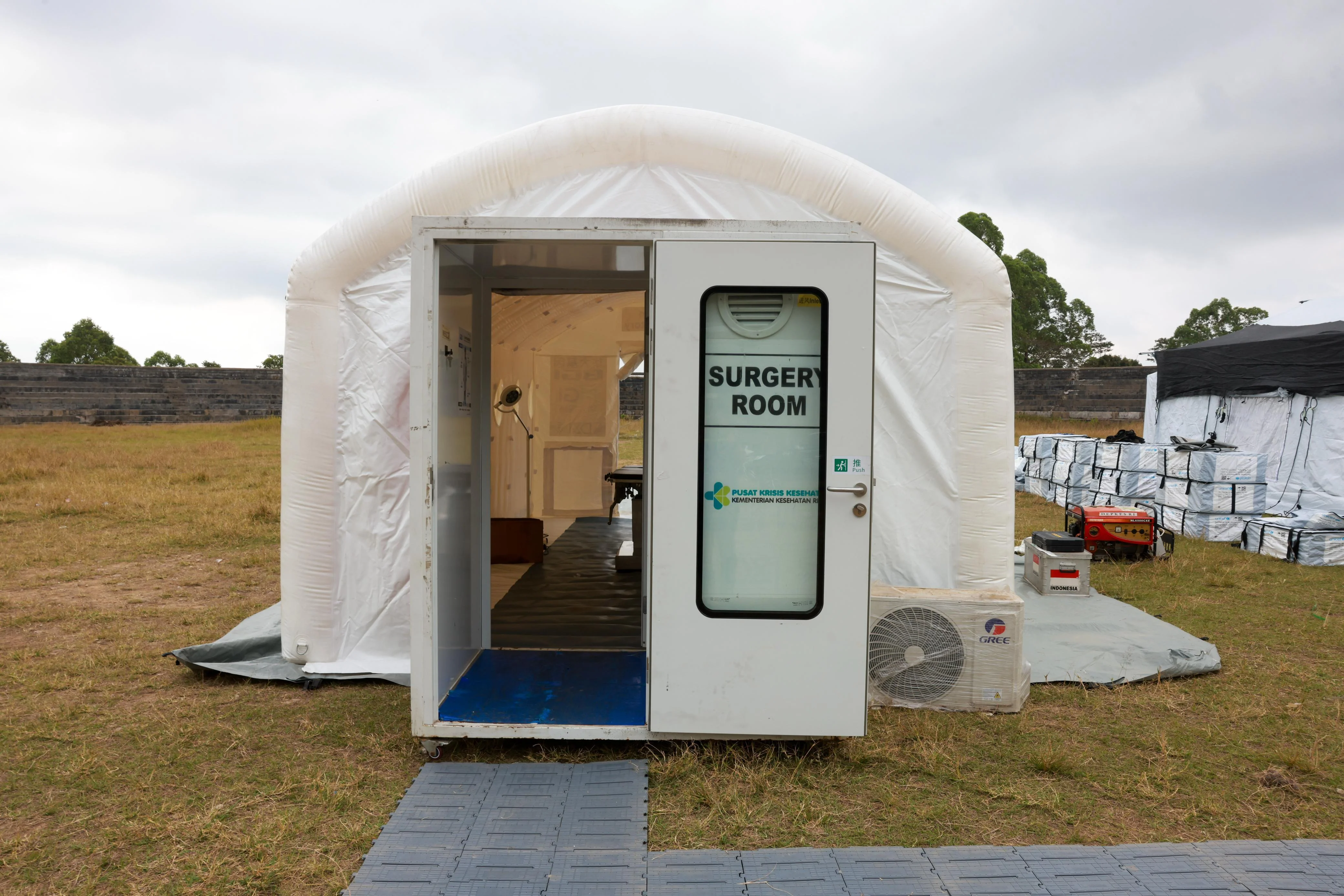
The field hospital at Golo Dukal Stadium will initially consist of five tents. Three inpatient tents will each accommodate up to 20 patients, providing an initial capacity of around 60 beds. A separate tent will serve as the emergency department, while another will function as an operating room.
“We have set up five tents here. Four are for patients, each accommodating 20 patients, and one is specifically for the operating room because it is sterile and can be isolated. We hope to start operating tomorrow,” Minister Budi said.
The ministry plans to expand the facility’s capacity to at least 100 inpatient beds, with additional tents being sent from Bali.
The field hospital is designed to provide a safe environment for patients and medical teams. Inpatient tents use specialized flooring to facilitate patient movement and medical equipment, maintain hygiene, and prevent rainwater from entering.
The tents are standard disaster‑response structures used in emergency operations worldwide, including by international humanitarian organizations. Their design allows adaptation to local weather conditions and the medical needs of disaster‑affected areas.
The operating room is one of the key facilities. It is designed as an isolated, sterile space to support surgical procedures and minimize infection risk. It is equipped with an operating table, surgical lights, and dedicated areas for preparing medical instruments.
“This is the operating room. It will be sterilized before use. Facilities like this were also used during the disasters in Sumedang and Aceh,” Minister Budi said.
The availability of an operating room will allow patients with earthquake‑related trauma -- particularly fractures caused by collapsed buildings -- to receive surgery without waiting for the main hospital to become fully operational.
The ministry also plans to establish a similar field hospital in Nagekeo Regency, where the local referral hospital was damaged by the earthquake. “We will replicate this field hospital not only in Ruteng but also in Nagekeo,” Minister Budi said.
Deploying field hospitals is part of the ministry’s emergency response to maintain healthcare services following the NTT earthquake. Alongside temporary facilities, the government continues mobilizing medical personnel, including specialist doctors, as well as medical supplies and logistical support.
Through field hospitals, specialist teams, and coordinated health logistics, the Ministry of Health aims to ensure earthquake victims continue receiving timely, safe, and appropriate medical treatment while damaged healthcare facilities are being restored. ***
News Recomendation
Memuat berita terbaru.....