



Indonesia Turns to Village Cooperatives to Boost Economy and Reduce Poverty
- 14 Apr 2026 11:22 WIB
- Voice of Indonesia
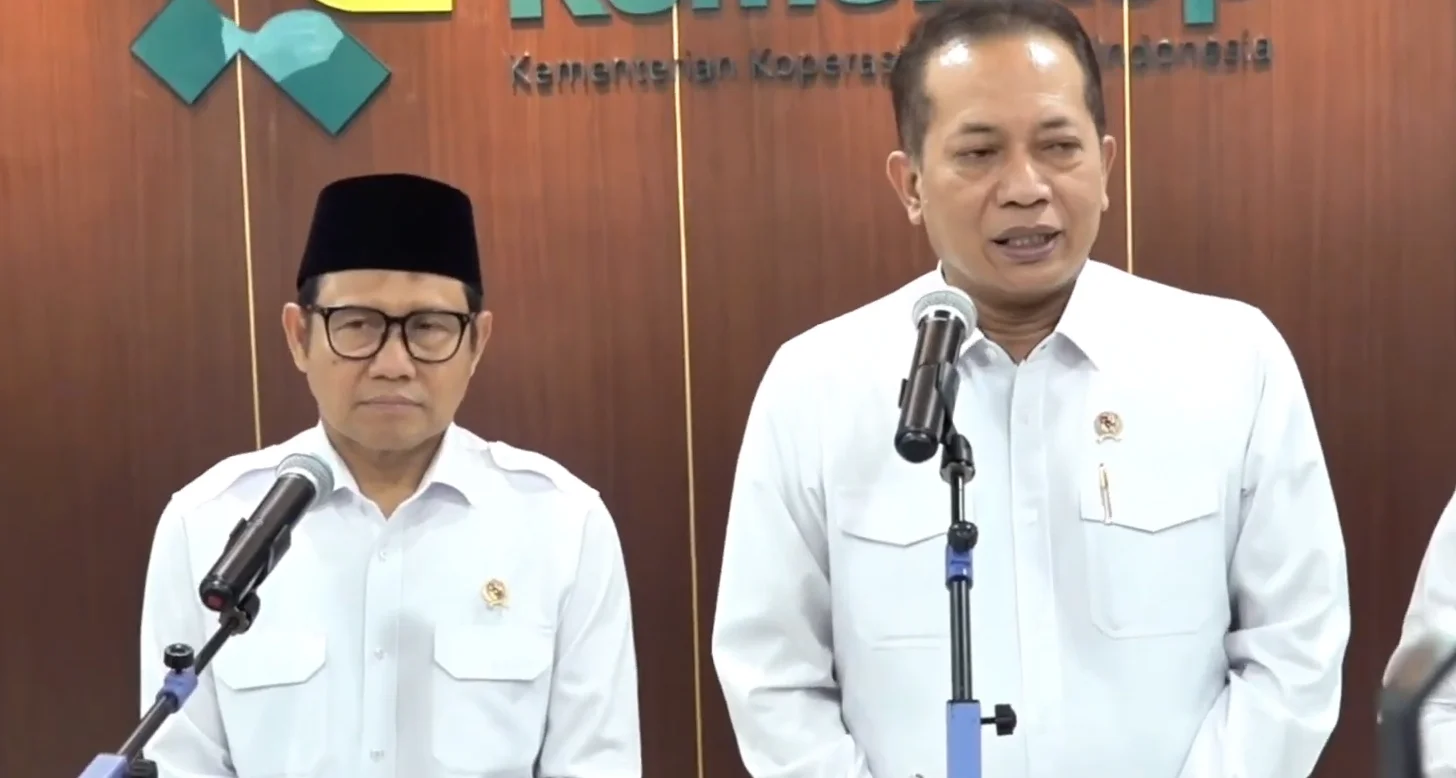
RRI.CO.ID, Jakarta - Indonesia bolsters economic self-reliance by positioning “Red-White Village/Sub-district Cooperatives” (KDKMP) as a rural economic driver. The government sees the project as instruments in achieving food independence amid an increasingly uncertain global environment.
Coordinating Minister for Community Empowerment, Affairs Muhaimin Iskandar, affirmed that cooperatives must evolve, capable of mobilizing domestic production and meeting national demand. “There is no other way; all cooperatives, especially the “Merah Putih” village and sub-district cooperatives, must become a driving force for our economy so that we can be ready to stand on our own two feet as a nation,” he stated to the press at Jakarta on Tuesday, April 14, 2026.
At the operational level, the government is advancing this vision through a cooperative-led rural economy model designed to connect producers directly with markets. The Red-White Cooperatives are being developed into multi-functional hubs that act both as distributors of essential goods and as off-takers for local products.
This approach is expected to streamline supply chains, stabilize prices, and ensure that value creation remains within local communities.
Minister of Cooperatives, Ferry Joko Julianto, highlighted that cooperatives will absorb a wide range of rural outputs. By integrating production, distribution, and consumption within a single ecosystem, the model also aims to reduce inefficiencies that often disadvantage small-scale producers.
“...as an off-taker or mechanism to purchase all of the products produced by communities in villages and sub-districts, whether they be food crops, livestock, horticultural products, fruits, vegetables, handicrafts, and so on,” Minister Ferry said, explaining the scope of the cooperatives.
The government expects that this dual function will accelerate economic circulation in rural areas and enhance resilience against external shocks. It will serve as both market access points and consumption centers.
Beyond economic restructuring, the initiative carries a significant social mandate. The government has set an ambitious target to eliminate extreme poverty, with cooperatives playing a frontline role in achieving that goal.
“The Merah Putih Village/Neighborhood Cooperative also serves as a tool for addressing poverty, as this year’s goal is to eliminate extreme poverty entirely,” Minister Ferry, stated on the same occasion. He also mentioned that the Ministry of Cooperatives will collaborate with the Ministry of Social.
One key mechanism involves integrating beneficiaries into cooperative membership, allowing recipients not only to access affordable goods but also to gain ownership stakes in the cooperatives themselves. This enables them to receive annual profit-sharing distributions (sisa hasil usaha), creating an additional and more sustainable income stream.
The policy also encourages greater economic participation among rural households, such as to engage in productive activities such as farming and livestock. Over time, this is expected to help lift households out of the lowest income brackets and reduce dependency on direct aid.
Indonesia is seeking to chart a development path that is both resilient and inclusive by building self-sustaining local economies and strengthening domestic supply chains. It also aims to target poverty at its roots, anchored in the collective power of its communities.
News Recomendation
Memuat berita terbaru.....